
If you live in the Central Valley — whether you're renting an apartment in Fresno, leasing a house in Modesto, or owning a home in Visalia — your tap water almost certainly has issues worth addressing. Hard water between 10 and 30 grains per gallon, chloramines added by municipal suppliers, nitrates from agricultural runoff, and total dissolved solids (TDS) readings of 150 to 400 mg/L are the baseline reality for most households in the region.
But here's where the paths diverge sharply: what you can do about your water depends enormously on whether you own your home or rent it. Homeowners have the full menu of options available — whole house systems, softeners, reverse osmosis under the sink, alkaline systems at the tap. Renters face real constraints around installation, landlord permission, and what happens when you move.
This guide breaks it all down. We'll walk through the best solutions for each situation, compare costs honestly (including what companies like Culligan, RainSoft, and Puronics charge), and explain how a local company like Home Valley Solutions approaches both renters and homeowners differently.
Why Central Valley Water Is Particularly Challenging
Before we get into solutions, it helps to understand why this region's water is harder to manage than most.
The hardness problem. Water hardness is measured in grains per gallon (gpg). The national average is around 7-8 gpg. Central Valley municipal supplies routinely test at 10 to 30 gpg depending on your city, the season, and the source blend your utility is drawing from. That's classified as "very hard" to "extremely hard." The calcium and magnesium minerals responsible for that hardness build up inside pipes, water heaters, dishwashers, and washing machines — reducing efficiency, shortening appliance life, and leaving the chalky white scale you see on faucets and shower glass.
Chloramines instead of chlorine. Many Central Valley utilities switched from chlorine to chloramines (a chlorine-ammonia compound) as a disinfectant because chloramines persist longer in the distribution system. The tradeoff: chloramines are harder to remove with standard carbon filters and produce different byproducts when they react with organic matter. Standard pitcher filters and many entry-level whole house systems aren't optimized to remove them.
Agricultural chemical runoff. The Central Valley is one of the most productive agricultural regions in the world. That productivity comes with a water quality cost. Nitrates from fertilizers, pesticides, and herbicides seep into groundwater and can enter municipal supplies through infiltration. Nitrates above 10 mg/L (the EPA maximum contaminant level) are a serious concern for infants and pregnant women. Many Central Valley well users test above this threshold.
TDS and taste. Total dissolved solids between 150 and 400 mg/L are common across the region. While not all dissolved solids are harmful, high TDS contributes to the flat, mineral-heavy taste many residents notice. Reverse osmosis is the most effective technology for bringing TDS down dramatically — often to under 30 mg/L.
Arsenic in well water. Homeowners and rural renters on private wells in parts of the Central Valley, particularly in the eastern foothills and some San Joaquin Valley communities, have tested positive for naturally occurring arsenic. The EPA limit is 10 parts per billion (ppb), but health researchers increasingly suggest the safe level may be lower. Well water users need testing specific to arsenic, and not all filtration systems address it.
---
The Renter's Situation: What You Can and Cannot Do
Renters make up a substantial portion of Central Valley households. In cities like Fresno, renter-occupied units exceed 50% of housing stock. Yet most water filtration marketing targets homeowners. Here's what renters actually have available.
What Renters Can Install Without Landlord Permission (Usually)
The general rule: anything that doesn't require modifying the plumbing, drilling holes, or permanent installation is typically fair game without asking. This includes:
Countertop reverse osmosis systems. These units sit on your counter and connect to the faucet via a simple diverter valve that screws onto the aerator — no tools, no holes, no permanent changes. A quality countertop RO system from a brand like APEC, SpringWell, or Aquasana runs $150 to $400. These are a solid option for renters who want clean drinking water without the landlord conversation.
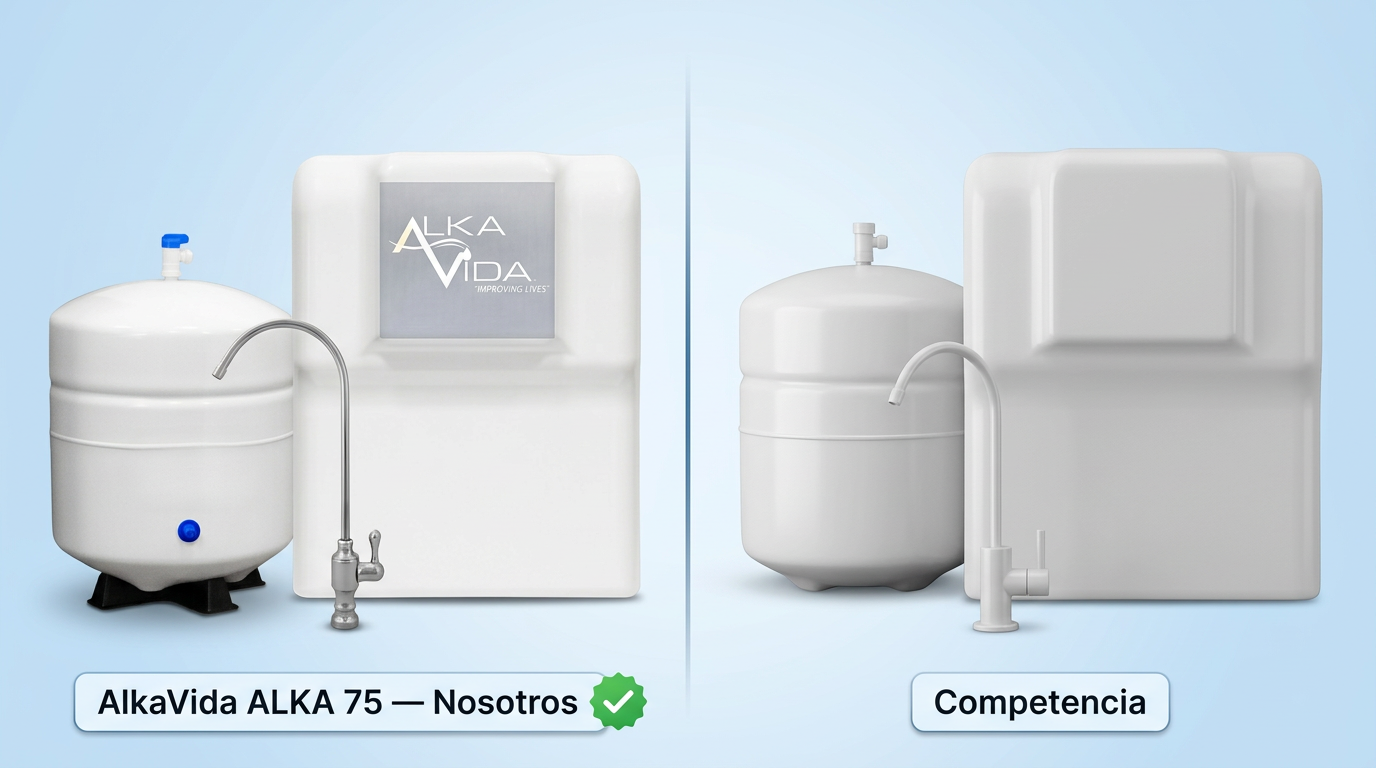
Under-sink RO with a faucet hole that already exists. Many kitchen sinks already have a pre-drilled hole for a soap dispenser or side sprayer that the tenant never uses. An under-sink RO system can use that existing hole for the dedicated filtered water faucet — no new drilling required. Cost for a quality under-sink unit: $200 to $600. Home Valley Solutions sells and installs systems in this category, and the AlkaVida alkaline RO system can often be configured for existing hole installations.
Refrigerator filters. If your rental has a refrigerator with a built-in water and ice dispenser, replacing the internal filter is almost always within a renter's rights. These are consumable items. Replacement filters run $30 to $80 depending on the brand.
Pitcher filters. Brands like Brita and ZeroWater are portable and require nothing from the landlord. They're better than nothing, but they have real limitations. ZeroWater does reduce TDS significantly. Standard Brita pitchers do almost nothing for hardness, nitrates, or chloramines — they mainly improve taste slightly. Don't rely on a pitcher filter if you have well water with nitrate concerns.
Shower filters. A shower head with a built-in filter screws onto your existing shower arm — no modification required. These reduce chlorine and chloramine exposure during bathing and can reduce the skin dryness and hair brittleness many Central Valley residents experience. Cost: $30 to $150.
What Renters Typically Need Landlord Permission For
Under-sink systems that require drilling a new hole in the countertop or sink. Some landlords say yes. Many do not. If you want an under-sink RO with a dedicated faucet and there's no existing hole, you need to ask.
Whole house systems. These connect to the main water line entering the home — a permanent plumbing modification. Renters almost never have access to install these. If your landlord is open to splitting costs (since a whole house system improves the property), it's worth the conversation, but don't count on it.
Water softeners. Same situation as whole house filters. These are permanent installations that tie into the main line and typically require a drain connection for backwash. They're homeowner territory.
Negotiating With Your Landlord
There are situations where the landlord conversation makes sense:
- You're on a private well and water quality testing shows nitrates, arsenic, or bacteria above safe levels. In California, landlords have an implied warranty of habitability — unfit water is a legitimate habitability concern. Documentation from a certified water test carries legal weight.
- You're in a long-term lease and willing to leave the system behind or negotiate a rent reduction in exchange for improving the property.
- You're renting from a private owner who lives nearby and cares about the property — not a corporate landlord managing hundreds of units.
Home Valley Solutions offers free water testing to renters as well as homeowners. Getting documented proof of what's in your water is the strongest starting point for any landlord negotiation. Call (559) 507-6838 to schedule a test.
[Get your free water test — renters welcome](https://www.homevalleysolutions.com/free-water-test?utm_source=blog&utm_medium=seo&utm_campaign=comparison_blogs&utm_content=renters-vs-homeowners-central-valley)
---
The Homeowner's Full Menu of Options
Homeowners in the Central Valley have access to the complete range of water treatment technologies. Here's how they stack up.
Whole House Filtration
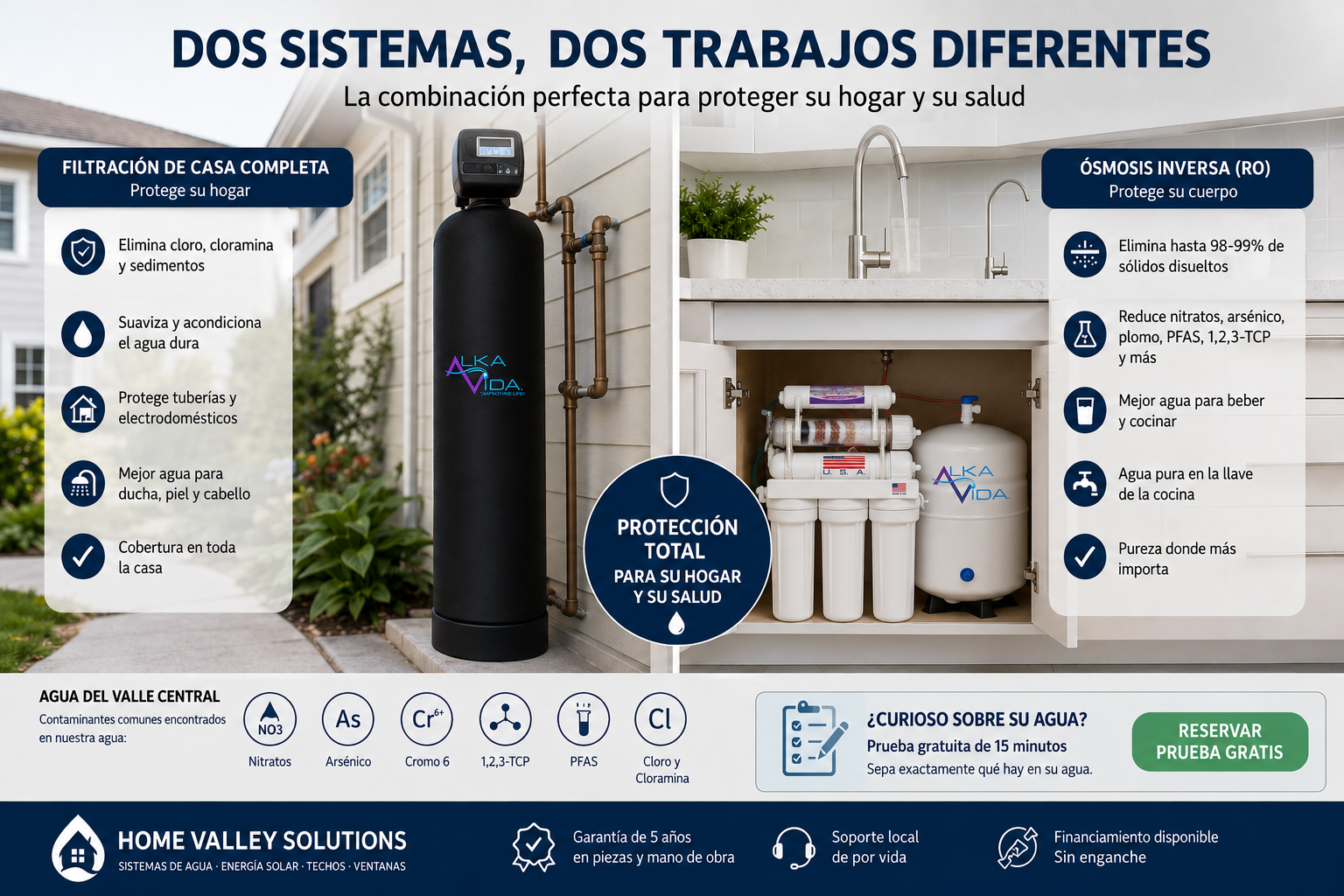
A whole house system (also called a point-of-entry system) treats all the water that enters your home before it reaches any fixture. This protects your pipes, appliances, water heater, and every faucet in the house.
For Central Valley homeowners, a good whole house system should address:
- Sediment (common in both well and municipal water)
- Chlorine and chloramines
- TDS reduction (to a degree)
- Hardness (via a separate softener stage or a salt-free conditioner)
Home Valley Solutions installs whole house filtration systems sized for Central Valley conditions. Learn more at the [whole house water filtration page](https://www.homevalleysolutions.com/services/water-filtration?utm_source=blog&utm_medium=seo&utm_campaign=comparison_blogs&utm_content=renters-vs-homeowners-central-valley).
What competitors charge for whole house systems:
- Culligan: Their whole house systems are primarily rental/lease-based at $40 to $60 per month. Over 5 years that's $2,400 to $3,600 with nothing to show for it at the end — no owned asset, and you're locked into ongoing payments.
- RainSoft: Full whole house systems with softener typically $4,000 to $8,000 installed. Heavy in-home sales pressure. Some customers report being quoted significantly higher figures.
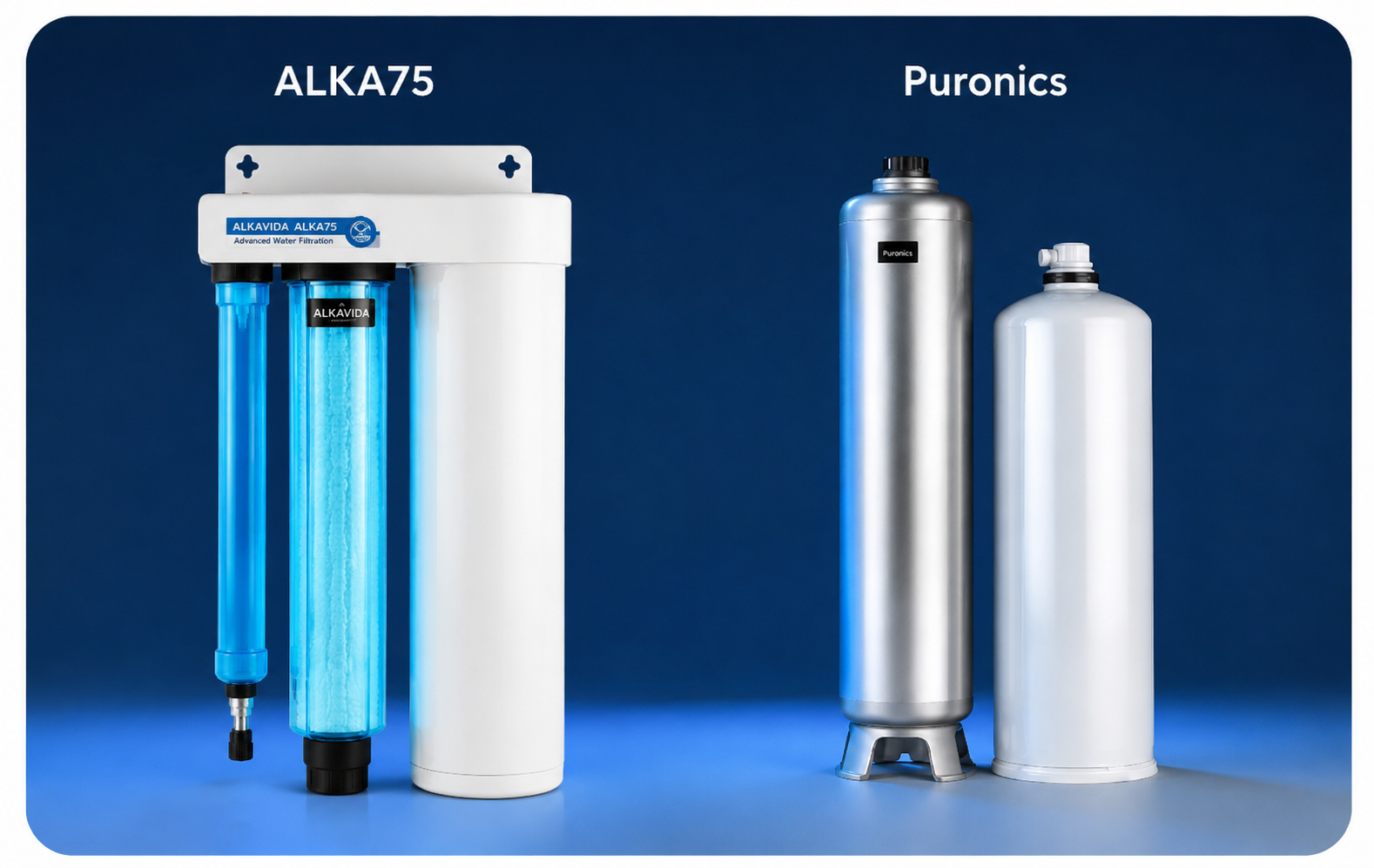
- Puronics: $3,000 to $6,000 range. Uses a proprietary system and pushes long-term service contracts.
- Kinetico: $3,000 to $6,000 range. Non-electric, twin-tank systems are genuinely innovative, but pricing can feel opaque without getting multiple quotes.
- Generation H2O and 559 Water Filters: Local Central Valley options. Pricing varies — get written quotes.
- EcoWater: Dealer-installed systems typically $2,500 to $5,000.
- LifeSource: Salt-free whole house systems, $2,500 to $4,000. No softening — addresses scale but doesn't produce soft water in the traditional sense.
Home Valley Solutions positions its whole house systems competitively against this market. The difference: no commissioned sales pressure, transparent pricing, and a local team that understands Central Valley water chemistry specifically.
Water Softeners
For homeowners dealing with hardness above 10 gpg — which is most of the Central Valley — a water softener is often the most impactful single investment you can make. Softeners use ion exchange to swap calcium and magnesium ions for sodium ions, producing genuinely soft water that extends appliance life, reduces soap usage by 50% or more, and eliminates scale buildup.
A salt-based ion exchange softener for a typical Central Valley home runs $800 to $2,500 for the equipment, plus installation. The ongoing cost is salt — roughly $5 to $20 per month depending on your water hardness and household size.
Salt-free conditioners (sometimes called "water conditioners" or "template-assisted crystallization" systems) don't actually soften water. They change the structure of calcium and magnesium so it's less likely to stick to surfaces, but they don't remove those minerals. For very hard water (above 20 gpg), traditional salt-based softeners typically outperform salt-free alternatives, though the salt-free systems have lower ongoing costs and no sodium added to the water.
Reverse Osmosis at the Kitchen Sink
RO systems are the gold standard for drinking and cooking water quality. They push water through a semipermeable membrane that blocks dissolved solids, nitrates, arsenic, heavy metals, pharmaceuticals, and most other contaminants. The result is water with TDS often under 30 mg/L — dramatically cleaner than even filtered municipal water.
For Central Valley homeowners concerned about nitrates (especially those on wells or near agricultural areas), RO is the most reliable solution. It's also the best answer for households wanting to reduce their bottled water spending.
Home Valley Solutions installs under-sink RO systems, including the AlkaVida line, which adds a remineralization and alkalinization stage to bring pH up to 8.5-9.5 after the RO membrane removes everything. This addresses one of the common criticisms of standard RO water — that it's too pure and slightly acidic. [Learn about reverse osmosis options here](https://www.homevalleysolutions.com/services/reverse-osmosis?utm_source=blog&utm_medium=seo&utm_campaign=comparison_blogs&utm_content=renters-vs-homeowners-central-valley).
Alkaline Water Systems
The AlkaVida alkaline water system from Home Valley Solutions is designed specifically for Central Valley households that want high-quality drinking water with the added benefit of ionized alkaline pH. Alkaline water at 8.5-9.5 pH has a devoted following among health-conscious consumers, athletes, and those who notice better hydration versus standard tap or bottled water.
The AlkaVida system combines filtration, RO, and remineralization in a single under-sink unit — giving you the purity of RO with the mineral balance of natural spring water. [Explore AlkaVida alkaline water systems](https://www.homevalleysolutions.com/services/alkaline-water?utm_source=blog&utm_medium=seo&utm_campaign=comparison_blogs&utm_content=renters-vs-homeowners-central-valley).
---
Cost Comparison: Renter vs Homeowner Solutions Over 5 Years
Here's an honest breakdown of total cost of ownership over five years for various approaches:
Renter — pitcher filter only
- Initial cost: $30-$50
- Replacement filters: ~$60-$100/year
- 5-year total: $330-$550
- What you get: Slight taste improvement. No protection against nitrates, hardness, chloramines, or arsenic.
Renter — countertop or under-sink RO
- Initial cost: $200-$600
- Filter replacements: ~$50-$150/year
- 5-year total: $450-$1,350
- What you get: Dramatically cleaner drinking water. Moves with you when you leave.
Homeowner — Culligan rental (whole house + softener)
- Monthly cost: $40-$60
- 5-year total: $2,400-$3,600
- What you get: Treated water while you pay. No asset owned. If you cancel, you return the equipment.
Homeowner — purchased whole house system + softener
- Initial cost: $2,000-$4,500 installed
- Ongoing: Salt ($60-$200/year), filter replacements ($50-$150/year)
- 5-year total: $2,550-$5,750
- What you get: An owned asset that adds home value, full household protection, and no monthly payment after installation.
Homeowner — RainSoft or Puronics premium system
- Initial cost: $4,000-$8,000 installed
- Ongoing: Salt and filters
- 5-year total: $4,300-$8,900+
- What you get: Comparable water quality to mid-range systems at premium pricing, often sold via high-pressure in-home demos.
The math generally favors purchasing over renting if you plan to stay in your home for more than three years.
---
How Home Valley Solutions Serves Both Renters and Homeowners
Most water filtration companies focus exclusively on homeowners because the big whole-house installation jobs are their primary revenue source. Home Valley Solutions takes a different approach.
For renters:
- Free water testing with no sales pressure — just information
- Recommendations for portable and semi-permanent options that fit your rental situation
- Help documenting water quality issues if you need to make a case to your landlord
- Point-of-use RO and alkaline systems that don't require permanent installation
For homeowners:
- Full site assessment starting with a free water test
- Transparent pricing on whole house filtration, softeners, RO, and alkaline systems
- No commissioned salespeople doing high-pressure kitchen table demos
- Bilingual service (English and Spanish) — important in Central Valley communities where Spanish is the primary household language for many families
- Local company — when you call (559) 507-6838, you're talking to the same team that installs and services your system
[Schedule a free water test and consultation](https://www.homevalleysolutions.com/free-water-test?utm_source=blog&utm_medium=seo&utm_campaign=comparison_blogs&utm_content=renters-vs-homeowners-central-valley)
---
Specific Situations Worth Addressing
"I'm renting but I have well water."
This is the scenario that warrants the most urgency. Municipal water, whatever its faults, goes through treatment and testing before it reaches your tap. Private well water is tested only as often as you test it — and many well users haven't tested in years.
In Central Valley well water, the concerns are:
- Nitrates from agricultural fertilizers (especially in the San Joaquin Valley flatlands)
- Arsenic (especially in foothill communities and areas with certain geological formations)
- Bacteria and coliform (especially after heavy rain events)
- Iron and manganese (causes rust staining and metallic taste)
- Hardness (often higher than municipal supplies)
If you're renting a property on a private well, you have legitimate legal standing to request the landlord provide documentation of recent water testing. In California, there's no state-mandated frequency for private well testing for residential rentals, but the habitability warranty applies — water must be safe to drink. Get it tested regardless, and bring the results to your landlord if there's a problem.
"I own my home but I'm planning to sell in two to three years."
A whole house water treatment system generally adds value to a home in the Central Valley because buyers know about the water quality here. A softener and filtration system is a selling point, not a liability. That said, if you're two to three years from selling, a mid-range system makes more sense than a $6,000-$8,000 premium install. The payback period on very high-end systems can exceed the time you'd have before selling.
"My landlord said I can install whatever I want."
Lucky you. In this case, treat yourself like a short-term homeowner. An under-sink RO system or AlkaVida alkaline unit is easily uninstalled and taken with you. Invest in something quality — the $200-$600 range — and take it to your next home.
"I'm a homeowner but I can't afford a full system right now."
Start with a point-of-use RO under the kitchen sink. Protecting your drinking and cooking water is the highest-priority intervention, and a quality under-sink system can be installed for $400-$800 all-in. A whole house system and softener can come later when the budget allows.
---
What to Ask Before Buying Any System
Whether you're a renter or homeowner, the questions that separate a good purchase from a regrettable one:
1. Have you tested my water specifically? Don't buy any system without a water test. The right system depends on what's actually in your water. National brands often sell the same package everywhere regardless of local conditions. A free test from Home Valley Solutions gives you actual numbers to work with.
2. What exactly does this system remove — and what doesn't it remove? Demand specifics. A "whole house carbon filter" may not address hardness. A "softener" addresses hardness but not chloramines or nitrates. An RO system addresses almost everything but typically isn't cost-effective for whole-house delivery (low flow rate, some water waste).
3. What are the ongoing costs? Salt, filter cartridges, membrane replacements, service contracts. Get the annual ongoing cost in writing. Some companies quote low on installation and make margin on ongoing service.
4. What's the warranty, and who services it? For renters buying portable units, manufacturer warranty is usually straightforward. For homeowners buying installed systems, local service matters. A Puronics or RainSoft dealer being the only entity authorized to service your system puts you in a difficult position if you're unhappy with service.
5. Will this move with me? (Renters) Under-sink and countertop RO systems: yes. Whole house systems: no.
---
Getting Started: The Right First Step
The right first step for both renters and homeowners is the same: know what's in your water before spending money on any solution.
Home Valley Solutions offers free water testing throughout the Central Valley. The test covers hardness, TDS, chlorine/chloramine levels, and pH at minimum — and we can arrange more comprehensive testing including nitrates, arsenic, and bacteria through certified labs when indicated.
There's no sales pressure attached to the test. You get real data about your water, an honest explanation of what it means, and recommendations that fit your situation — whether you're renting an apartment in Clovis or owning a home in Madera.
[Schedule your free water test](https://www.homevalleysolutions.com/free-water-test?utm_source=blog&utm_medium=seo&utm_campaign=comparison_blogs&utm_content=renters-vs-homeowners-central-valley) or call (559) 507-6838.
[View all water filtration services](https://www.homevalleysolutions.com/services/water-filtration?utm_source=blog&utm_medium=seo&utm_campaign=comparison_blogs&utm_content=renters-vs-homeowners-central-valley)
[Book an appointment](https://www.homevalleysolutions.com/appointment?utm_source=blog&utm_medium=seo&utm_campaign=comparison_blogs&utm_content=renters-vs-homeowners-central-valley)
---
Summary: Key Takeaways
- Renters can install countertop or under-sink RO systems, shower filters, and refrigerator filters without landlord permission. Whole house systems and softeners require homeownership or explicit landlord approval.
- Homeowners have access to the full range: whole house filtration, softeners, under-sink RO, and alkaline systems.
- Central Valley water is genuinely challenging — 10-30 gpg hardness, chloramines, nitrates, TDS 150-400 mg/L, and some arsenic in well water areas.
- Buying vs renting equipment: Culligan's $40-60/month rental looks convenient but costs $2,400-$3,600 over 5 years with no owned asset. Purchasing a system costs more upfront but builds equity in your home.
- Premium brands like RainSoft ($4,000-$8,000), Puronics ($3,000-$6,000), and Kinetico ($3,000-$6,000) offer quality systems but often use high-pressure sales tactics and premium pricing.
- Home Valley Solutions offers free testing, transparent pricing, bilingual service, and local knowledge of Central Valley water conditions — for both renters and homeowners.
---
Home Valley Solutions is a local, family-owned water filtration company serving the Central Valley. We offer free water testing with no obligation, bilingual service, and honest recommendations. Call (559) 507-6838 or visit homevalleysolutions.com.
Ready to Improve Your Water Quality?
Get a free water test and discover how we can help you.