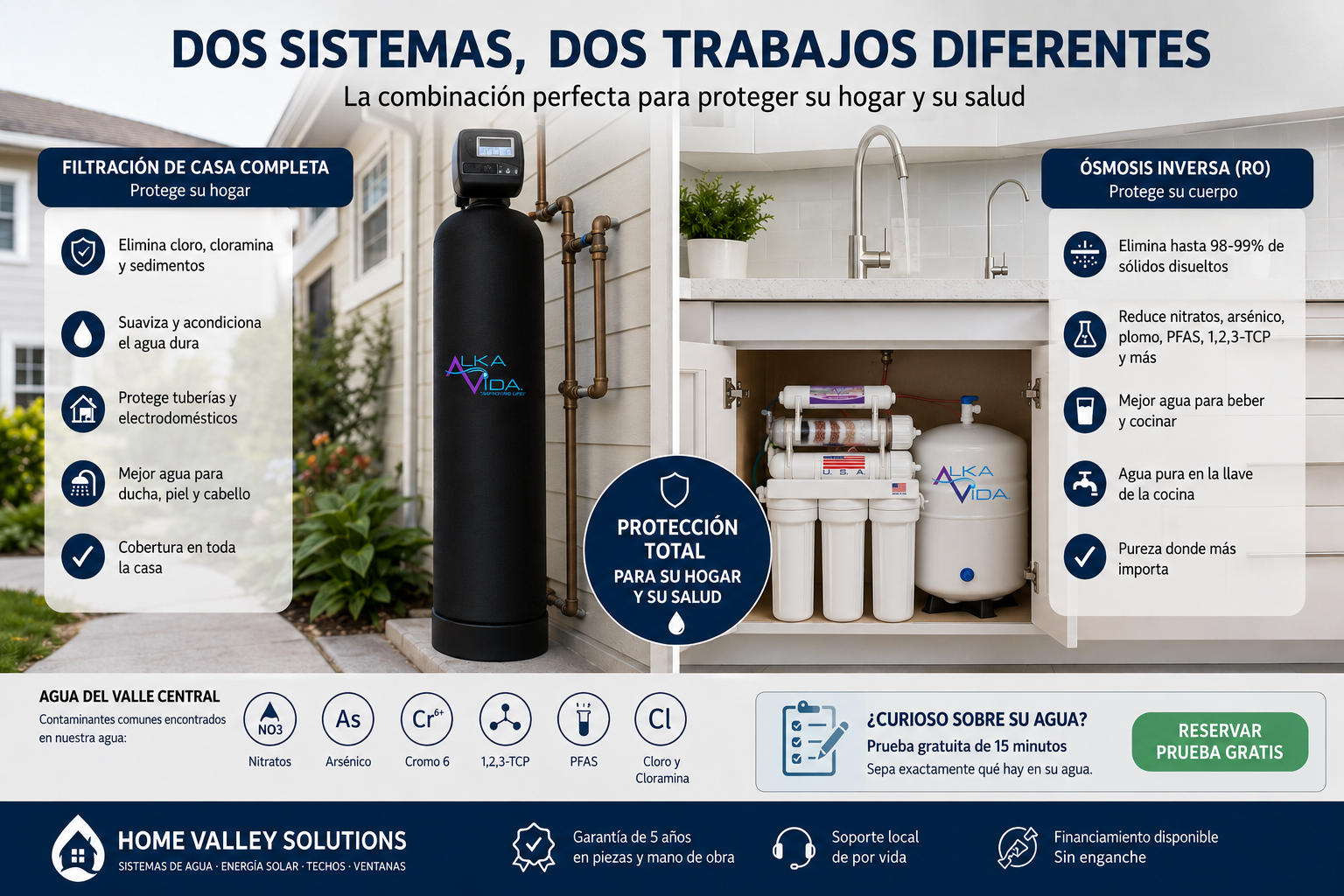
It's the single most common question we hear at kitchen tables across Fresno, Madera, and Merced: "Do I need a whole-house system or reverse osmosis?" The honest answer is that they solve two different problems — and understanding the difference will save you from buying the wrong system twice.
Two Systems, Two Different Jobs
A whole-house filtration system (also called point-of-entry or POE) installs where the water main enters your home. Every drop that reaches every faucet, shower, washing machine, and water heater passes through it first. Its job is protection at volume: removing chlorine and chloramine, reducing sediment, and conditioning the hardness that runs 15–25+ grains per gallon across the Central Valley.
A reverse osmosis (RO) system (point-of-use or POU) installs under one sink — usually the kitchen. It forces water through a semipermeable membrane with pores around 0.0001 microns, stripping out up to 98–99% of dissolved solids: nitrates, arsenic, hexavalent chromium, lead, PFAS, and the 1,2,3-TCP that shows up in Valley groundwater. Its job is purity at the tap you drink and cook from.
The shorthand: whole-house protects your home; reverse osmosis protects your body.
Side-by-Side Comparison
| Whole-House Filtration | Reverse Osmosis | |
|---|---|---|
| Coverage | Every faucet & appliance | One tap (kitchen) |
| Removes chlorine/chloramine | ✅ Excellent | ✅ Yes (at one tap) |
| Softens / conditions hard water | ✅ Yes | ❌ No |
| Removes nitrates & arsenic | ❌ Not reliably | ✅ 95–99% |
| Removes PFAS & 1,2,3-TCP | Partial (carbon-dependent) | ✅ Strong reduction |
| Protects pipes & appliances | ✅ Yes | ❌ No |
| Better shower/skin/hair water | ✅ Yes | ❌ No |
| Water waste | None | 1–4 gal per gal (older units) |
| Typical installed cost (Valley, 2026) | $2,500–$7,500 | $400–$1,500 |
Neither column wins outright — because they aren't competing for the same job.
Where each one falls short
A whole-house carbon system will not reliably remove nitrates — the number-one agricultural contaminant in San Joaquin Valley groundwater. And an under-sink RO does nothing for the hard water destroying your water heater, spotting your dishes, and drying out your skin in every shower. Buying only one system usually means the other problem is still running through your house.
What Central Valley Water Actually Contains
This decision is regional. EWG Tap Water Database records for Valley utilities routinely show nitrate, arsenic, 1,2,3-TCP, hexavalent chromium, and disinfection byproducts above health guidelines — even when the water is fully legal. Legal limits and health guidelines are not the same thing: many EWG health guidelines are hundreds of times stricter than the enforceable federal maximums.
Hardness is the second regional reality. Most Valley cities sit between 15 and 25+ grains per gallon — 'very hard' on any scale. That's why appliance warranties die early here, why swamp coolers scale up, and why bottled-water spending runs so high.
Enter your ZIP on our Water Score tool to see the exact EWG record for your utility — contaminant counts, multiples above guidelines, and the source data.
The Real Answer for Most Valley Homes: Both, as One Platform
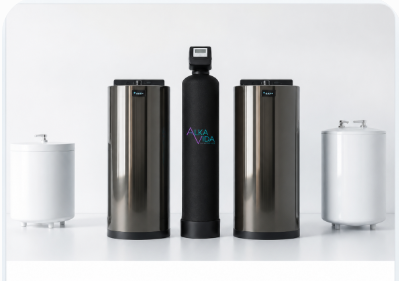
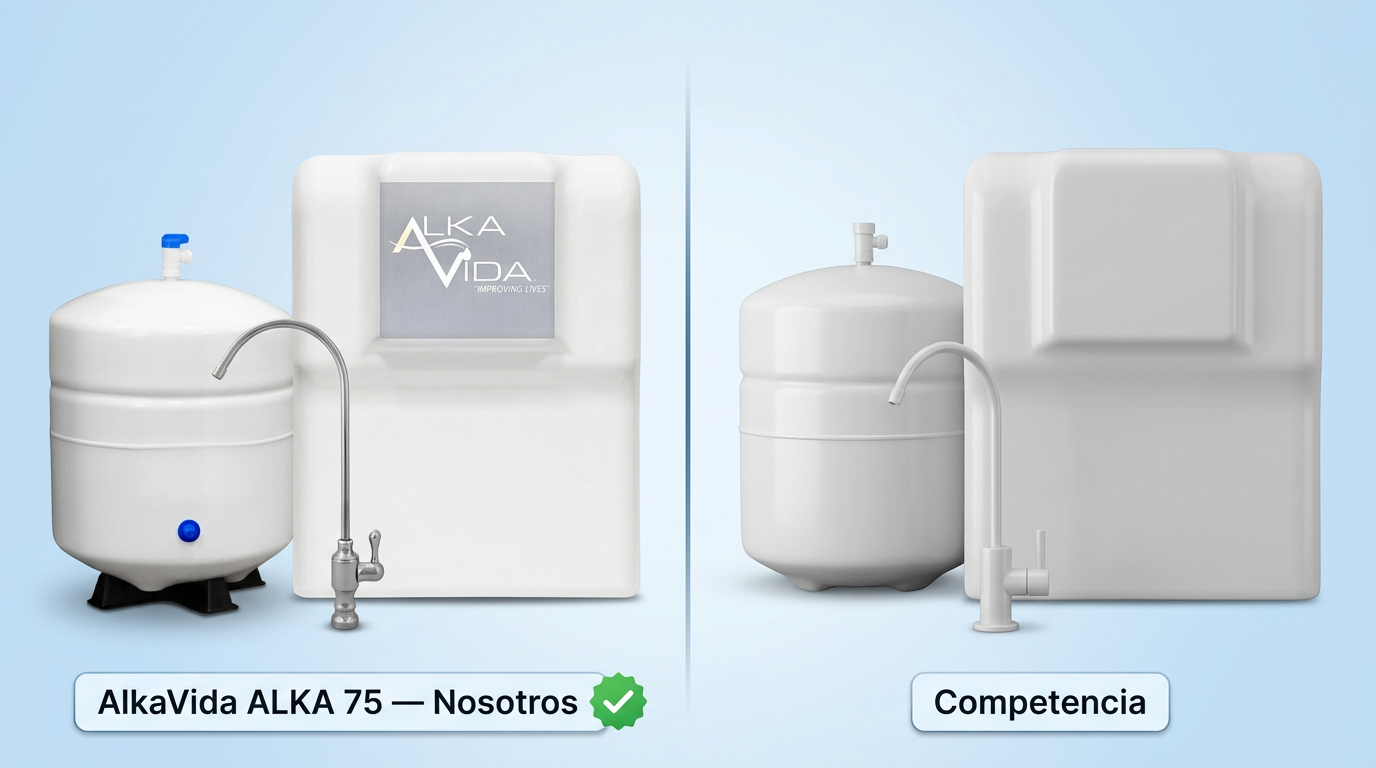
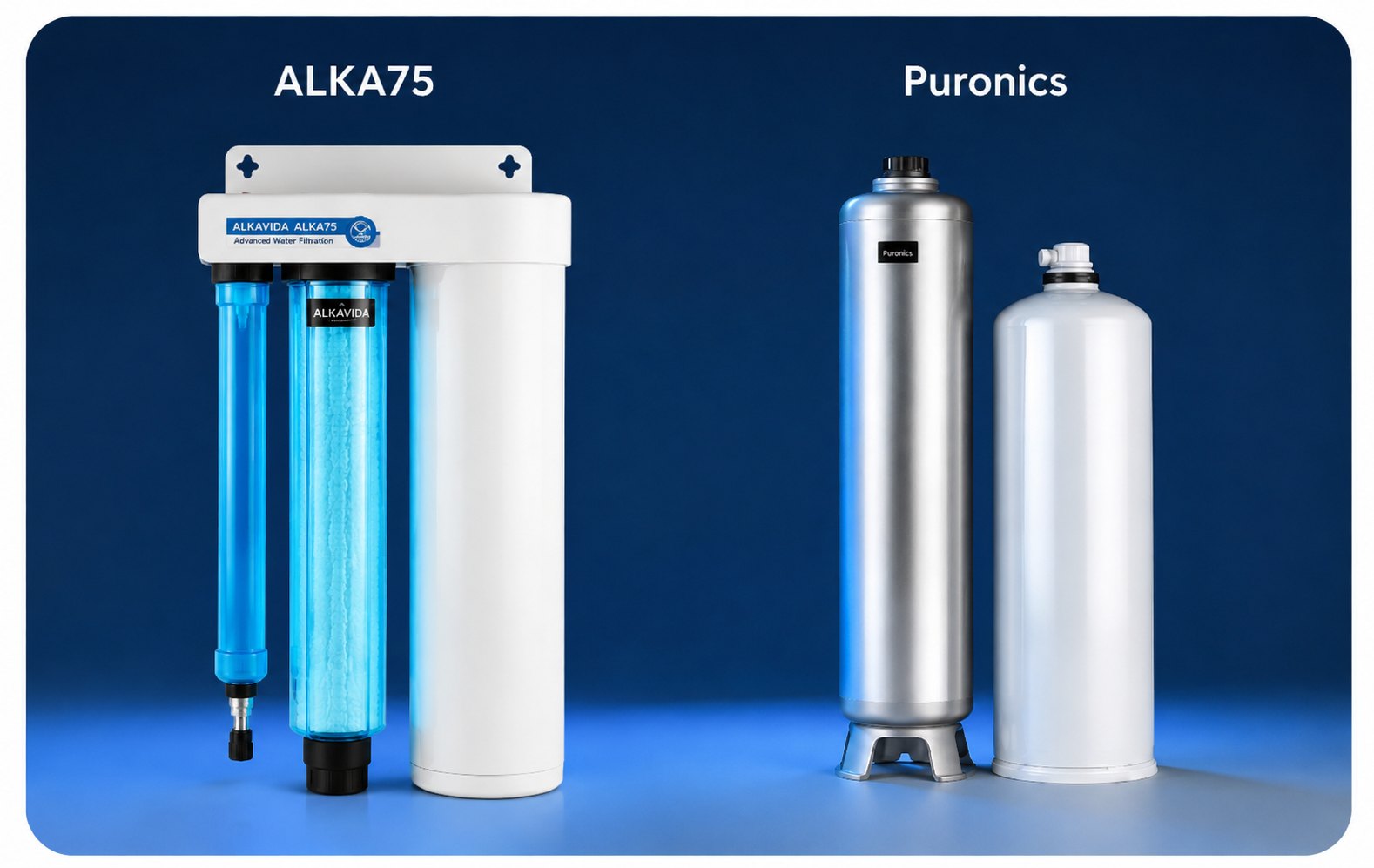
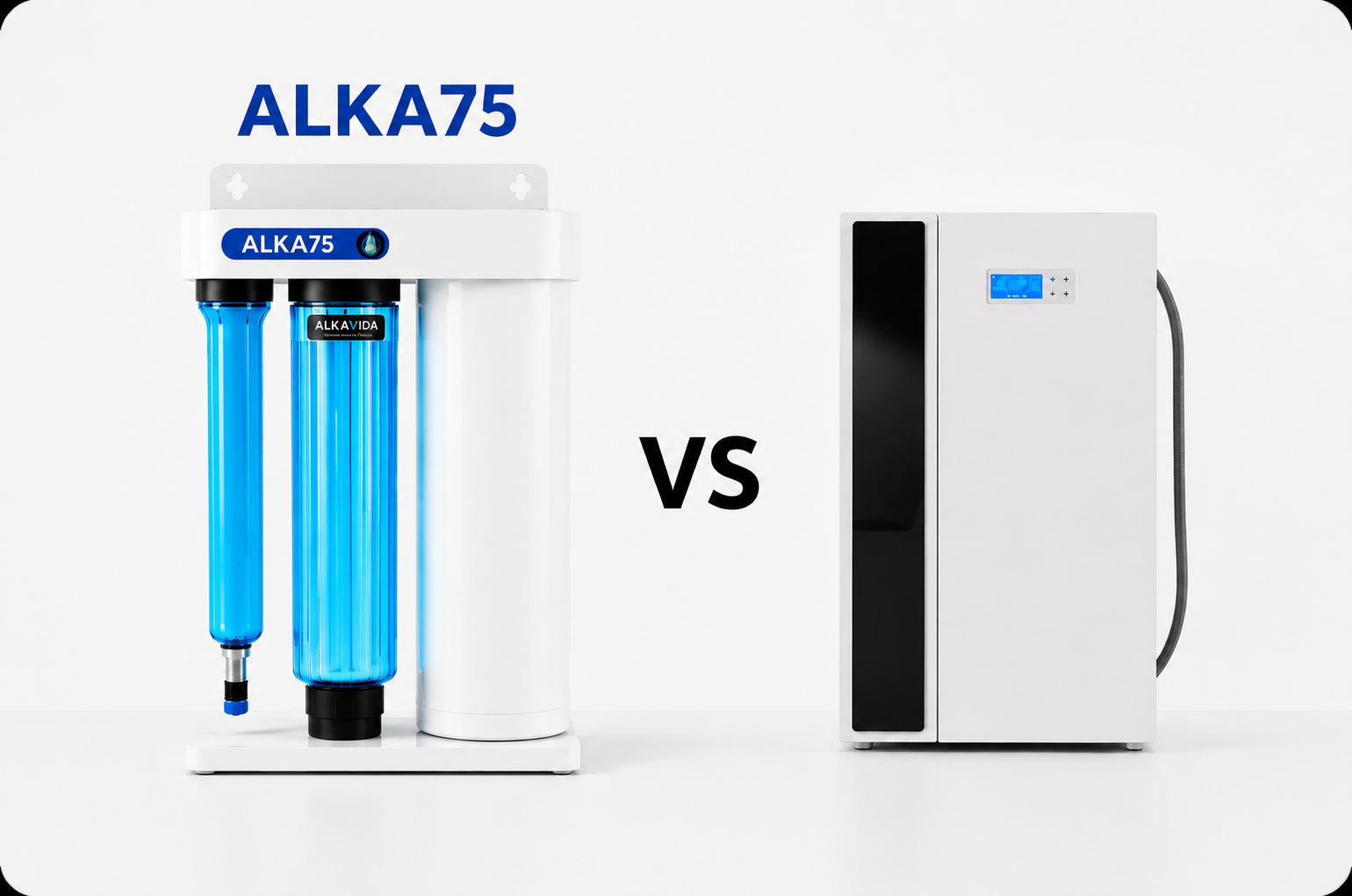
For the majority of homes we test, the right architecture is a whole-house system conditioning and dechlorinating every drop, with an RO + remineralization stage at the kitchen tap for drinking and cooking. That's exactly how the ALKA75 platform we install is engineered: 22 stages ending in alkaline, mineral-restored drinking water at pH 8.5–9.5, backed by a 5-year parts-and-labor warranty and lifetime local support.
Doing it as one integrated install instead of two separate purchases matters: one crew, one warranty, one service number — and the RO membrane lasts dramatically longer because the whole-house stages have already removed the chlorine and sediment that destroy membranes.
Cost, Financing, and What to Do Next
Installed 2026 pricing in our service area: standalone whole-house systems typically run $2,500–$7,500; quality under-sink RO $400–$1,500; integrated platforms are custom-quoted after a free in-home water test, with $0-down financing and payment plans available — use our 60-second financing pre-qualifier to see a comfortable monthly range before anyone visits your home.
Start with the free 15-point water test. It measures your actual hardness, chlorine, TDS, and nitrate levels, so you're sizing a system to your water — not to a sales pitch. It takes about 20 minutes, in English or Spanish, and there's zero obligation.
Ready to Improve Your Water Quality?
Get a free water test and discover how we can help you.