Modesto, the heart of California's Stanislaus County, faces significant water quality challenges that directly impact the health and safety of over 218,000 residents. As one of the nation's most productive agricultural regions, decades of intensive farming have introduced complex contaminants into the local water supply.
Understanding what flows through your taps is essential for protecting your family. This comprehensive guide examines Modesto's unique water quality situation, the specific contaminants threatening local water supplies, and proven filtration solutions that have helped thousands of Central Valley families ensure their water is safe.
Modesto's Water Sources: Tuolumne River and Groundwater
Modesto's drinking water comes from two primary sources, each with distinct quality characteristics and contamination risks:
Tuolumne River Surface Water: Approximately 60-70% of Modesto's water supply originates from the Tuolumne River, which flows from Yosemite National Park through the Central Valley. The river is captured at Don Pedro Reservoir and treated at the Modesto Regional Water Treatment Plant before distribution.
While the Tuolumne River generally provides higher-quality water than groundwater, it faces contamination from agricultural runoff, particularly during irrigation season (April-October) when fertilizers, pesticides, and sediment wash into the river system. Spring snowmelt also carries accumulated pollutants downstream.
Groundwater from Local Aquifers: During drought years and peak demand periods, Modesto increases reliance on groundwater from the Turlock-Modesto aquifer system. This groundwater source has been significantly impacted by decades of agricultural chemical application, including fertilizers, fumigants, and pesticides.
The aquifer shows elevated levels of nitrates, 1,2,3-TCP, and DBCP—legacy contaminants from agricultural practices dating back to the 1950s-1980s. These compounds persist in groundwater for decades, creating long-term contamination issues even after the chemicals were banned.
Blended System Challenges: Modesto operates a blended water system, mixing surface and groundwater based on availability, cost, and seasonal demand. This means contaminant levels in your tap water can vary significantly throughout the year, making consistent quality challenging to maintain.
Residents in east and southeast Modesto typically receive more groundwater, while north and west areas receive predominantly Tuolumne River water. Understanding your neighborhood's primary water source helps you assess your specific contamination risks.
Major Contaminants in Modesto's Drinking Water
Recent water quality reports, EPA compliance data, and independent testing reveal several concerning contaminants in Modesto's water supply:
Nitrates: Critical Agricultural Contamination
Nitrate contamination represents the most widespread water quality threat in Modesto and Stanislaus County. Levels frequently approach or exceed the EPA's Maximum Contaminant Level (MCL) of 10 mg/L, particularly in wells serving agricultural and semi-rural areas. **Sources of Nitrate Contamination:** Stanislaus County's intensive agriculture drives nitrate pollution: • Over 400,000 tons of nitrogen fertilizer applied annually • Large-scale dairy operations with manure management challenges • Aging septic systems in unincorporated areas • Irrigation water containing dissolved fertilizers **Health Risks:** Nitrates pose severe health risks, particularly for vulnerable populations: • Infants under 6 months: "Blue baby syndrome" (methemoglobinemia) prevents blood from carrying adequate oxygen—potentially fatal • Pregnant women: Increased risk of miscarriage, preterm birth, and birth defects • Adults: Long-term exposure linked to thyroid dysfunction, increased cancer risk, and cardiovascular problems • Children: Elevated cancer risk and potential developmental impacts **Geographic Distribution:** Highest nitrate levels occur in: • East Modesto neighborhoods near agricultural areas • Southeast Modesto near Ceres border • Rural well systems outside city limits • Areas with high concentration of dairy operations Some private wells in rural Stanislaus County show nitrate levels of 15-20 mg/L—nearly double the safe limit.
1,2,3-Trichloropropane (1,2,3-TCP): The Silent Carcinogen
This industrial solvent and pesticide ingredient haunts California's agricultural regions decades after being banned. Modesto-area groundwater shows persistent 1,2,3-TCP contamination that threatens long-term health. **Sources and Persistence:** • Used extensively as a soil fumigant in California agriculture from 1950s-1980s • Applied to combat nematodes in almond orchards, vineyards, and vegetable crops • Despite being banned in the 1980s, 1,2,3-TCP persists due to its chemical stability • Degrades extremely slowly in groundwater—half-life of 10-20 years **Detection Levels in Modesto:** Recent testing shows: • 15-25% of groundwater wells contain detectable 1,2,3-TCP • Concentrations range from 0.005 to 0.03 parts per trillion (ppt) • California's response level: 5 ppt **Health Concerns:** The EPA classifies 1,2,3-TCP as a probable human carcinogen: • No safe exposure level established • Linked to liver and kidney cancers • May cause reproductive and developmental problems
DBCP and Arsenic
DBCP, a banned nematicide, continues contaminating Modesto-area groundwater 40+ years after prohibition. Arsenic, both naturally occurring and from historical pesticide use, affects 25-35% of local groundwater wells. These persistent contaminants require advanced filtration like reverse osmosis for effective removal. Learn more about comprehensive solutions at our [water filtration page](/services/water-filtration) and [página de filtración de agua](/servicios/filtracion-de-agua).
Health Impacts on Modesto Families
The cumulative effects of water contamination create serious health concerns for Stanislaus County residents:
Children and Infants at Greatest Risk: Young bodies are more vulnerable to contaminant exposure: • Drink more water relative to body weight (50-100% more than adults) • Developing organs more susceptible to damage • Nitrates pose immediate, potentially fatal threat to infants
Pregnant Women: Water contamination increases risks during pregnancy including miscarriage, preterm birth, and birth defects.
Chronic Disease Links: Long-term consumption contributes to elevated cancer rates, thyroid disease, cardiovascular disease, and kidney problems in areas with documented water quality issues.
Water Filtration Solutions for Modesto Homes
Given Modesto's unique contamination challenges, home water treatment systems provide essential protection:
Reverse Osmosis Systems: Maximum Protection
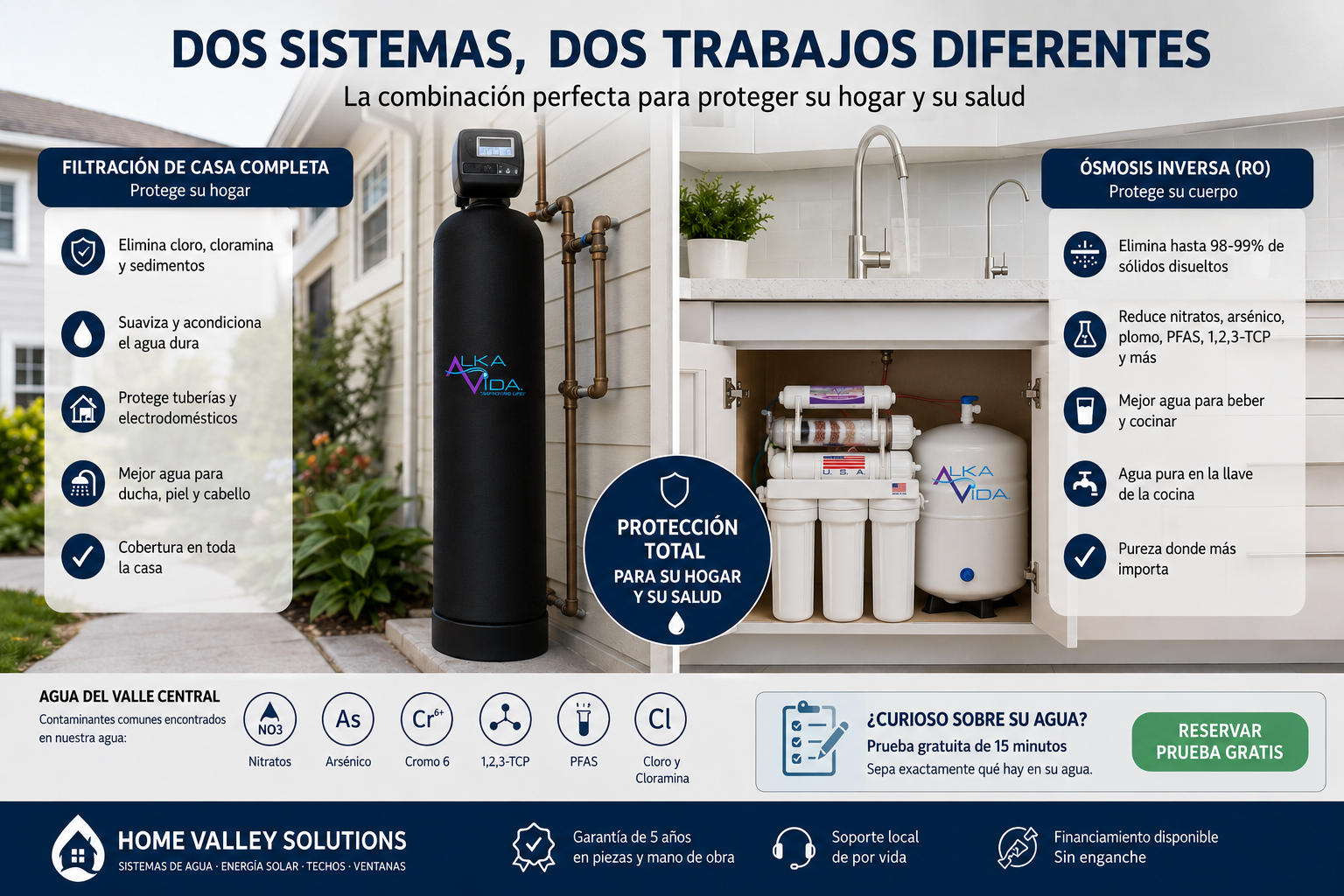
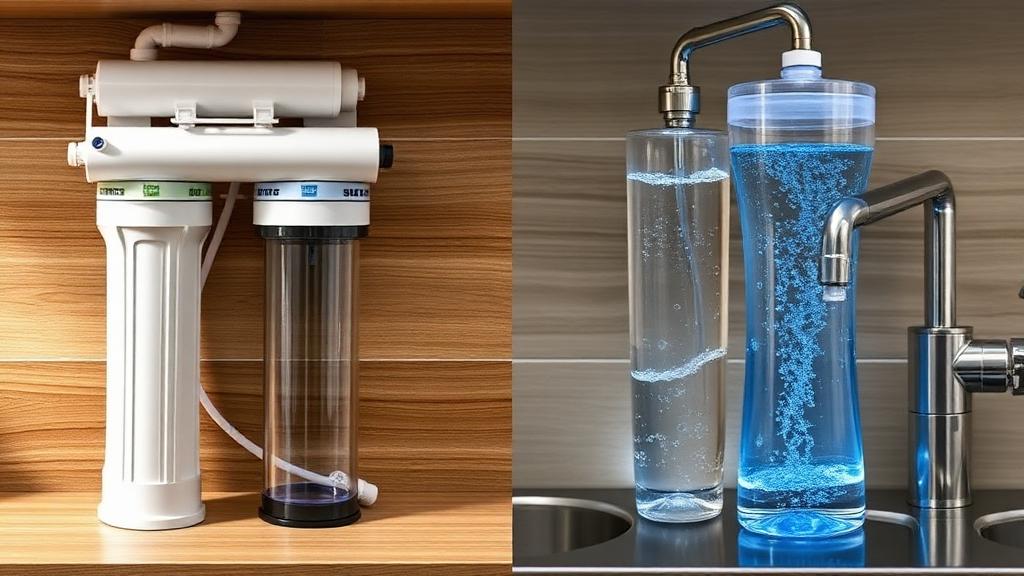
Reverse osmosis (RO) provides the most comprehensive treatment for Modesto's water contaminants: **What RO Removes:** • 95-99% of nitrates • 99%+ of 1,2,3-TCP and DBCP • 95-99% of arsenic • 85-95% of disinfection byproducts (THMs, HAAs) **System Options:** • Under-sink point-of-use: $300-$800 installed • Whole-house RO systems: $3,000-$6,000 installed Our [reverse osmosis systems](/services/reverse-osmosis) and [sistemas de ósmosis inversa](/servicios/osmosis-inversa) are specifically designed to handle Modesto's challenging water composition.
Whole House Water Filtration
Comprehensive protection for every tap: **Multi-Stage Process:** 1. Sediment pre-filter removes particles and debris 2. Carbon filtration removes chlorine, pesticides, and organic compounds 3. Catalytic carbon targets chloramines and disinfection byproducts 4. Optional specialty media for nitrates, arsenic, or heavy metals Visit our [Modesto water filtration page](/services/water-filtration-modesto) or [página de filtración de agua de Modesto](/servicios/filtracion-agua-modesto) for detailed recommendations.
Why Modesto Families Choose Home Valley Solutions
As Stanislaus County's trusted water quality experts since 2015, we understand the Central Valley's unique challenges:
Our Modesto Expertise: • Free comprehensive water testing • Customized system recommendations • Professional installation by licensed contractors • Ongoing maintenance services • Emergency water quality service
Proven Track Record: We've installed systems in thousands of Modesto and Stanislaus County homes, consistently achieving: • Nitrate reduction from 15 mg/L to <1 mg/L • Complete elimination of 1,2,3-TCP detection • 95%+ reduction in total dissolved solids
Certifications: • NSF/ANSI certified equipment • California contractor license • 5-year warranty on systems • 90-day satisfaction guarantee
Take Action: Protect Your Family Today
Every day you wait is another day your family is exposed to potentially harmful contaminants.
Your Next Steps: 1. Schedule Free Water Testing: We'll test for nitrates, arsenic, TDS, pesticides, pH, and more 2. Review Your Results: Plain-language explanation of what's in your water 3. Get Personalized Recommendations: Based on your test results and household needs 4. Professional Installation: Quick, clean installation with minimal disruption 5. Ongoing Support: Filter reminders, annual testing, 24/7 emergency service
Special Offer for Modesto Residents: • $200 off any whole-house system • Free extended 5-year warranty • Free annual water testing for 3 years
[Schedule your free water test today](/free-water-test) or [programe su prueba de agua gratuita](/prueba-de-agua-gratuita) and join thousands of Stanislaus County families who have taken control of their water quality.
Contact Home Valley Solutions: Phone: (559) 507-6838 WhatsApp: (559) 507-6838
Ready to Improve Your Water Quality?
Get a free water test and discover how we can help you.