
If you live in Los Banos, your water is among the most challenging in all of California. That is not an exaggeration, and it is not a sales tactic — it is what the data shows. With hardness levels that routinely test at 20 to 30+ grains per gallon, documented arsenic concerns in the groundwater supply, widespread private well use throughout the area, and decades of agricultural chemical exposure in the local aquifer, Los Banos homeowners face a combination of water quality challenges that is genuinely more demanding than most cities in the state.
This guide will explain exactly what is in your water, why it matters, what solutions actually work, and how to make a smart decision about the companies and products competing for your business.
The Los Banos Water Situation: An Honest Overview
Los Banos is located in western Merced County, in the San Joaquin Valley. The city takes its name from the Spanish for "the baths" — a reference to historic pools formed by natural springs in the area. Today, Los Banos draws its municipal water supply primarily from local groundwater wells tapping the Central Valley aquifer, with supplemental surface water from the Delta-Mendota Canal system depending on availability and season.
The geology of the western San Joaquin Valley produces some of the hardest water in California. Unlike the Sierra Nevada foothill geology that feeds some other Central Valley communities with moderately hard water, the sedimentary geology of this part of Merced County is loaded with calcium and magnesium carbonate minerals that dissolve readily into groundwater.
Layer on top of that: decades of intensive agriculture in and around Los Banos means the local aquifer has been significantly affected by pesticides, fertilizers, and herbicides. The Westlands Water District, the largest agricultural water district in the country, operates nearby and its history of drainage issues has been extensively studied in the context of groundwater quality.
The result is a water supply that requires serious attention from any homeowner who wants to protect their health, their plumbing, and their appliances.
---
What's in Los Banos Water: The Data
Extremely Hard Water: 20–30+ GPG
Los Banos water is classified as extremely hard by any standard used in the water treatment industry. At 20–30+ grains per gallon (gpg), this is more than twice the threshold for "hard" water (7–10.5 gpg) and nearly three times the national average. Some tested properties in the area and surrounding rural zones come in even higher, particularly those on private wells drawing from shallower portions of the aquifer.
The effects of water this hard are not subtle:
Your water heater: This is the single most expensive immediate impact. A tank water heater operating in 25+ gpg water will develop a significant scale layer inside the tank within 2–3 years. That scale acts as insulation between the burner or heating element and the water, forcing the heater to run longer and hotter to reach temperature. A water heater that should deliver 12 years of service may fail in 5–7 years in Los Banos water conditions without softening. Tankless water heaters, which many homeowners assume are better, are actually more vulnerable to scale damage — the small heat exchanger passageways can clog with mineral buildup much faster than a conventional tank.
Your plumbing: At 20+ gpg, calcium carbonate scale builds up inside supply pipes over time, gradually reducing flow and eventually requiring pipe replacement in extreme cases. This is especially relevant for older homes in Los Banos where galvanized or copper plumbing has been exposed to extremely hard water for decades.
Every water-using appliance: Ice makers, dishwashers, washing machines, coffee makers, humidifiers — all experience dramatically shortened service lives in extremely hard water environments. The mineral deposits aren't just aesthetic; they create mechanical stress, reduce heating efficiency, and block moving parts.
Your daily experience: Showering in 25+ gpg water means the soap never really rinses away. The minerals in the water bind with soap to form calcium soap scum that deposits on your skin, your hair, and every surface the water touches. People in Los Banos with untreated water often spend significantly more on cleaning products, descaler solutions, and personal care products than they would with treated water.
Arsenic in Los Banos Groundwater
Arsenic is a naturally occurring element found in the rocks and soils of many California geological formations. In parts of the San Joaquin Valley, including the Los Banos area, groundwater arsenic levels have been a documented concern for decades.
The EPA maximum contaminant level (MCL) for arsenic is 10 parts per billion (ppb). However, the MCLG — the goal level considered truly safe — is zero. The gap between the legally enforceable limit and the health goal exists because of the practical challenges and costs of achieving zero arsenic in large community water systems. But zero is what the science points to for safety.
For Los Banos municipal water users: the city tests for arsenic and must report exceedances. Historical data for smaller San Joaquin Valley water systems has shown documented instances of arsenic above or near the MCL. Check the most recent Consumer Confidence Report for current levels.
For private well users: You have no regulatory safety net. Arsenic in private wells is entirely your responsibility to detect and address. Given the geology of the Los Banos area, testing for arsenic is not optional — it is a health necessity, particularly for households with children, pregnant women, or long-term residents who have been drinking well water without testing.
Health impact of arsenic: Long-term low-level arsenic exposure is associated with increased risk of bladder, lung, and skin cancers. It has also been linked to cardiovascular disease, diabetes, and developmental effects in children. There is no safe level — every reduction in arsenic exposure reduces risk.
What removes arsenic: Reverse osmosis is the most effective residential technology for arsenic removal, with typical removal rates of 85–95% for arsenic (V), the most common form in California groundwater. Whole-house arsenic treatment is also possible with specialized media filters for households where arsenic removal at every point of use is needed.
Well Water: Common and Often Untested
A large number of properties in the Los Banos area — including both rural parcels and some older in-town properties — rely on private wells. This is fundamentally different from using municipal water in terms of your protection and your responsibility.
Private wells are not regulated under the Safe Drinking Water Act. No government agency is required to test your well, notify you of problems, or require you to take corrective action. You are the water utility for your property, and the burden is entirely on you.
In the Los Banos context, this matters enormously because:
- Groundwater arsenic is a real risk
- Agricultural chemical infiltration — from pesticides, herbicides, and nitrates — is documented throughout this part of Merced County
- Older wells may have compromised casings that allow surface water infiltration
- The water table in the San Joaquin Valley has been declining for decades due to agricultural pumping, meaning wells that worked fine for years may now be drawing from different aquifer zones with different chemical profiles
Minimum recommended testing for Los Banos area well water: nitrates, arsenic, bacteria (coliform and E. coli), hardness, pH, TDS, and pesticide/herbicide screening if the property is near agricultural land.
Agricultural Chemicals: Nitrates and Beyond
Los Banos sits in the heart of one of the most intensively farmed regions in the world. The crops grown in western Merced County — cotton, tomatoes, grain, and various vegetables — rely on significant inputs of nitrogen-based fertilizers. Over decades, these nitrates have percolated through the soil and into the groundwater.
Nitrate testing for the Los Banos area consistently shows that groundwater is vulnerable. The EPA MCL of 10 mg/L (as nitrogen) has been exceeded in various San Joaquin Valley communities, and the trend in the Central Valley is not improving.
Beyond nitrates, agricultural areas also see groundwater contamination from pesticide and herbicide residues. While many of these compounds are tested for at the municipal level, private well users bear full responsibility for their own detection and treatment.
TDS and General Water Quality
Total Dissolved Solids in Los Banos water is elevated, reflecting both the high hardness and the additional dissolved minerals and agricultural compounds present. TDS levels above 500 ppm are common in the area, particularly in private wells. This affects the taste and quality of water used for drinking, cooking, and beverages.
---
Filtration Solutions for Los Banos Homeowners
Given the severity and complexity of Los Banos water quality issues, effective treatment requires a more comprehensive approach than most California cities. Here is what actually works:
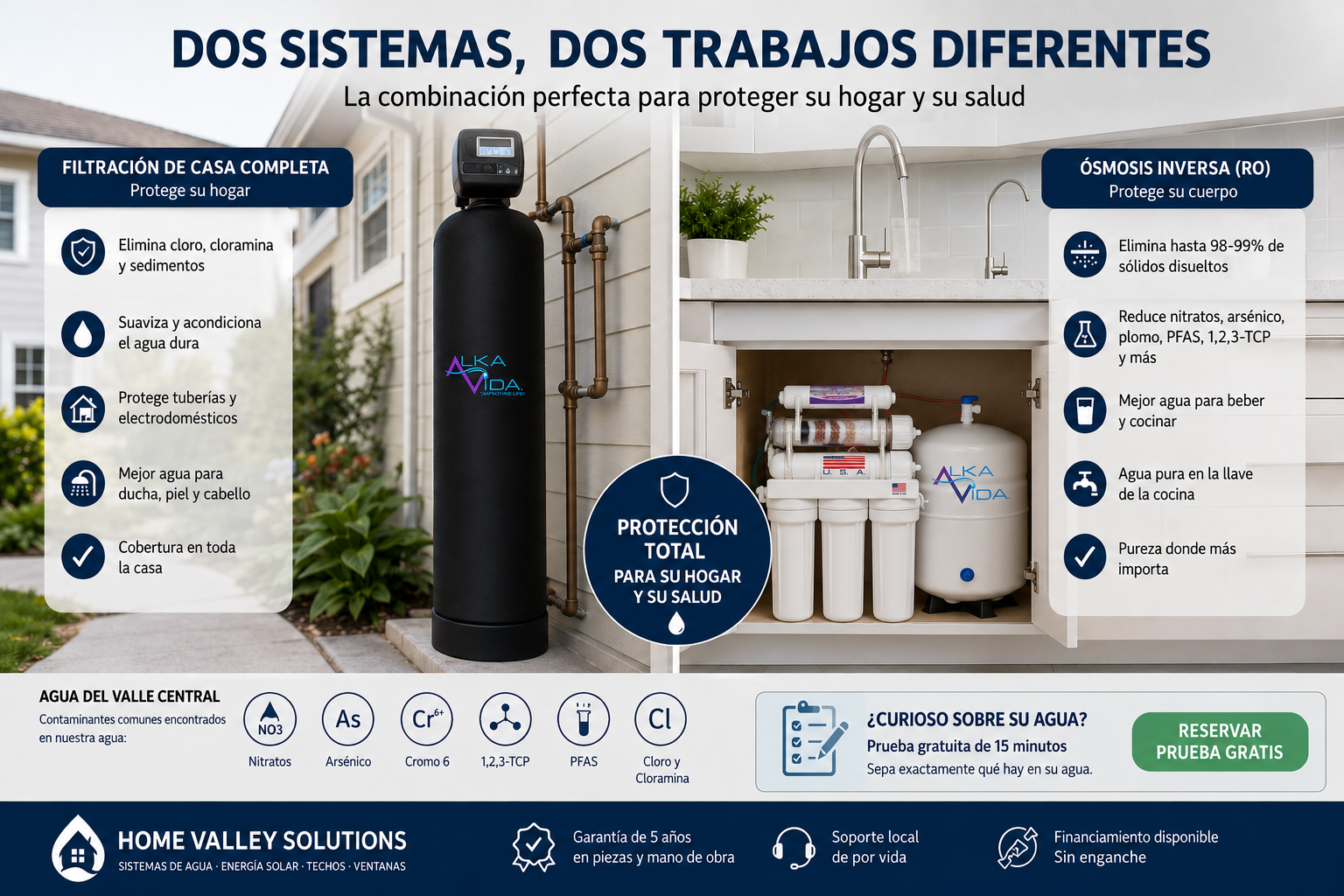
Foundation Layer: Whole-House Water Softener
For Los Banos's 20–30+ gpg water, a water softener is not optional if you want to protect your home and appliances. At this hardness level, the damage is fast and severe. A quality salt-based ion exchange softener will:
- Eliminate scale buildup throughout your home
- Protect your water heater (at Los Banos hardness levels, this protection is worth hundreds of dollars per year in extended appliance life)
- Make every water-using appliance last significantly longer
- Transform your shower and bath experience
- Reduce soap, detergent, and cleaning product consumption substantially
For Los Banos hardness levels, system sizing is critical. You need a softener with adequate resin capacity to handle both the volume of water your household uses and the exceptionally high mineral load of the water. Undersizing a softener for Los Banos water is a serious mistake — the system will run out of capacity too quickly and regenerate too frequently, wearing out the resin and the valve mechanism faster. A 48,000–64,000 grain capacity system is appropriate for most Los Banos homes.
[See our whole-house water filtration solutions](/services/water-filtration?utm_source=blog&utm_medium=seo&utm_campaign=comparison_blogs&utm_content=los-banos-hard-water-solutions)
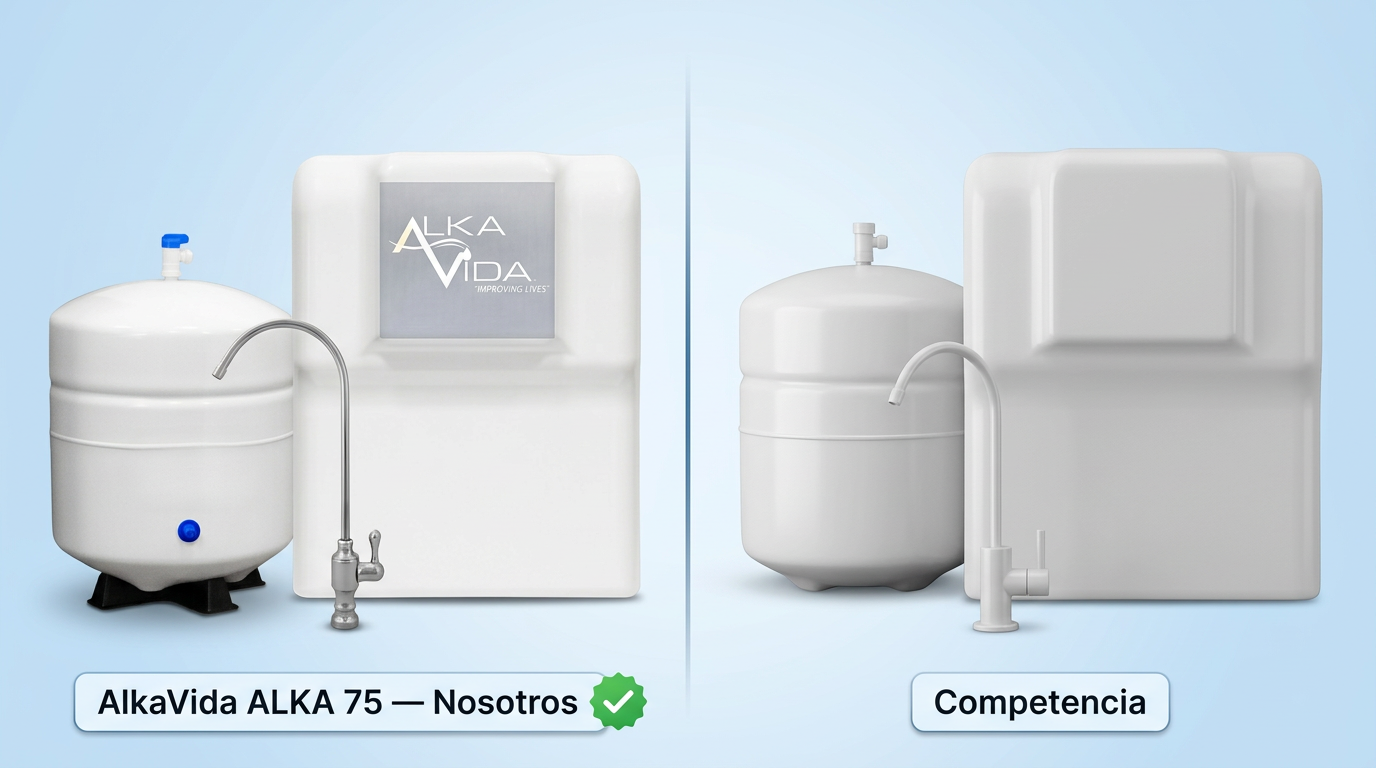
Critical Layer: Reverse Osmosis for Drinking Water
Given Los Banos's arsenic concerns and nitrate risks, a reverse osmosis system for drinking water is not a luxury — it is a health protection measure. A quality 5- or 6-stage undersink RO system will remove:
- Arsenic (85–95% removal)
- Nitrates (85–95% removal)
- TDS
- Heavy metals
- Chloramines and chlorine
- Most bacteria and parasites
- A broad range of agricultural chemicals
For Los Banos well water users, RO is the most important investment you can make in the safety of what your family drinks and cooks with. The arsenic risk alone justifies it.
RO systems require periodic maintenance: pre-filters every 6–12 months, post-carbon filter annually, and membrane replacement every 2–3 years. The total annual maintenance cost is typically $50–$150, far less than the cost of bottled water for a family.
[Learn about our reverse osmosis systems for Los Banos homes](/services/reverse-osmosis?utm_source=blog&utm_medium=seo&utm_campaign=comparison_blogs&utm_content=los-banos-hard-water-solutions)
Additional Layer for Well Water: Sediment and Carbon Filtration
Well water users in Los Banos should also consider:
Whole-house sediment filter: A pleated or wound cartridge sediment filter (10–25 micron) installed at the point where water enters the house removes sand, silt, and particulate matter. This protects the softener resin from particulate damage and extends the life of all downstream equipment.
Whole-house catalytic activated carbon: For agricultural chemical taste and odor issues, a catalytic carbon filter stage addresses VOCs, pesticide residues that affect taste, and improves overall water odor. Standard activated carbon is less effective on chloramines; catalytic carbon handles both.
Arsenic Specialty Treatment
If municipal testing or your private well test shows arsenic levels that concern you — particularly if you are near or above 5 ppb — whole-house arsenic removal with a specialized iron-based media filter may be appropriate in addition to the RO system at the kitchen sink. This is a more advanced and expensive solution, but for high-arsenic wells it may be warranted. HVS can advise on this based on your actual test results.
Alkaline Water
After treatment removes contaminants, some Los Banos homeowners choose to add alkalinization to their drinking water. The AlkaVida alkaline water system from Home Valley Solutions produces filtered, alkaline water in the 8.0–9.5 pH range for drinking and cooking.
[Explore alkaline water options](/services/alkaline-water?utm_source=blog&utm_medium=seo&utm_campaign=comparison_blogs&utm_content=los-banos-hard-water-solutions)
---
Water Treatment Company Comparison: Who Serves Los Banos?
Several companies compete for the Los Banos water treatment market. Here is what you need to know about each.
Culligan
Culligan's Central Valley dealer network extends to Los Banos and Merced County. They offer the full range of softening, filtration, and RO products.
Honest assessment: Culligan's brand recognition is real, but it comes at a price. Their in-home sales process is structured to close deals at premium prices. Monthly rental agreements, while attractive upfront, often cost 2–3x the equipment purchase price over their term. For Los Banos homeowners who need substantial multi-stage treatment, the cost difference between Culligan and a quality local provider can be several thousand dollars. If you do engage with Culligan, get a competing quote before signing anything.
RainSoft
RainSoft dealers are active in the Central Valley and will serve Los Banos. Their systems are technically capable, particularly for challenging water.
Honest assessment: The sales model is the primary concern. RainSoft's in-home demonstration process is designed to be lengthy and to close on the day of the visit. Prices are set at a significant premium over market with "day-of" discounts that create false urgency. The systems can be good; the buying experience often is not. Multiple consumer complaints across California relate to the pressure tactics rather than the products themselves.
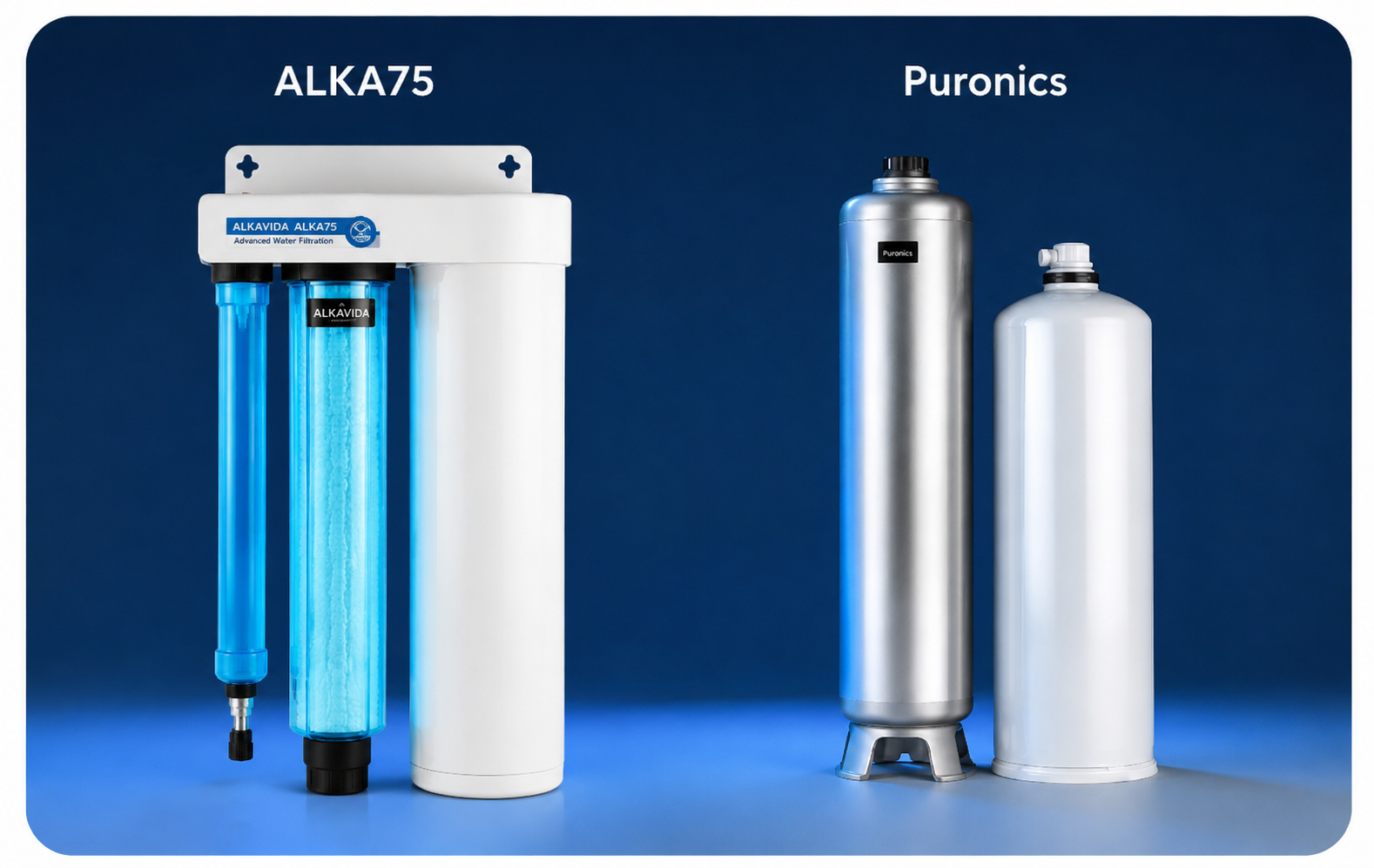
Puronics
Puronics is a California company with specific experience in Central Valley hard water, which makes them more relevant to the Los Banos market than some national brands.
Honest assessment: The California focus and the hard water expertise are legitimate differentiators. The pricing model follows the same premium structure as RainSoft, with in-home presentations designed to close at high prices. Worth understanding the technology, less worth engaging with the sales process without a competing quote in hand.
Kinetico
Kinetico's twin-tank, non-electric softeners are well-suited to extreme hard water applications like Los Banos. The demand-initiated regeneration means the system only regenerates when it needs to based on actual water usage, which is more efficient in high-hardness situations.
Honest assessment: For the softener component specifically, Kinetico makes a strong technical argument. Their pricing is premium but more transparent than some competitors. For Los Banos's multi-contaminant situation, you'll want to verify that the dealer can provide a complete solution — softener plus arsenic-capable RO plus carbon filtration — not just the softener.
EcoWater
EcoWater offers quality systems with smart monitoring features. Their dealer network covers the broader Central Valley.
Honest assessment: Solid equipment, smart home integration for those who want it, dealer-dependent service quality. A mid-to-upper range option that competes on technology features.
Generation H2O
Regional operator with Central Valley focus. More competitive pricing than the national franchise brands.
Honest assessment: A legitimate middle-market option. For Los Banos's complex water situation — hard water plus arsenic plus agricultural chemicals — verify that they have specific experience with multi-stage treatment and arsenic removal before committing.
559 Water Filters
Entry-level regional operator. Budget-oriented.
Honest assessment: Low prices, limited support, and limited expertise for complex situations. Not the right choice for Los Banos's arsenic and agricultural chemical concerns, which require specialized knowledge.
A-1 Water Quality
Established Central Valley operator, primarily softener-focused.
Honest assessment: Fine for straightforward softener installations. For the full multi-stage treatment that Los Banos's water profile requires, verify their capability with arsenic-specific treatment before proceeding.
Clean Valley Water
Regional operator with Central Valley presence.
Honest assessment: Competitive pricing, local focus. Same verification recommended as A-1 for complex multi-contaminant treatment.
Home Valley Solutions
Home Valley Solutions is the locally owned, bilingual water treatment company for Central Valley homeowners. For Los Banos specifically, HVS brings several things that matter:
Free water testing first: Before recommending anything, HVS tests your actual water. In Los Banos, where water quality varies between municipal customers and well users, and where arsenic levels vary by location and depth, this matters more than anywhere. You get a recommendation based on your specific water, not a template solution.
Multi-stage capability: HVS installs the complete treatment suite that Los Banos homes often need — whole-house softening, whole-house carbon filtration, undersink RO (with arsenic-capable membranes), and the AlkaVida alkaline water system.
Bilingual service: A substantial portion of Los Banos residents are Spanish-speaking. HVS serves you in the language you're most comfortable with, from the initial consultation through installation and maintenance.
No pressure: HVS doesn't use commissioned sales structures or high-pressure closing tactics. You get honest information and a recommendation that fits what your water actually needs.
[Schedule your free Los Banos water test](/free-water-test?utm_source=blog&utm_medium=seo&utm_campaign=comparison_blogs&utm_content=los-banos-hard-water-solutions)
---
Reading Los Banos's Consumer Confidence Report
The City of Los Banos publishes an annual Consumer Confidence Report (CCR). This document is your primary resource for understanding what the city tests for and what it finds. Look for it on the city's website or request it from the public works department.
Key areas to examine:
Arsenic levels: Given the local geology, this is the first number to look at. Any detection above 5 ppb warrants attention. At 10 ppb (the MCL), action is appropriate.
Nitrate levels: Compare to the 10 mg/L MCL. Seasonal variation is common in communities that blend multiple well sources.
Hardness: Not always listed in CCRs as a primary contaminant (it's a secondary standard), but some cities include it. If listed, anything above 180 mg/L (about 10.5 gpg) warrants softening.
Disinfection byproducts: Trihalomethanes and haloacetic acids — compare to EPA limits.
Violation history: Past violations tell you whether the system has struggled with compliance. A history of arsenic or nitrate violations indicates a more urgent situation.
Well users: The CCR does not cover your private well. For Los Banos area wells, seek a certified laboratory test covering the contaminants described in this guide.
---
The True Cost of Extreme Hard Water in Los Banos
The economics of water treatment in Los Banos are unusually compelling because the untreated water is unusually damaging. Consider the math:
Water heater damage:
- Lifespan without softening in 25+ gpg water: 6–8 years
- Lifespan with quality softening: 15–20+ years
- Replacement cost saved: $800–$1,500 per heater, per decade
Energy cost of scaling:
- A heavily scaled water heater can use 30–50% more energy
- At Los Banos hardness levels, scaling is aggressive
- Energy waste over 10 years: $2,000–$5,000 depending on fuel type and usage
Appliance replacement:
- Dishwashers, washing machines, refrigerators: all fail earlier in extreme hard water
- Conservative estimate over 10 years: $1,000–$3,000 in premature replacements
Bottled water:
- A family buying bottled water because tap tastes bad: $600–$1,200/year
- Over 10 years: $6,000–$12,000
Total untreated cost estimate over 10 years: $9,800–$21,500
Against this, a complete whole-house softener plus RO system typically costs $3,000–$6,500 installed, with maintenance running $100–$200 per year. The investment pays for itself, and then keeps paying.
---
Frequently Asked Questions: Los Banos Water
How hard is Los Banos water exactly? Municipal water in Los Banos typically tests between 20 and 30+ grains per gallon (gpg). This is classified as extremely hard and is among the highest hardness levels in residential water supplies in California. Private wells in the area can test even higher.
Is arsenic in my water? For municipal water, check the most recent Consumer Confidence Report from the City of Los Banos. For private well water, you must test independently. The Los Banos area's geology is associated with natural arsenic presence in groundwater. Testing is the only way to know your specific level.
What's the best water filter for Los Banos? For comprehensive protection in Los Banos, the recommended approach is: (1) whole-house water softener with appropriate capacity for extreme hard water, (2) whole-house catalytic carbon filtration, (3) undersink reverse osmosis for drinking water with arsenic-rated membranes. This addresses hardness, agricultural chemicals, and the specific arsenic risk.
Does softened water remove arsenic? No. Water softeners are designed for hardness minerals (calcium and magnesium) and do not remove arsenic. You need reverse osmosis or a specialty arsenic media filter for arsenic removal.
Is Los Banos well water safe? Well water safety in Los Banos cannot be assumed — it must be verified through testing. Given the area's geology and agricultural history, untested well water carries real risk. Test annually.
Do Spanish-speaking homeowners have service options? Yes. Home Valley Solutions provides fully bilingual water consultation, testing, installation, and service in both English and Spanish throughout the Los Banos area.
---
What To Do Next
If you live in Los Banos — whether on municipal water or a private well — the situation is serious enough that doing nothing is not a neutral choice. Extreme hard water is actively damaging your home right now. If you're on a well, you may be drinking arsenic or nitrates without knowing it.
The right first step is a water test. Not an assumption, not a neighbor's opinion — your actual water, tested with instruments.
Home Valley Solutions provides free in-home water testing for Los Banos homeowners. We come to you, test your water, and give you real numbers. If you need treatment, we'll tell you exactly what and why. If something is out of our scope (like a very high arsenic well requiring specialty equipment), we'll tell you that honestly too.
[Book your free Los Banos water test today](/free-water-test?utm_source=blog&utm_medium=seo&utm_campaign=comparison_blogs&utm_content=los-banos-hard-water-solutions)
[Schedule an appointment at your convenience](/appointment?utm_source=blog&utm_medium=seo&utm_campaign=comparison_blogs&utm_content=los-banos-hard-water-solutions)
Call us: (559) 507-6838 — English and Spanish, no pressure.
[Read our full Central Valley water guide](/water-guide?utm_source=blog&utm_medium=seo&utm_campaign=comparison_blogs&utm_content=los-banos-hard-water-solutions)
---
Home Valley Solutions is a locally owned, bilingual water filtration company serving Los Banos, Merced County, and the Central Valley. We specialize in extreme hard water, well water treatment, reverse osmosis, and the AlkaVida alkaline water system. Free water testing, no pressure, honest answers.
Ready to Improve Your Water Quality?
Get a free water test and discover how we can help you.