If you've noticed white spots on your dishes, soap scum in your shower, or itchy skin after bathing, you're likely dealing with hard water. This common problem affects millions of California homeowners, causing damage to plumbing, reducing appliance efficiency, and creating frustrating daily inconveniences.
The good news? Hard water is completely solvable. This comprehensive guide will help you identify hard water issues, understand their impact, and discover the best solutions for your home.
What is Hard Water?
Hard water contains high concentrations of dissolved minerals, primarily calcium and magnesium. These minerals are picked up as water travels through limestone and chalk deposits underground before reaching your home.
Water hardness is measured in grains per gallon (GPG) or parts per million (PPM):
• Soft Water: 0-3.5 GPG (0-60 PPM) • Slightly Hard: 3.5-7 GPG (61-120 PPM) • Moderately Hard: 7-10.5 GPG (121-180 PPM) • Hard Water: 10.5-14 GPG (181-240 PPM) • Very Hard Water: 14+ GPG (240+ PPM)
Most California cities have water hardness ranging from 7-20 GPG, with some areas like Bakersfield, Modesto, and parts of the Central Valley experiencing very hard water (15-25 GPG).
The minerals themselves aren't harmful to drink, but they cause numerous problems throughout your home as they accumulate and form scale deposits.
How to Identify Hard Water in Your Home
Hard water leaves telltale signs throughout your house. Here's what to look for:
In the Bathroom
• White, chalky residue on faucets and showerheads • Soap scum that's difficult to remove from shower doors and tubs • Bath towels that feel stiff and scratchy after washing • Reduced water pressure from clogged aerators • Difficulty getting soap and shampoo to lather properly • Cloudy spots on mirrors and glass • Bathtub ring that forms quickly
In the Kitchen
• Spots and film on dishes, glassware, and silverware • White buildup inside coffee makers and kettles • Ice cubes that look cloudy • Dishwasher that leaves residue on dishes • Difficulty rinsing dishes clean • Buildup on sink fixtures
On Your Plumbing and Appliances
• Reduced water flow from faucets • Visible scale buildup on visible pipes • Water heater making popping or rumbling sounds • Appliances failing earlier than expected • Increased energy bills (scale reduces efficiency) • Frequent plumbing repairs needed
On Your Body
• Dry, itchy skin after showering • Hair that feels dry, dull, or difficult to manage • Soap residue on skin that doesn't rinse away • Increased need for moisturizers and conditioners • Skin irritation or eczema flare-ups • Colors fading faster on clothing
On Your Laundry
• Clothes feel stiff and rough after washing • Fabrics wear out and fade faster • Whites turn gray or dingy • Need to use more detergent than recommended • Washing machine has visible scale buildup • Towels lose absorbency over time
The Hidden Costs of Hard Water
Hard water is expensive—often costing homeowners thousands of dollars in hidden costs:
Plumbing Damage ($2,000-10,000): Scale buildup inside pipes reduces water flow and increases pressure, eventually leading to pipe damage, leaks, and costly repairs. Replacing corroded pipes and fixtures is expensive.
Appliance Replacement ($3,000-8,000+): Hard water reduces appliance lifespan by 30-50%: • Water heaters: 8-13 years → 5-8 years • Dishwashers: 10 years → 6-7 years • Washing machines: 11 years → 7-8 years • Coffee makers: 5 years → 2-3 years
Energy Waste ($200-500/year): Scale buildup on water heater elements forces your heater to work harder: • 1/4" scale buildup = 40% efficiency loss • 1/2" scale buildup = 70% efficiency loss This translates to $200-500 annually in wasted energy for the average home.
Increased Cleaning Products ($300-500/year): Hard water requires more: • Soap and shampoo (3-4x more for proper lather) • Dish detergent (2-3x recommended amount) • Laundry detergent (2x normal usage) • Specialty cleaners for scale removal • Fabric softeners and conditioners
Personal Care Products ($200-400/year): Dry skin and hair from hard water means buying more: • Moisturizers and lotions • Hair conditioners and treatments • Body washes and specialty soaps
Clothing Replacement ($300-600/year): Hard water damages fabrics, reducing clothing lifespan by 40-50%. You'll replace: • Towels that lose absorbency • Sheets that become scratchy • Clothes that fade and wear out faster
Total Annual Cost: $1,000-2,500+
Over 10 years, hard water can cost $10,000-25,000 in damage, replacement, and increased consumption. A water softener typically costs $1,500-3,500 installed and pays for itself in 1-3 years.
Water Hardness Levels in California Cities
California's diverse geology creates varying hardness levels across the state:
Very Hard Water (15-25+ GPG): • Bakersfield: 18-22 GPG • Modesto: 15-20 GPG • Fresno: 14-18 GPG • Parts of Riverside County: 20-30 GPG • Parts of San Bernardino County: 18-25 GPG
Hard Water (10-14 GPG): • Sacramento: 10-12 GPG • Stockton: 11-14 GPG • San Jose: 8-12 GPG • Parts of Los Angeles: 10-15 GPG
Moderately Hard Water (7-10 GPG): • San Diego: 8-10 GPG • Parts of Orange County: 7-9 GPG • Oakland: 7-9 GPG
Soft to Slightly Hard (0-7 GPG): • San Francisco: 2-4 GPG (benefits from Sierra snowmelt) • Parts of coastal California: 3-6 GPG
Central Valley cities like Fresno, Bakersfield, and Modesto face particularly severe hard water challenges due to groundwater high in dissolved minerals from agricultural areas.
Solutions: Water Softeners vs. Filtration Systems
Two main approaches tackle hard water: water softeners and alternative conditioning systems. Here's how they compare:
Traditional Salt-Based Water Softeners
**How They Work:** Ion exchange process replaces calcium and magnesium with sodium ions **Pros:** • Most effective solution—reduces hardness to near zero • Proven technology used for 100+ years • Protects all plumbing and appliances • Noticeable improvement in soap lathering • Softer skin and hair • NSF certified options available **Cons:** • Requires salt refills (50 lb bags every 1-2 months) • Adds small amount of sodium to water (10-50 mg/L) • Uses water during regeneration cycle • Requires drain connection • Initial cost: $1,500-3,500 installed • Ongoing salt costs: $50-150/year **Best For:** Homes with hard or very hard water (10+ GPG) seeking maximum protection and performance.
Salt-Free Water Conditioners
**How They Work:** Template Assisted Crystallization (TAC) or electromagnetic conditioning prevents minerals from forming scale **Pros:** • No salt required • No drain connection needed • No water waste • Lower maintenance • No sodium added to water • Eco-friendly operation **Cons:** • Doesn't actually remove hardness minerals • Less effective than traditional softeners • Doesn't improve soap lathering or skin/hair feel • Performance varies by water chemistry • Some systems lack independent verification • Still requires periodic maintenance • Cost: $1,000-2,500 installed **Best For:** Homes with moderate hardness (7-10 GPG) focused primarily on preventing scale, or those unable to use salt-based systems.
Combination Systems
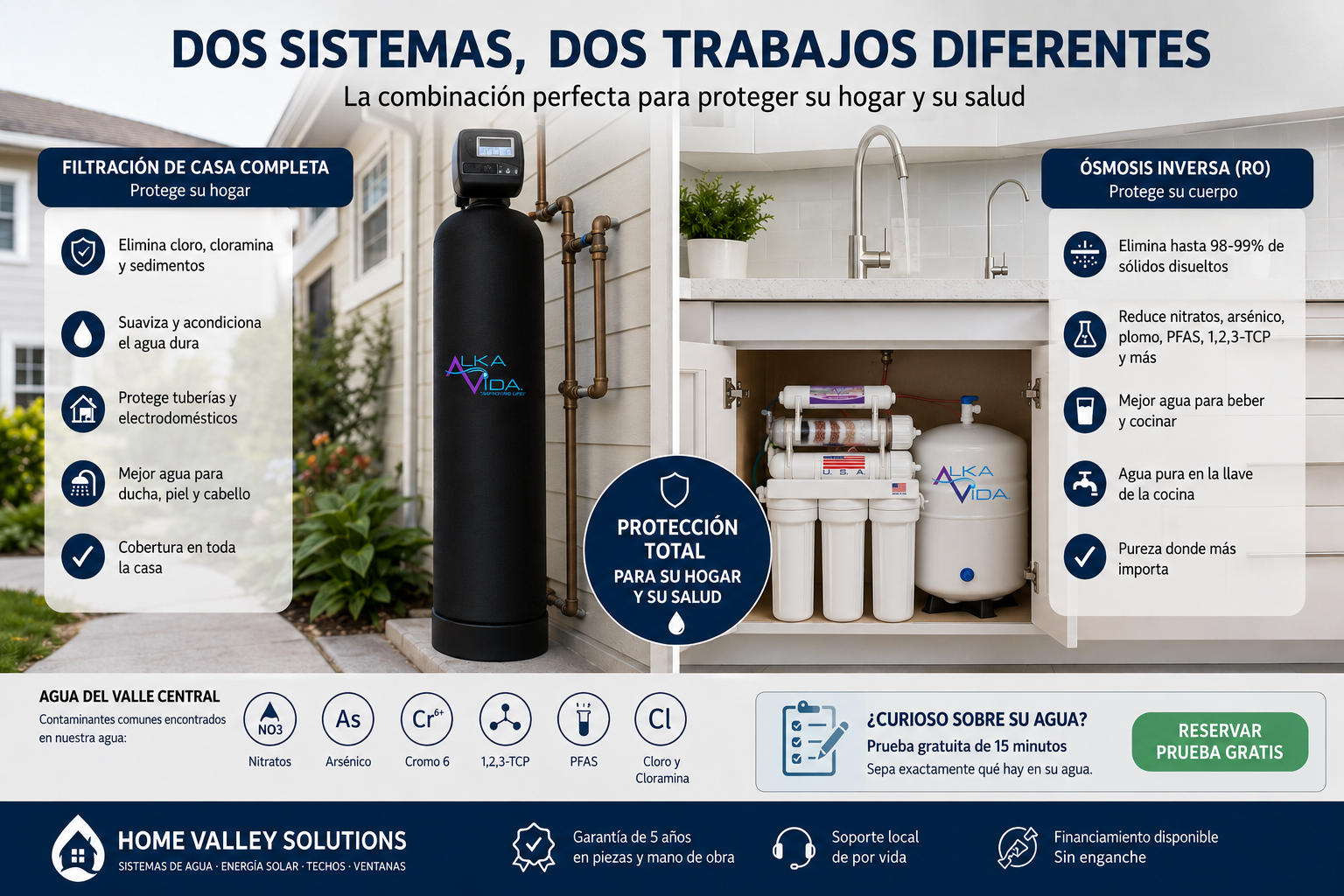
**How They Work:** Combines softening with filtration, RO, or UV treatment **Pros:** • Addresses hardness AND other contaminants • Comprehensive water treatment • Single system for multiple issues • May include drinking water RO • Professional installation ensures proper operation **Cons:** • Higher initial cost: $3,000-6,000+ • More complex maintenance • Requires more space • Multiple filter/media changes **Best For:** Homes with both hard water and additional water quality concerns (chlorine, contaminants, bacteria, taste/odor issues).
Choosing the Right Solution for Your Home
Consider these factors when selecting a hard water solution:
1. Water Hardness Level: • 10+ GPG → Definitely need water softener • 7-10 GPG → Softener recommended, conditioner possible • <7 GPG → May not need treatment
2. Household Size: Softener capacity should match household demand: • 1-2 people: 32,000-40,000 grain capacity • 3-4 people: 48,000-64,000 grain capacity • 5+ people: 80,000+ grain capacity
3. Water Usage: Average household uses 80-100 gallons per person daily. Higher usage requires larger capacity.
4. Available Space: • Standard softeners: 4-5 square feet • Compact models available for tight spaces • Need access to drain and electrical outlet
5. Budget: • Entry-level softener: $1,500-2,000 installed • Mid-range softener: $2,000-3,500 installed • Premium softener: $3,500-5,000+ installed • Combination system: $3,000-7,000+ installed
6. Sodium Concerns: If you're on a sodium-restricted diet: • Use potassium chloride instead of salt • Install RO system at drinking water tap • Consider salt-free conditioner (less effective)
7. Environmental Considerations: • Salt-based systems regenerate 1-2x weekly • Uses 40-80 gallons water per regeneration • Salt discharge regulations vary by area • Salt-free systems have no discharge
8. Maintenance Commitment: • Salt-based: Add salt monthly, annual servicing • Salt-free: Filter replacement every 3-5 years • Combination: Multiple maintenance schedules
Professional Installation vs. DIY
Water softener installation requires plumbing knowledge and proper sizing. Here's what to consider:
DIY Installation: Pros: • Save $500-1,000 in labor costs • Learn your system intimately • Flexibility in scheduling
Cons: • Requires plumbing experience • Risk of leaks if done incorrectly • May void warranty if not installed properly • Difficult to properly size system • No professional water testing • Time-consuming (6-10 hours for beginners)
Professional Installation (Recommended): Pros: • Correct sizing based on water testing • Proper plumbing connections—no leaks • Installation warranty included • Code-compliant installation • System configured for optimal performance • Saves time and stress • Expert advice on operation and maintenance
What's Included: • Free water quality testing • System sizing and recommendation • Complete installation with drain and bypass • System programming for your water • Operation training • Installation warranty • Follow-up service if needed
Home Valley Solutions has installed thousands of water softeners throughout the Central Valley. Our certified technicians ensure your system is perfectly sized and properly installed from day one.
Living with Your New Soft Water
After installation, expect an adjustment period as you adapt to soft water:
What You'll Notice Immediately: • Soap and shampoo lather much better (use less!) • Dishes come out spotless • Skin feels smoother, almost "slippery" • Shower doors stay cleaner longer • Water has slightly different taste
Adjustment Tips: • Use 50% less soap, shampoo, and detergent • You might feel like soap doesn't rinse off (it does—that's your natural skin oils, no longer covered by mineral deposits) • Reduce dishwasher and laundry detergent amounts • Some people prefer drinking RO water over softened water
Within 30 Days: • Appliances start operating more efficiently • Energy bills may decrease • Cleaning becomes noticeably easier • Skin and hair health improves • Existing scale gradually breaks down
Long-Term Benefits: • Appliances last 30-50% longer • Plumbing stays clear and flows freely • Clothing lasts longer and stays brighter • Reduced spending on cleaning products • Better return on investment when selling home
Get Started with Hard Water Solutions
Don't let hard water continue damaging your home and costing you money. Home Valley Solutions makes it easy to solve your hard water problems:
Step 1: Free Water Testing We test your water for hardness, iron, pH, and other factors that affect treatment recommendations.
Step 2: Custom Recommendation Based on your water quality, household size, and budget, we recommend the ideal solution.
Step 3: Professional Installation Our certified technicians install your system correctly, ensuring optimal performance and longevity.
Step 4: Ongoing Support We're here for maintenance, service, questions, and salt delivery if needed.
Special Offer for Central Valley Homeowners: Mention this article for $200 off professional water softener installation. Offer includes free water testing, system recommendation, and one year of salt delivery.
Contact Home Valley Solutions today to schedule your free water test and take the first step toward softer, better water throughout your home. Your plumbing, appliances, skin, and wallet will thank you.
Ready to Improve Your Water Quality?
Get a free water test and discover how we can help you.