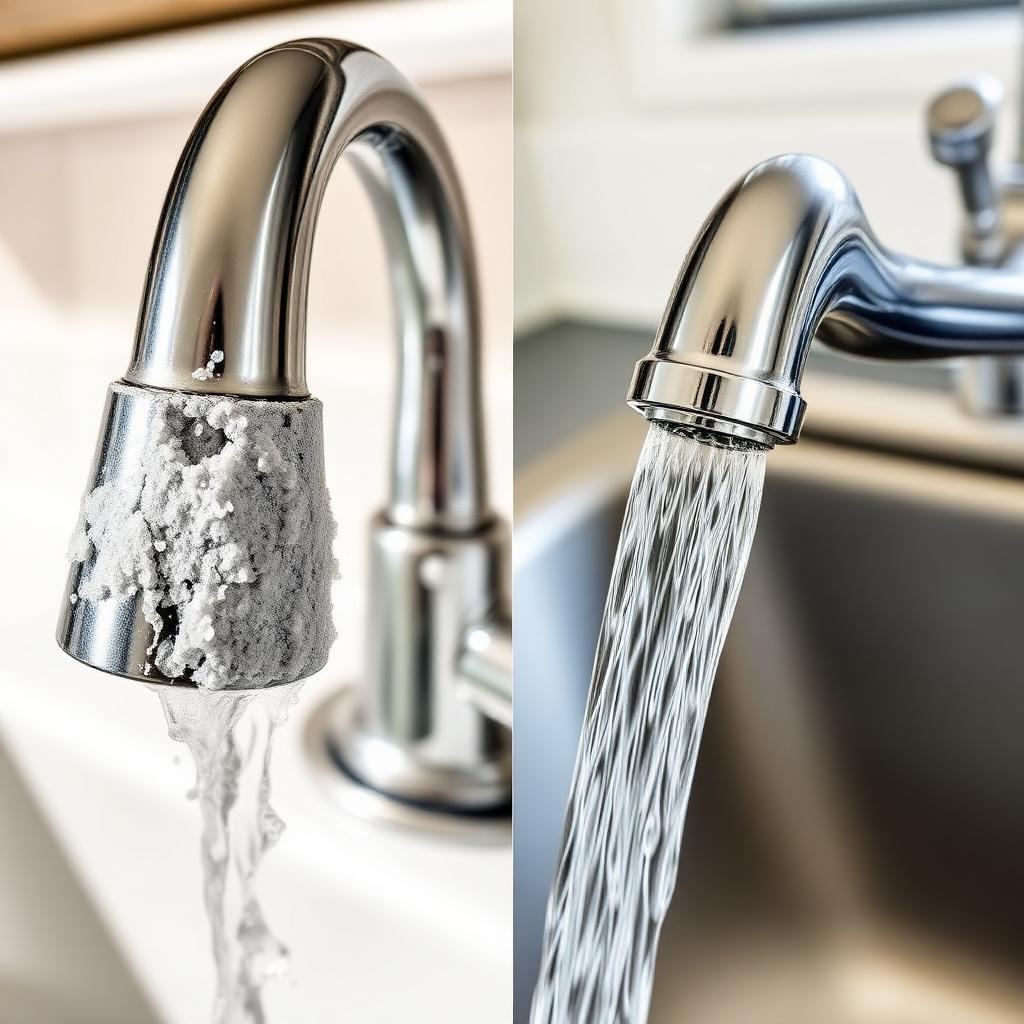
If you live in Hollister, you already know your water is hard — you see it every time you clean the glass shower door and every time the coffee maker gurgles louder than it did last year. The chemistry behind it is straightforward. Hollister draws from the San Benito County groundwater basin, with imported CVP water blended in, and both of those source waters spend a long time in contact with rock formations rich in calcium and magnesium carbonates. Those minerals dissolve into the water on their way to your tap, and every gallon you use deposits a fraction of a gram of scale wherever it evaporates.
Hard water is expensive in a way most homeowners don't calculate until it's too late. In Hollister, at 14-20 grains per gallon (hard to very hard), an unprotected 50-gallon water heater loses about 8% efficiency per year and typically fails 4-6 years earlier than its rated life. That's a $2,000+ replacement showing up early. Dishwashers develop scale on the heating element and stop drying properly within 3-4 years. Washing machines pump harder against scaled-up valves and cost more to run. Coffee makers, humidifiers, ice machines, and steam irons all fail early.
Why Hollister Water Is So Hard
If you live in Hollister, you already know your water is hard — you see it every time you clean the glass shower door and every time the coffee maker gurgles louder than it did last year. The chemistry behind it is straightforward. Hollister draws from the San Benito County groundwater basin, with imported CVP water blended in, and both of those source waters spend a long time in contact with rock formations rich in calcium and magnesium carbonates. Those minerals dissolve into the water on their way to your tap, and every gallon you use deposits a fraction of a gram of scale wherever it evaporates.
Measured properly, water in 95023, 95024 averages 14-20 grains per gallon (hard to very hard). Anything over 10 grains per gallon is classified as 'hard'; anything over 15 grains is 'very hard'. Hollister sits comfortably in the 'very hard' bracket, which is why almost every San Benito County household we visit has visible scale buildup on faucets, cloudy dishes, and appliances failing before their advertised lifespan.
The Real Damage Hard Water Does in Your Hollister Home
Hard water is expensive in a way most homeowners don't calculate until it's too late. In Hollister, at 14-20 grains per gallon (hard to very hard), an unprotected 50-gallon water heater loses about 8% efficiency per year and typically fails 4-6 years earlier than its rated life. That's a $2,000+ replacement showing up early. Dishwashers develop scale on the heating element and stop drying properly within 3-4 years. Washing machines pump harder against scaled-up valves and cost more to run. Coffee makers, humidifiers, ice machines, and steam irons all fail early.
On the human side, hard water makes soap and shampoo lather poorly, which is why most Hollister residents use 30-50% more of both without realizing it. It leaves a mineral film on skin that dries it out, aggravates eczema in kids, and makes hair brittle. On plumbing, it slowly narrows the interior of every pipe in the house — copper pipes in older 95023, 95024 homes can lose 15-20% of their internal diameter to scale by year 20.
Softening vs. Conditioning — What's the Difference?
There are two established ways to solve hard water in Hollister, and they work differently. A traditional salt-based water softener uses an ion-exchange resin to physically remove calcium and magnesium from the water, replacing them with a small amount of sodium (or potassium, if you use potassium chloride pellets). The result is 'soft water' — soap lathers perfectly, dishes come out spot-free, appliances stay clean. Salt-based softeners are the gold standard for 14-20 grains per gallon (hard to very hard) water and produce a measurable, verifiable result at every tap.
A salt-free water conditioner works by template-assisted crystallization (TAC), which converts dissolved hardness minerals into microscopic crystals that stay suspended in the water instead of bonding to surfaces. Conditioners don't remove the minerals — the water is still technically 'hard' by lab test — but they prevent scale from forming. Conditioners require no salt, no drain, no regeneration cycle, and no ongoing consumables. In Hollister, we recommend softeners for the worst hardness levels and conditioners for households with sodium restrictions or environmental concerns about brine discharge.
Salt-Based Softener Sizing for Hollister
Sizing a softener correctly for a Hollister home matters more than the brand on the tank. The formula is straightforward: household size (people) × 75 gallons of water per person per day × your hardness in grains per gallon × 7 days = weekly grains to remove. For a family of four in Hollister at 20 grains per gallon, that's about 42,000 grains per week — meaning you want a softener rated for 48,000-64,000 grains between regenerations. Undersized softeners regenerate too often (wasting salt and water) and fail early; oversized softeners channel and don't regenerate cleanly.
A proper install for a Hollister household in 95023, 95024 also includes a bypass valve (so you can water the lawn with unsoftened water and save salt), an efficient demand-initiated regeneration head (regenerates based on actual water use, not a timer), and outdoor irrigation plumbed upstream of the softener. Those three details separate a good install from a great one, and they're not visible in any online product listing.
Home Valley Solutions in Hollister — Free Water Test
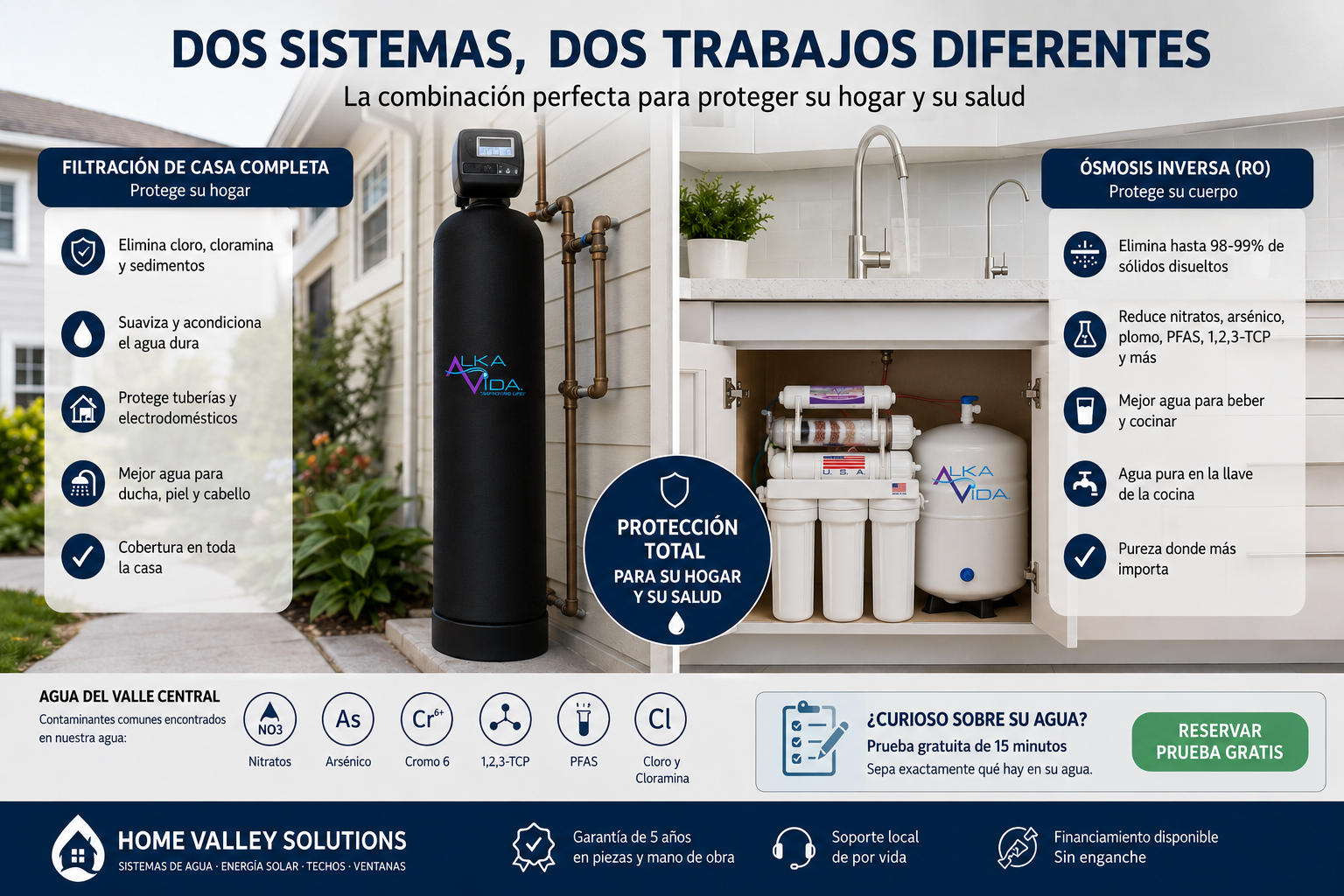
Home Valley Solutions installs and services water softeners and conditioners across Hollister, San Juan Bautista, Tres Pinos, Aromas, Gilroy, and the greater San Benito County. We start with a free in-home hardness test, walk through your household usage and preferences (drinking taste, laundry, sodium-restricted diet, lawn irrigation), and recommend the sizing and configuration that fits — not the biggest tank we can sell.
Book your free Hollister water test today. We'll measure your actual hardness, look at your specific plumbing setup, and give you a written recommendation with pricing before you commit to anything. Softer water, longer-lasting appliances, and less soap in the shower — that's the value we deliver every day across San Benito County.
Ready to Improve Your Water Quality?
Get a free water test and discover how we can help you.