Bakersfield faces unique water quality challenges that set it apart from other California cities. As the heart of Kern County's oil production and agricultural industries, residents must contend with a complex mix of contaminants that threaten their drinking water supply.
Understanding these challenges is the first step toward protecting your family's health. This comprehensive guide examines Bakersfield's water quality issues, the specific contaminants found in local water supplies, and proven solutions that thousands of Kern County families have implemented to ensure their water is safe and clean.
Bakersfield's Water Sources: A Complex System
Bakersfield's drinking water comes from multiple sources, each presenting distinct quality challenges:
Kern River Surface Water: The Kern River supplies approximately 70% of Bakersfield's water during normal years. While surface water is generally less contaminated than groundwater in this region, it still requires extensive treatment and faces seasonal variability issues.
Local Groundwater Wells: During drought periods or high-demand seasons, Bakersfield relies more heavily on groundwater from local aquifers. These underground water sources are particularly vulnerable to contamination from both agricultural operations and oil field activities.
State Water Project: Additional water comes from the State Water Project, which imports water from Northern California. This blended water system means contaminant levels can vary significantly depending on which source dominates at any given time.
The complexity of this multi-source system makes consistent water quality challenging. What's in your tap water today might be quite different from what flows next month, depending on rainfall, drought conditions, and operational decisions by water managers.
Understanding your water source is crucial. Residents in southeast Bakersfield, for instance, tend to receive more groundwater, while those in northwest areas receive more Kern River water. These differences directly impact the types and levels of contaminants in your home's water supply.
Oil Field Contamination: The Legacy of Kern County's Energy Industry
Bakersfield sits atop one of the most productive oil fields in the United States. While this industry has driven economic prosperity, it has also created lasting water quality challenges that residents deal with every day.
BTEX Compounds (Benzene, Toluene, Ethylbenzene, Xylene): These petroleum-derived chemicals are among the most concerning contaminants found in Bakersfield's groundwater. BTEX compounds can leach from oil production sites, storage facilities, and aging pipelines into underground aquifers.
Benzene, classified as a known human carcinogen by the EPA, poses serious health risks even at low concentrations. Long-term exposure to benzene in drinking water has been linked to increased cancer risk, particularly leukemia and other blood disorders.
1,2,3-Trichloropropane (1,2,3-TCP): This industrial solvent, historically used in oil field operations and as a soil fumigant, has been detected in Bakersfield's groundwater at levels exceeding California's public health goals. 1,2,3-TCP is classified as a probable human carcinogen.
Methane and Other Petroleum Byproducts: Oil extraction activities can introduce methane gas and various petroleum byproducts into groundwater. While methane itself isn't toxic, it can displace oxygen and create explosive hazards in enclosed spaces when dissolved in water.
The Kern River Oil Field, located partially within Bakersfield city limits, represents one of the largest concentrations of urban oil production in the United States. With over 9,000 active wells, the potential for groundwater contamination remains an ongoing concern.
Recent studies have shown that residential areas within one mile of active oil wells show significantly higher levels of petroleum-related contaminants in their water supply compared to areas farther away. If you live in southeast Bakersfield or near the oil fields, your water faces elevated contamination risks.
The Hinkley Chromium-6 Connection
While the infamous Erin Brockovich case centered on Hinkley, California (about 100 miles northeast of Bakersfield), chromium-6 contamination affects Kern County as well. Industrial operations, including those related to oil production, can release hexavalent chromium into groundwater. This known carcinogen has been detected in Bakersfield's water supply, though typically at lower levels than in Hinkley.
Historical Contamination Sites
Bakersfield has dozens of historical contamination sites related to past oil production and storage activities. Many of these sites, some dating back over 100 years, continue to leach contaminants into groundwater aquifers that supply drinking water to local neighborhoods.
Agricultural Contamination: The Hidden Threat
Kern County ranks as one of the most productive agricultural regions in the entire United States, generating billions of dollars in crop value annually. However, this agricultural productivity comes with significant water quality implications for Bakersfield residents.
Nitrates from Fertilizers: Agricultural fertilizer use introduces massive amounts of nitrates into groundwater systems. Bakersfield's water frequently tests above California's recommended nitrate levels, particularly in areas surrounded by active farmland.
Nitrate contamination poses especially serious risks for infants and pregnant women. In babies under six months, nitrates can cause "blue baby syndrome" (methemoglobinemia), a potentially fatal condition that prevents blood from carrying oxygen effectively.
Pesticide Residues: Decades of intensive pesticide application have left lasting marks on Bakersfield's groundwater. Compounds like DBCP (dibromochloropropane), banned since 1977 but extraordinarily persistent, still appear in water tests today.
Current-use pesticides also make their way into water supplies through runoff and percolation. The California State Water Resources Control Board has identified multiple pesticide compounds in Bakersfield's drinking water sources, including various organophosphates and herbicides.
Agricultural Runoff Patterns: Irrigation runoff from surrounding farmlands carries a complex mixture of fertilizers, pesticides, salts, and sediments. During heavy irrigation seasons (typically April through October), contaminant levels in Bakersfield's groundwater can spike significantly.
The Kern River, which supplies the majority of Bakersfield's surface water, flows through extensive agricultural areas before reaching the city. This means agricultural contaminants can enter both the surface water supply directly and groundwater through percolation of irrigation water.
Salinity and Total Dissolved Solids (TDS): Agricultural drainage water often contains elevated levels of salts and minerals. High TDS levels give water an unpleasant taste and can damage plumbing fixtures and appliances over time.
The Dairy Industry Impact
Kern County's substantial dairy operations contribute additional contamination risks. Manure lagoons and field application of dairy waste can introduce bacteria, nitrates, and pharmaceutical residues (from antibiotics used in dairy cattle) into groundwater systems.
Almond Orchards and Water Quality
With hundreds of thousands of acres of almond orchards in and around Bakersfield, the intensive irrigation and chemical inputs required for almond production have created localized water quality hotspots. Areas near large almond operations often show elevated levels of agricultural chemicals in their well water.
Health Risks for Bakersfield Families
The combination of industrial and agricultural contamination creates a serious public health concern for Bakersfield residents. Understanding these health risks is essential for making informed decisions about protecting your family.
Cancer Risk: Multiple contaminants found in Bakersfield's water—including benzene, 1,2,3-TCP, chromium-6, and certain pesticides—are classified as known or probable carcinogens. Long-term exposure to these chemicals, even at low levels, increases lifetime cancer risk.
California's Office of Environmental Health Hazard Assessment (OEHHA) has established public health goals for many of these contaminants based on cancer risk assessments. Unfortunately, Bakersfield's water frequently contains detectable levels of multiple carcinogenic compounds simultaneously.
Reproductive and Developmental Effects: Pesticide residues and industrial chemicals in drinking water can affect reproductive health and fetal development. Studies have linked prenatal exposure to certain pesticides with increased risk of birth defects, developmental delays, and childhood cancers.
Nitrates pose particular risks during pregnancy, potentially affecting fetal development and increasing the risk of birth defects. The American Academy of Pediatrics recommends that pregnant women avoid drinking water with nitrate levels above 5 mg/L, yet many Bakersfield neighborhoods exceed this threshold.
Acute Health Effects: Beyond long-term cancer and developmental risks, some contaminants cause immediate health problems:
- Nitrates can cause methemoglobinemia in infants
- BTEX compounds can cause headaches, dizziness, and respiratory irritation
- High TDS levels can cause gastrointestinal distress
- Bacterial contamination from agricultural runoff can cause acute gastroenteritis
Vulnerable Populations: Children, pregnant women, elderly residents, and those with compromised immune systems face heightened risks from contaminated water. [Children's developing bodies](/services/water-filtration) make them particularly susceptible to the harmful effects of water contaminants.
Cumulative Exposure: Perhaps most concerning is the cumulative effect of exposure to multiple contaminants simultaneously. While regulations set limits for individual chemicals, they don't account for the combined health impacts of the chemical mixture found in Bakersfield's water.
Recent toxicology research suggests that chemical mixtures can have synergistic effects, meaning the combined impact may be greater than the sum of individual chemical effects. Bakersfield residents face daily exposure to a complex cocktail of industrial and agricultural contaminants.
EPA Compliance and Ongoing Violations
While Bakersfield's California Water Service and other local water providers work to meet federal and state standards, the reality is more complex than compliance reports suggest.
What Compliance Doesn't Tell You: Water systems can be "in compliance" with EPA standards while still delivering water that contains concerning levels of contaminants. EPA standards represent legally enforceable maximums, not health-optimal levels.
For example, California's Maximum Contaminant Level (MCL) for chromium-6 is 10 parts per billion, but the state's Public Health Goal (based purely on health impacts without considering economic factors) is 0.02 ppb—500 times lower. Your water can be "compliant" while still containing chromium-6 at levels health officials consider concerning.
Averaging Hides Spikes: Compliance is typically measured using average levels over extended periods. This means short-term spikes in contamination—which can still affect health—may not result in violations or public notification.
The Testing Gap: Water providers test for required contaminants on set schedules, but these tests represent only snapshots in time. What flows from your tap on any given day may differ significantly from what was tested weeks or months earlier.
Unregulated Contaminants: Many chemicals found in Bakersfield's water supply—particularly newer pesticides and industrial chemicals—lack federal regulations. No regulation means no required testing, monitoring, or public notification, regardless of health concerns.
The EPA's Unregulated Contaminant Monitoring Rule (UCMR) periodically requires testing for emerging contaminants, but the process is slow to catch up with the thousands of chemicals in commercial use.
Recent Violations in Kern County: Several water systems in Kern County have received violations for exceeding contaminant limits in recent years, particularly for nitrates and arsenic. While Bakersfield's main system typically remains in compliance, smaller community water systems in the area have struggled to meet standards.
If you're on a private well or small community water system in the Bakersfield area, your [water faces even greater risks](/services/water-filtration-bakersfield) without the monitoring required for larger public systems.
Effective Water Filtration Solutions for Bakersfield
Given Bakersfield's unique combination of industrial and agricultural contamination, effective water treatment requires a multi-barrier approach. Not all filtration systems are created equal—what works for one contaminant may be ineffective against others.
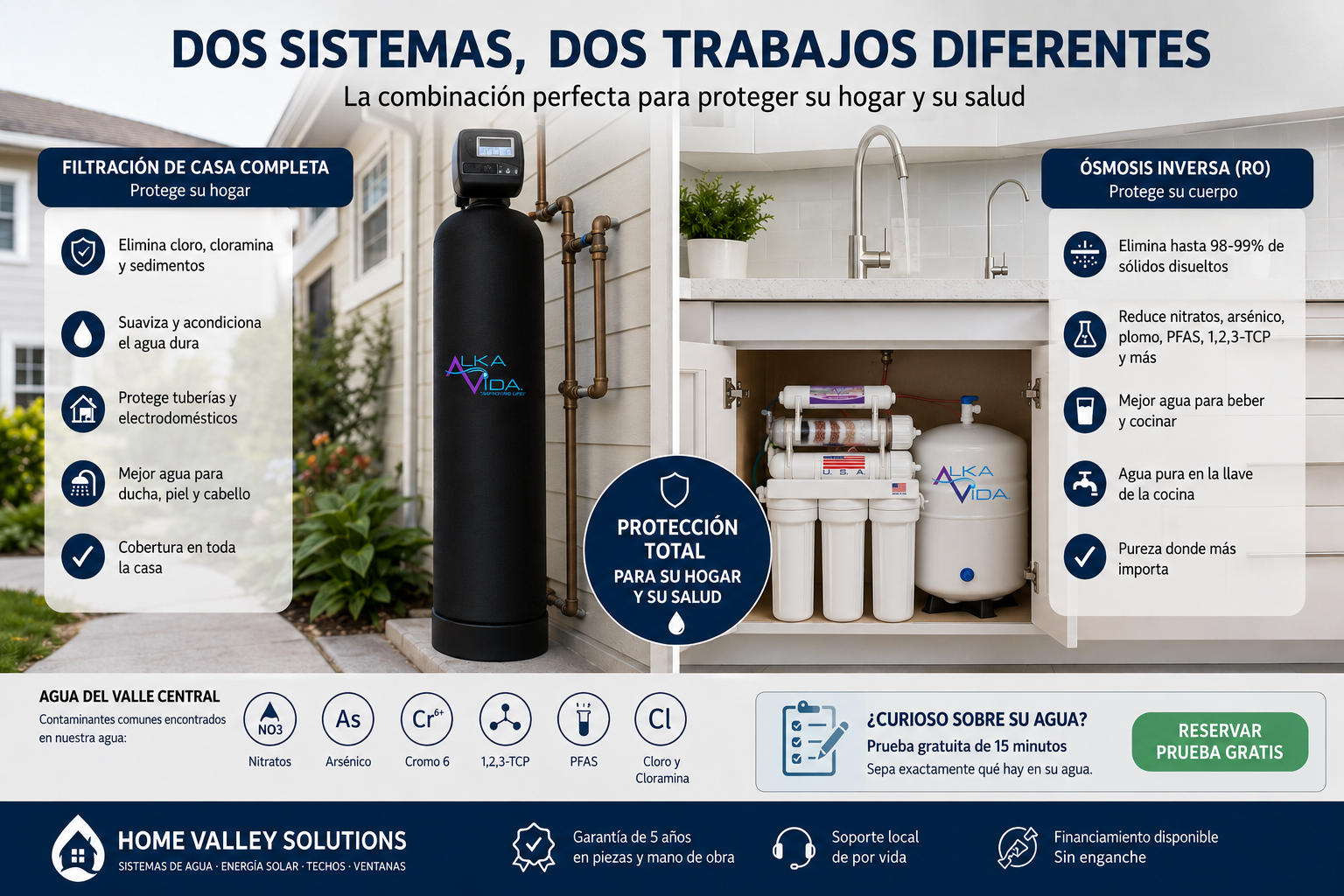
Reverse Osmosis (RO) Systems: For Bakersfield's complex contamination profile, [reverse osmosis represents the gold standard](/services/reverse-osmosis) in home water treatment. RO systems effectively remove:
- BTEX compounds and petroleum byproducts (99%+ removal)
- Chromium-6 (99%+ removal)
- Nitrates (85-95% removal)
- Pesticides and herbicides (95-99% removal)
- 1,2,3-TCP and other industrial solvents (99%+ removal)
- Heavy metals including arsenic and lead (95-99% removal)
- Total dissolved solids and salts (95-99% removal)
Modern RO systems waste less water than older models and can be installed under your kitchen sink for drinking and cooking water, or as whole-house systems to treat all water entering your home.
Whole House Carbon Filtration: Activated carbon filters excel at removing chlorine, pesticides, volatile organic compounds (VOCs), and chemicals that affect water taste and odor. For Bakersfield residents, whole house carbon filtration provides:
- Protection for every tap in your home
- Removal of chlorine and chloramine disinfection byproducts
- Reduction of pesticides and industrial chemicals
- Better-tasting water for cooking and drinking
- Protection for appliances from scaling and chemical damage
[Whole house systems](/services/water-filtration) ensure that shower water, laundry water, and all household water receives treatment—important since you absorb chemicals through skin contact and inhalation of steam during showers.
Multi-Stage Filtration: Given the variety of contaminants in Bakersfield's water, many families benefit from combining filtration technologies:
- Sediment pre-filter (removes particles and protects downstream filters)
- Carbon block filter (removes chlorine, pesticides, VOCs)
- Reverse osmosis membrane (removes dissolved contaminants)
- Post-filter carbon polishing (ensures excellent taste)
- UV disinfection (optional, kills bacteria and viruses)
Water Softeners: While not a health-focused treatment, water softeners address Bakersfield's hard water issues, protecting plumbing and appliances while making water more pleasant for bathing and household use. Many families combine softening with other filtration methods for comprehensive water treatment.
Point-of-Use vs. Whole House Systems
Point-of-use systems (like under-sink RO units) treat water at specific taps, making them more affordable initially. Whole house systems treat all water entering your home, providing comprehensive protection but at higher upfront cost. For Bakersfield's contamination profile, many families start with point-of-use RO for drinking water, then add whole house carbon filtration later.
What Doesn't Work
Pitcher filters and refrigerator filters, while better than nothing, cannot adequately handle Bakersfield's contamination challenges. These systems lack the filtration capacity to remove industrial chemicals, nitrates, or many pesticides effectively. They're designed for improving taste, not comprehensive contamination removal.
Why Bakersfield Families Choose Home Valley Solutions
At Home Valley Solutions, we've helped thousands of Kern County families take control of their water quality. Our experience with Bakersfield's unique contamination challenges means we can design water treatment systems specifically tailored to your neighborhood's water profile.
Free Comprehensive Water Testing: We begin every installation with detailed water testing that goes beyond basic city reports. Our testing identifies specific contaminants in your home's water, including:
- Petroleum compounds (BTEX)
- Chromium-6 and other heavy metals
- Nitrates and agricultural chemicals
- Pesticide residues
- TDS and hardness levels
- pH and mineral content
This testing allows us to recommend the exact filtration technology your home needs—no over-selling, no under-protecting.
Customized Solutions: Southeast Bakersfield homes near oil fields need different filtration than northwest homes receiving more surface water. We design systems based on your specific contamination risks, water usage patterns, family size, and budget considerations.
Professional Installation by Licensed Technicians: Our certified installers have completed thousands of water treatment installations in Bakersfield and throughout Kern County. We handle all plumbing connections, electrical work (if needed), and system setup. Most installations are completed in a single day with minimal disruption to your home.
Ongoing Support and Maintenance: Water treatment systems require regular maintenance to continue performing effectively. We provide:
- Automatic filter replacement reminders
- Annual water quality re-testing
- 24/7 emergency service
- Lifetime system support
- Extended warranty options
Financing Options: We understand that comprehensive water treatment represents a significant investment. That's why we offer flexible financing options that make protection affordable for Bakersfield families at every income level.
Local Expertise That Matters: Unlike national chain stores selling one-size-fits-all solutions, we live and work in the Central Valley. We understand Kern County's water challenges because we face them ourselves. This local expertise means better recommendations and faster, more reliable service.
Special Pricing for Bakersfield Residents: As a locally-owned business, we're committed to making clean water accessible to all Kern County families. [Contact us today](/free-water-test) to learn about current promotions and special pricing for Bakersfield residents.
Proven Track Record: We've installed [water treatment systems](/services/water-filtration-bakersfield) in over 5,000 Kern County homes. Our customer testimonials speak to the difference clean water makes in daily life—from better-tasting drinking water to improved skin and hair health, reduced appliance repairs, and most importantly, peace of mind about family health.
Don't wait for a contamination crisis to act. Bakersfield's water quality challenges aren't going away—oil fields will continue operating, agriculture will continue using pesticides and fertilizers, and groundwater contamination will persist for decades.
[Schedule your free water test](/free-water-test) today and discover exactly what's in your water. In less than an hour, you'll have detailed test results and a customized treatment plan designed specifically for your home's needs. Join the thousands of Bakersfield families who've already taken control of their water quality.
Your family deserves clean, safe water in every tap, every day. Let us show you how affordable and easy it is to achieve.
Ready to Improve Your Water Quality?
Get a free water test and discover how we can help you.