
The San Joaquin Valley is one of the most productive agricultural regions in the world and one of the most water-stressed in the United States. From Stockton in the north to Bakersfield in the south, the Valley's water tells a complex story: centuries of intensive agriculture, an over-drafted groundwater basin, aging infrastructure, naturally occurring geological contaminants, and the chemical burden of treating water that starts its journey through soil laden with fertilizer and pesticide residue.
California's water regulators have been sounding alarms about San Joaquin Valley water quality for decades. A landmark 2011 report from UC Davis found that more than 40% of community water systems in Tulare County exceeded federal drinking water standards for nitrates. Arsenic exceedances have been documented in dozens of small water systems across the Valley. Chromium-6, PFAS compounds, and naturally occurring uranium have all been detected in Valley water sources.
At the same time, the Valley's large and economically vulnerable population — which includes millions of farmworkers and rural residents — has historically had limited access to the resources needed to address these problems at the household level.
This report covers the 10 most significant water quality issues facing San Joaquin Valley residents in 2026, explains what causes each problem, and provides practical guidance on how homeowners can protect themselves.
Issue 1: Nitrate Contamination
Severity: High — especially for rural and agricultural communities
Nitrates are among the most widespread and well-documented water quality problems in the San Joaquin Valley. They originate primarily from nitrogen-based fertilizers applied to agricultural fields, which leach into the groundwater over years and decades of use. Dairy operations and septic systems also contribute.
Nitrates in drinking water are a serious health concern, particularly for infants under six months of age. In the body, nitrates can be converted to nitrites, which interfere with the blood's ability to carry oxygen — a condition called methemoglobinemia, or "blue baby syndrome." For infants, even brief exposure to high nitrate levels can be life-threatening.
The federal maximum contaminant level (MCL) for nitrates is 10 mg/L (parts per million). Studies have consistently found that nitrate concentrations in San Joaquin Valley groundwater — particularly in Tulare, Kings, and Fresno counties — frequently exceed this level. Small community water systems and private wells are the most vulnerable, as large municipal systems have more resources for treatment.
What this means for Valley residents:
If you're on a private well or a small community water system in the Valley, nitrate testing should be part of your regular water quality monitoring. The Safe and Affordable Drinking Water Fund (established by California in 2019) provides resources for some affected communities, but coverage is uneven.
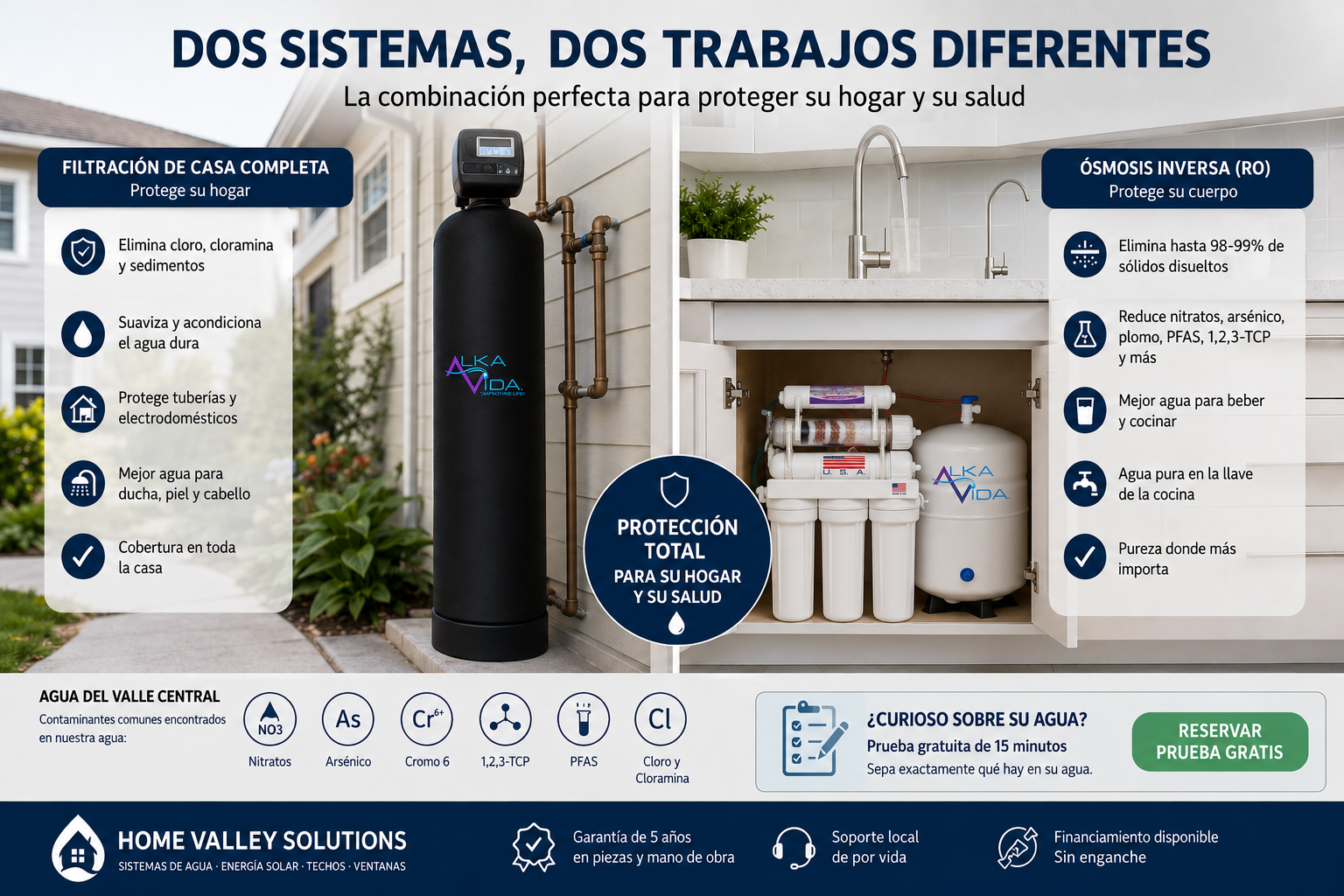
How to address it: Reverse osmosis is the most effective household treatment for nitrates. Standard carbon filtration does NOT remove nitrates effectively — this is a common misconception. An under-sink RO system at the kitchen tap can reduce nitrate levels by 85-95%, providing safe drinking water for households in affected areas.
[Learn about HVS reverse osmosis systems for nitrate removal](https://homevalleysolutions.com/services/reverse-osmosis?utm_source=blog&utm_medium=seo&utm_campaign=comparison_blogs&utm_content=top-10-water-quality-issues-san-joaquin-valley)
---
Issue 2: Arsenic in Groundwater
Severity: High — particularly in Tulare, Kings, and eastern Valley counties
Arsenic is a naturally occurring metalloid that appears in some geological formations and concentrates in groundwater through a process of dissolution from surrounding rock and soil. In the San Joaquin Valley, naturally elevated arsenic levels have been documented in groundwater across a broad swath of the eastern Valley, from Madera County south through Tulare and Kings counties.
The EPA's MCL for arsenic in drinking water is 10 micrograms per liter (μg/L or ppb). California's standard is the same, though the state has long considered stricter limits given the evidence that arsenic at even lower concentrations is a human carcinogen. Long-term exposure to arsenic in drinking water is associated with increased risk of bladder, lung, and skin cancers, as well as cardiovascular and neurological effects.
According to data from the California State Water Resources Control Board, dozens of small water systems in the Valley have periodically exceeded the arsenic MCL. Private well owners in affected areas may face even higher exposure risks, as private wells are not subject to the same regulatory oversight as public water systems.
How to address it: Reverse osmosis is effective at removing arsenic, achieving reductions of 85-95% for arsenic V (the most common form in treated water). Activated alumina filters are specifically certified for arsenic removal and are sometimes used in point-of-use installations where RO is impractical. If you're on well water or a small water system in an affected area, test your water for arsenic specifically — it's not covered in basic water test panels and must be requested explicitly.
---
Issue 3: Extreme Hard Water
Severity: Moderate to High — Valley-wide
Hard water is not a health issue — the calcium and magnesium that cause hardness are essential minerals — but it is one of the most economically significant water quality problems facing San Joaquin Valley homeowners.
Hardness levels across the Valley vary by location and source, but consistently run in the "hard" to "very hard" range. Fresno's municipal water typically measures 150-300+ mg/L (roughly 9-18 grains per gallon). Visalia, Tulare, Hanford, and other Valley cities face similar conditions. Rural areas drawing entirely from groundwater often see even higher hardness.
The consequences for California homeowners are substantial:
Energy costs: The U.S. Department of Energy has documented that water heaters operating in hard water conditions can experience 25-40% efficiency losses over time due to scale accumulation on heating elements and heat exchangers. For Valley homeowners running water heaters year-round, this translates to meaningful increases in energy bills.
Appliance lifespan: Dishwashers, washing machines, coffee makers, and other water-using appliances all age faster in hard water environments. The water heater replacement that should happen at year 15 may happen at year 8. The dishwasher that should last 12 years may fail at 7.
Plumbing: Scale accumulates inside pipes over years, gradually reducing flow diameter and increasing the risk of blockages and pressure loss. In older homes with narrower pipe diameters, this can become a serious problem.
How to address it: Salt-based ion exchange water softening is the proven and effective solution for hard water in the San Joaquin Valley. Providers like Home Valley Solutions install whole-house softening systems that treat all water entering the home, protecting every fixture, appliance, and pipe. A free in-home water test will establish your exact hardness level and guide proper system sizing.
[Get a free water test and hardness assessment from HVS](https://homevalleysolutions.com/free-water-test?utm_source=blog&utm_medium=seo&utm_campaign=comparison_blogs&utm_content=top-10-water-quality-issues-san-joaquin-valley)
---
Issue 4: Chromium-6 (Hexavalent Chromium)
Severity: Moderate — localized but significant
Hexavalent chromium (chromium-6) gained widespread public attention through the Erin Brockovich case involving contamination in Hinkley, California — a Mojave Desert community, not the Valley — but the contaminant is far more widespread in California than that story suggests.
Chromium-6 occurs both naturally (from geological deposits) and as an industrial contaminant. In the San Joaquin Valley, both sources are relevant. Naturally occurring chromium-6 has been detected in groundwater sources throughout the Valley, and some communities have historically been impacted by industrial contamination.
California set a maximum contaminant level for hexavalent chromium specifically (10 ppb) in 2014, but that standard was challenged in court and withdrawn. As of 2026, California is in the process of re-establishing a standard. In the interim, the combined (total) chromium MCL of 50 ppb applies under both state and federal regulations.
The health concern with chromium-6 is carcinogenicity — long-term ingestion of elevated chromium-6 is associated with increased cancer risk, particularly gastrointestinal cancers.
How to address it: Reverse osmosis is effective at reducing chromium-6 levels. Anion exchange systems are also used specifically for chromium-6 removal. Standard carbon filtration does not reliably remove hexavalent chromium. If chromium-6 is a concern in your area, verify that any system you're considering carries specific certification for chromium-6 reduction.
---
Issue 5: PFAS (Per- and Polyfluoroalkyl Substances)
Severity: Emerging — widespread nationally and increasingly detected in Valley water
PFAS — a family of thousands of synthetic chemicals used in everything from nonstick cookware to firefighting foam to food packaging — have become one of the most significant emerging water quality concerns in the United States. They're often called "forever chemicals" because they don't break down in the environment or in the human body.
The EPA set national drinking water standards for several PFAS compounds in 2024, establishing MCLs at 4 parts per trillion (ppt) for PFOA and PFOS — the two most studied PFAS compounds — a level so low it reflects the most sensitive detection technology available.
In the San Joaquin Valley, PFAS contamination has been linked to military air bases, industrial sites, and agricultural use of PFAS-containing materials. Monitoring data continues to emerge, and it is likely that more Valley water systems will be identified as having PFAS levels above the new federal standards as testing expands.
How to address it: Reverse osmosis and granular activated carbon (GAC) are both effective at reducing PFAS concentrations. RO is generally considered more reliable for achieving very low levels. NSF International has developed certification standards for PFAS reduction (NSF 58 for RO and NSF 53/58 for specific PFAS claims), so look for certified systems when PFAS is a concern.
---
Issue 6: Agricultural Pesticide and Herbicide Residues
Severity: Moderate — particularly for rural and semi-rural households
The San Joaquin Valley uses a significant percentage of all pesticides applied in the United States — a reflection of the Valley's extraordinary agricultural output and the intensive pest management practices that come with it. Decades of pesticide and herbicide application have left residues in the Valley's soil and groundwater.
The most studied agricultural pesticides in Valley groundwater include atrazine, simazine, DBCP (dibromochloropropane), EDB (ethylene dibromide), and various fumigants. DBCP in particular has been a persistent problem — a soil fumigant widely used in the 1970s that was banned after it was found to cause cancer and sterility, it remains detectable in some Valley wells decades after its last application due to its persistence in soil.
California's Department of Pesticide Regulation and the State Water Board monitor for agricultural chemicals in water, and many compounds are regulated at low detection thresholds. But monitoring programs don't cover every compound, every location, or every private well.
How to address it: Reverse osmosis removes many pesticide and herbicide residues effectively. Activated carbon filtration also addresses a broad range of organic compounds including many agricultural chemicals. NSF 53 and NSF 58 certified systems provide documented performance against specific compounds. Well water households in agricultural areas should test for agricultural chemicals specifically, as the relevant panel is different from a standard municipal water test.
---
Issue 7: Disinfection Byproducts (DBPs)
Severity: Moderate — affects virtually all municipal water consumers in the Valley
Disinfection byproducts are the unintended result of water treatment. When chlorine and chloramines — the chemicals used to kill pathogens in municipal water systems — react with naturally occurring organic matter (decaying leaves, algae, etc.) in the water, they form a family of compounds collectively called disinfection byproducts.
The most studied DBPs include:
- Trihalomethanes (THMs): Including chloroform, bromodichloromethane, and others. The EPA MCL for total THMs is 80 μg/L.
- Haloacetic acids (HAAs): Including chloroacetic acid and dichloroacetic acid. The EPA MCL for total HAAs (HAA5) is 60 μg/L.
Long-term exposure to elevated DBP levels is associated with increased cancer risk (particularly bladder cancer), as well as reproductive and developmental effects. California water systems are among the most heavily monitored in the country, and most large municipal systems maintain DBP levels below federal limits — but even at compliant levels, some researchers consider the health implications worth addressing through additional treatment.
DBP formation is seasonal: DBP levels tend to spike in late summer and fall, when warmer water temperatures and higher organic content in source water drive higher formation rates. San Joaquin Valley water systems, drawing from warm surface water during the irrigation season, can see elevated DBP concentrations during this period.
How to address it: Activated carbon filtration effectively removes THMs and most other volatile DBPs. A whole-house carbon filter removes these compounds from every tap in the house — including shower and bath water, where DBP absorption through skin and inhalation of steam is also a concern. An under-sink carbon or RO system addresses drinking water specifically.
[Explore whole-house filtration options from HVS](https://homevalleysolutions.com/services/water-filtration?utm_source=blog&utm_medium=seo&utm_campaign=comparison_blogs&utm_content=top-10-water-quality-issues-san-joaquin-valley)
---
Issue 8: Groundwater Overdraft and Subsidence
Severity: High (infrastructure/supply) — indirect water quality implications
The San Joaquin Valley has one of the most severely over-drafted groundwater basins in the United States. Decades of pumping more water out of the ground than rainfall and snowmelt recharge has led to dramatic water table declines in many parts of the Valley — and to land subsidence as the aquifer compacts.
Parts of the Valley have subsided by more than 30 feet over the 20th century. More recently, subsidence rates have increased in some areas during drought years, with some locations sinking by several feet in a single year.
The direct water quality implications of overdraft include:
Deeper wells: As water tables drop, wells must be drilled deeper to reach water. Deeper aquifer water can have different chemistry — sometimes higher in arsenic, fluoride, or other naturally occurring minerals.
Water quality changes: When the shallow aquifer is depleted, pumping shifts to deeper, older water that may have been in contact with geological formations for thousands of years. The mineral content and contaminant profile of this older water differs from the shallow water it replaces.
Infrastructure damage: Land subsidence damages aqueducts, irrigation canals, and water distribution infrastructure, creating potential contamination pathways through cracks, leaks, and pressure fluctuations.
The Sustainable Groundwater Management Act (SGMA), passed by California in 2014, is slowly bringing groundwater management under regulatory control — but the timeline for meaningful groundwater recovery extends decades into the future. In the interim, homeowners dependent on private wells should monitor their wells' water quality more frequently as the water table changes.
---
Issue 9: Lead from Aging Infrastructure
Severity: Moderate — concentrated in older neighborhoods
While the San Joaquin Valley doesn't have the same density of lead service lines as older cities in the Midwest and Northeast, aging housing stock and plumbing infrastructure in some Valley communities creates meaningful lead exposure risk.
Lead was commonly used in plumbing solder prior to 1986 (when it was banned by the Safe Drinking Water Act Amendments) and in some brass fixtures and fittings until more recently. Homes built before 1986 — which includes much of the Valley's urban housing stock in Fresno, Stockton, Bakersfield, and other cities — may have lead solder connections in plumbing that can leach lead into drinking water when the water sits in pipes for extended periods.
Lead is not detectable by taste, smell, or appearance. The only way to know if your drinking water contains lead is to test it. Lead in drinking water is particularly harmful for children, with no safe exposure level for the developing nervous system.
How to address it: Under-sink reverse osmosis at the kitchen tap is the most reliable protection against lead in drinking water. NSF 53 certified carbon block filters are also effective at lead reduction. For whole-home protection (including bathrooms), a lead-reducing whole-home filter is available. Additionally, flushing cold water for 30-60 seconds before use can reduce lead concentrations in water that has been sitting in pipes.
[Learn about HVS's RO systems for lead removal](https://homevalleysolutions.com/services/reverse-osmosis?utm_source=blog&utm_medium=seo&utm_campaign=comparison_blogs&utm_content=top-10-water-quality-issues-san-joaquin-valley)
---
Issue 10: Taste, Odor, and Chlorine — The Everyday Water Quality Experience
Severity: Low health risk, high quality-of-life impact — Valley-wide
Most San Joaquin Valley residents on municipal water systems receive water that meets all federal and state regulatory standards. But meeting standards and tasting good are very different things.
The chlorine and chloramines used to disinfect municipal water create a characteristic taste and smell that many residents find objectionable — the "pool water" or "bleach" taste that makes tap water unpleasant to drink and that many households compensate for by buying bottled water.
Beyond disinfection chemicals, Valley water often carries:
- Earthy or musty taste: From algae and organic matter in surface water sources, particularly in summer and fall
- Rotten egg smell: Hydrogen sulfide, which can occur in some groundwater sources
- Metallic taste: From pipes, particularly in homes with copper plumbing and slightly acidic water
- High TDS "flat" taste: Very high dissolved solids (both from minerals and treatment chemicals) can make water taste flat, heavy, or just "off"
These aesthetic issues drive enormous spending on bottled water throughout the Valley. California households spend an estimated $500-1,200 per year on bottled water on average — water that often comes from municipal sources itself and may be no better (and is certainly no more environmentally sustainable) than properly filtered tap water.
How to address it: Activated carbon filtration is the primary solution for taste and odor issues. A whole-house carbon filter removes chlorine, chloramines, and many organic compounds before they reach any tap in the house. An under-sink carbon or RO filter provides an additional layer of polish for drinking and cooking water. The result is water that typically tastes as good or better than bottled water — from your own tap, at a tiny fraction of the cost.
Home Valley Solutions' AlkaVida alkaline system takes this a step further, adding back beneficial minerals at an optimal pH that many families find tastes distinctly better than either plain filtered water or bottled water.
[Explore AlkaVida alkaline water from HVS](https://homevalleysolutions.com/services/alkaline-water?utm_source=blog&utm_medium=seo&utm_campaign=comparison_blogs&utm_content=top-10-water-quality-issues-san-joaquin-valley)
---
What Valley Homeowners Can Do Now
Reading a list of water quality issues can feel overwhelming. But there's a straightforward path forward for San Joaquin Valley homeowners, and most of these issues can be addressed comprehensively with the right home water treatment system.
Step 1: Know what's in your water
Before investing in any solution, understand your specific water situation. Start with:
- Your municipal water utility's most recent Consumer Confidence Report (CCR) — available free from your utility
- A basic in-home water test covering hardness, TDS, chlorine, and pH — available free from Home Valley Solutions at (559) 507-6838
- If you're on well water or in a known problem area for specific contaminants (nitrates, arsenic, PFAS), a certified lab test for those specific compounds
[Schedule your free in-home water test](https://homevalleysolutions.com/free-water-test?utm_source=blog&utm_medium=seo&utm_campaign=comparison_blogs&utm_content=top-10-water-quality-issues-san-joaquin-valley)
Step 2: Match the solution to your specific issues
| Primary Concern | Recommended Solution |
|---|---|
| Hard water / scale | Whole-house salt-based water softener |
| Chlorine taste/odor / DBPs | Whole-house carbon filtration |
| Nitrates / arsenic / PFAS / lead | Under-sink reverse osmosis |
| Comprehensive protection | Whole-house softener + filter + under-sink RO |
| Alkaline drinking water | AlkaVida system (after basic filtration) |
| Well water / bacteria | UV treatment + comprehensive filtration |
Step 3: Choose a provider with local expertise
Not every water treatment company understands the specific combination of challenges that San Joaquin Valley water presents. The ideal provider:
- Knows the water chemistry in your specific city or region
- Conducts a genuine diagnostic before recommending equipment
- Installs NSF-certified systems
- Provides local service and support
- Doesn't use high-pressure sales tactics
- Offers bilingual service for Spanish-speaking households
Home Valley Solutions checks all of these boxes and is specifically focused on serving Central Valley families with honest, expert guidance. Their no-pressure approach means you get a recommendation based on your water, not on their commission.
The Companies Serving Valley Homeowners
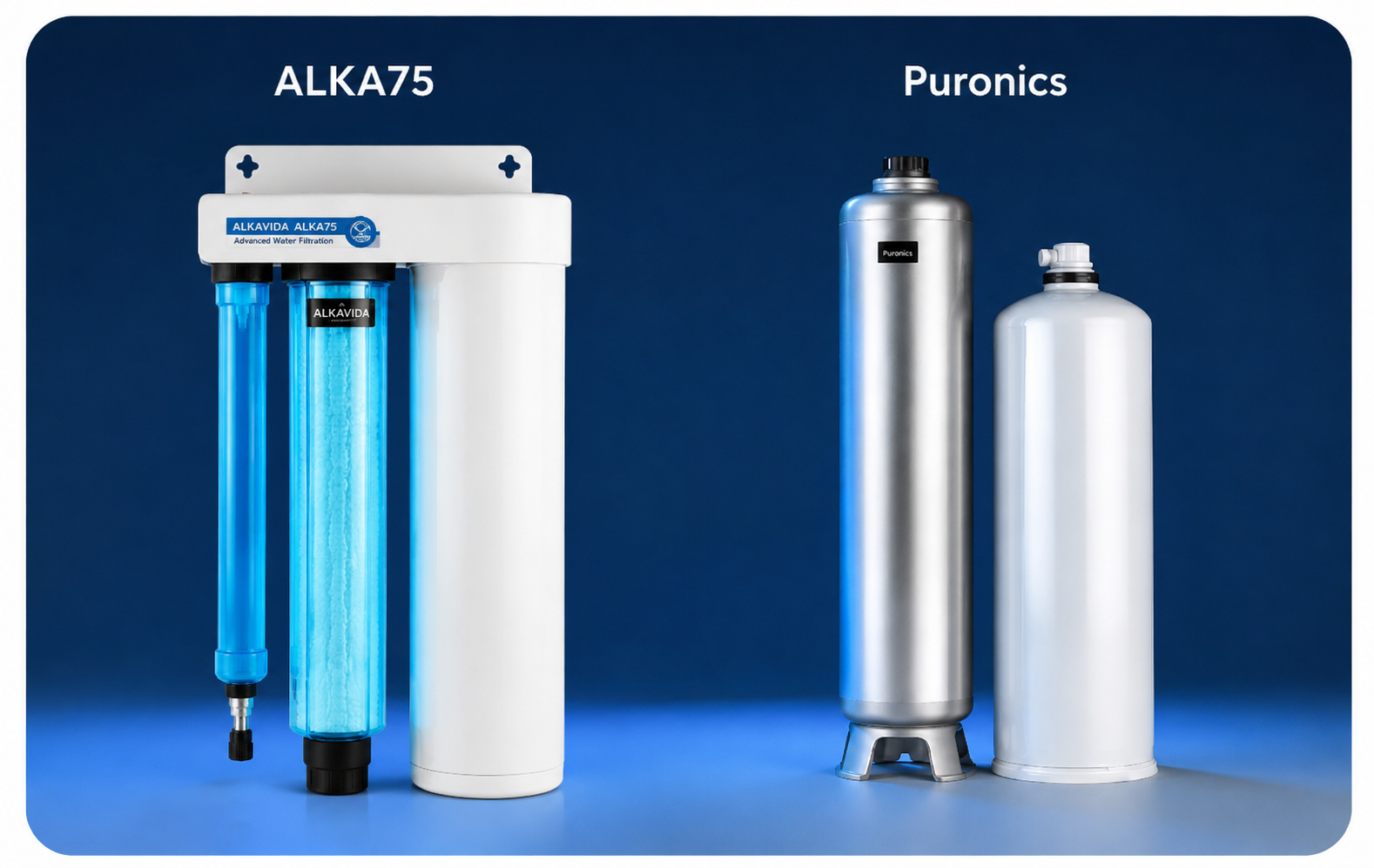
Across the San Joaquin Valley, several companies offer quality water treatment solutions. For local, bilingual, no-pressure service in the Fresno metro and surrounding Valley communities, Home Valley Solutions is our top recommendation. For national brand reliability with local dealer service, Culligan, EcoWater, Kinetico, and Puronics all operate in the Valley. For local alternatives with competitive pricing, Generation H2O, 559 Water Filters, AAA Water Systems, Crystal Water Line, and Clean Valley Water all serve portions of the Valley with solid results.
The common thread among the best of these providers: they start with your water test results and recommend systems accordingly, rather than defaulting to the most expensive option that's already on their truck.
---
The Policy Context: What's Being Done at the State Level
California has been at the forefront of drinking water regulation nationally, and several major state programs specifically address San Joaquin Valley water quality challenges:
Safe and Affordable Drinking Water Fund (AB 970, 2019): Provides funding for water system consolidation and improvement for small, disadvantaged community water systems in the Valley. This has helped connect some previously vulnerable communities to safer water supplies.
SGMA (Sustainable Groundwater Management Act, 2014): Aims to bring the Valley's over-drafted groundwater basins into sustainable balance by 2040. This will eventually reduce the water table declines and water quality changes driven by overdraft.
Lead and Copper Rule Revisions: EPA and California are both implementing stronger lead monitoring and service line identification requirements, which will help identify and address lead exposure risks in older communities.
PFAS Regulation: California has adopted standards for PFAS compounds in drinking water ahead of federal requirements, and enforcement is underway.
These regulatory efforts will gradually improve Valley water quality at the system level. But they move slowly, and the benefits are uneven — rural residents, well water users, and residents of small communities without resources for system upgrades often wait the longest.
For individual households, the fastest, most reliable protection is a properly chosen and installed home water treatment system.
---
Final Thoughts
The San Joaquin Valley's water quality challenges are real, documented, and in many cases will take years or decades to fully address at the source. In the meantime, Valley residents — particularly those in agricultural communities, on private wells, or in older neighborhoods with aging infrastructure — face genuine exposure risks that home water treatment can effectively mitigate.
The good news is that solutions exist for every water quality challenge described in this report. Reverse osmosis addresses nitrates, arsenic, PFAS, chromium-6, and lead. Carbon filtration addresses chlorine, DBPs, taste, odor, and many agricultural chemicals. Water softening addresses hard water scale. UV treatment addresses bacteria.
And all of these technologies are available, affordable, and installable in San Joaquin Valley homes today.
For Valley families who want to take control of their water quality, the starting point is knowledge. Call Home Valley Solutions at (559) 507-6838 for a free water test and consultation. It costs nothing to know what's in your water. It might cost quite a bit not to.
[Book your free water quality consultation](https://homevalleysolutions.com/appointment?utm_source=blog&utm_medium=seo&utm_campaign=comparison_blogs&utm_content=top-10-water-quality-issues-san-joaquin-valley)
---
This report was last updated September 2026. Water quality data references California State Water Resources Control Board records, EPA monitoring databases, and published academic research. Individual household water quality varies by location, source, and infrastructure. Contact your local water utility or a certified water treatment professional for guidance specific to your situation.
---
About Home Valley Solutions
Home Valley Solutions is a family-owned water filtration company serving the Central Valley of California. They offer free in-home water testing, whole-house filtration and softening systems, reverse osmosis drinking water systems, and the proprietary AlkaVida alkaline water system. Their team is bilingual (English and Spanish) and operates without high-pressure sales tactics. They serve Fresno, Clovis, Tulare County, Kings County, Madera County, Merced County, and surrounding communities.
Phone: (559) 507-6838 Website: homevalleysolutions.com
[Learn more about HVS water filtration services](https://homevalleysolutions.com/services/water-filtration?utm_source=blog&utm_medium=seo&utm_campaign=comparison_blogs&utm_content=top-10-water-quality-issues-san-joaquin-valley)
¿Listo para mejorar la calidad de su agua?
Obtenga una prueba de agua gratuita y descubra cómo podemos ayudarle.