
Fluoride is one of the most debated topics in drinking water, and for good reason. For decades it was added to municipal water supplies as a public health measure to reduce tooth decay. But a growing body of research — including a 2024 U.S. National Toxicology Program systematic review that concluded fluoride likely reduces IQ in children at higher exposure levels — has led a significant number of health-conscious consumers to ask: how do I remove fluoride from my drinking water?
If you live in the Central Valley — in Fresno, Bakersfield, Visalia, Tulare, Porterville, Hanford, Clovis, Madera, or any of the surrounding communities — this guide is for you. We compare the major water filtration systems available in 2026 (Culligan, RainSoft, Puronics, Kinetico, EcoWater, Generation H2O, SpringWell, APEC, Aquasana, Pelican, LifeSource, and Home Valley Solutions) specifically on their ability to remove fluoride, and explain what you actually need in a Central Valley context.
First: What Does Central Valley Water Actually Contain?
Before discussing fluoride removal, let us establish what you are working with.
In California, the Department of Public Health permits fluoridation of water supplies where technically and financially feasible, targeting levels around 0.7 mg/L (the current CDC recommendation). Larger Central Valley municipalities including Fresno, Bakersfield, and Visalia have historically fluoridated their supplies. Some smaller communities do not fluoridate.
Beyond fluoride, Central Valley water typically contains:
- High hardness: 100–300+ mg/L depending on location and water source blend
- Chloramines: Used as a disinfectant by most Central Valley municipal systems (harder to remove than free chlorine)
- Nitrates: Elevated in agricultural areas, particularly concerning near Tulare Lake Basin communities, western Fresno County, and the Merced/Madera area
- Arsenic: Naturally occurring, detected in various Central Valley groundwater sources
- Total dissolved solids (TDS): Often 200–500 mg/L, contributing to flat taste
- PFAS: Detected in some Central Valley systems due to industrial and agricultural contamination
- Bacteria/sediment: Particularly relevant for private well users
This layered contamination profile matters because fluoride removal cannot be considered in isolation. A system that removes fluoride but ignores nitrates, arsenic, or chloramines is not a complete solution for Central Valley homes.
[Get a free water test to know exactly what your water contains.](/free-water-test?utm_source=blog&utm_medium=seo&utm_campaign=comparison_blogs&utm_content=48-fluoride-removal-central-valley)
---
The Hard Truth About Fluoride Removal
Here is the first thing any honest guide needs to tell you: most water filtration systems do not remove fluoride.
This is a point of significant confusion in the marketplace, and some companies either mislead buyers or simply do not know their own products well enough to be accurate. Let us be specific:
These methods DO NOT significantly remove fluoride:
- Standard activated carbon (GAC) filters — pitcher filters, countertop filters, most whole-house carbon filters
- Salt-based water softeners (they remove hardness minerals, not fluoride)
- Salt-free conditioners (they do not remove anything — they condition minerals to resist scale)
- KDF media (removes some heavy metals, not effective for fluoride)
- Standard sediment filters (remove particles only)
These methods DO effectively remove fluoride:
- Reverse osmosis (RO): A properly functioning RO system with an intact membrane removes 85–95%+ of fluoride. This is the most widely available and cost-effective fluoride removal method for residential use.
- Activated alumina filters: Specifically designed for fluoride and arsenic removal. Effective when properly maintained and sized. Less common than RO in residential applications.
- Bone char carbon: Made from carbonized animal bone, it has significant fluoride adsorption capacity. Used in some specialty filtration systems. Less common in mainstream residential products.
- Ion exchange (anion exchange): Can be designed specifically for fluoride removal, but standard water softeners (which use cation exchange) do not remove fluoride.
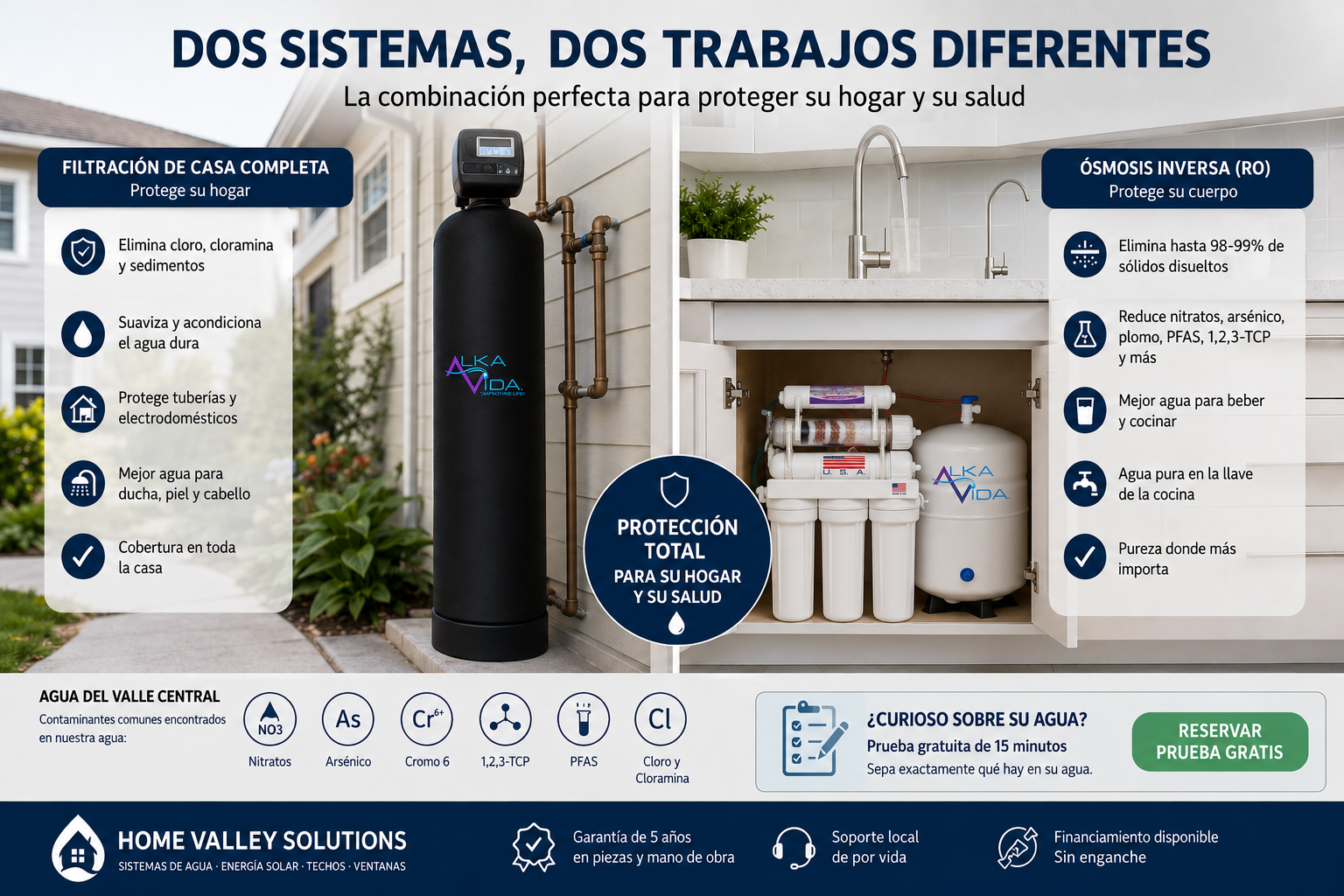
If you are specifically focused on fluoride removal, the answer for almost all Central Valley homeowners is reverse osmosis. An RO system under your kitchen sink will reliably remove fluoride from your drinking and cooking water, along with nitrates, arsenic, PFAS, residual chloramines, and TDS — addressing multiple Central Valley concerns simultaneously.
---
Brand-by-Brand Comparison: Fluoride Removal in Central Valley
Culligan
Culligan's strength for fluoride removal is their Aqua-Cleer RO system. As a multi-stage reverse osmosis unit installed under the kitchen sink, the Aqua-Cleer will remove fluoride (along with nitrates, arsenic, and PFAS) from your drinking and cooking water.
Culligan does not claim their whole-house softener systems remove fluoride, because they do not. The softener handles hardness; the RO handles fluoride. If a Culligan representative tells you their whole-house system removes fluoride, ask them to show you the technical specification sheet — it will not be listed.
The Aqua-Cleer is a legitimate product. Pricing is available only through in-home quotes, and costs in the Central Valley area typically run $600–$1,200 for the system plus installation, or can be bundled into a monthly rental package. Quality of service depends on the local Fresno/Central Valley Culligan franchise.
Fluoride removal: Yes, through their RO system at the point of use. Whole-house fluoride removal: No — not possible with softening/carbon systems.
---
RainSoft
RainSoft's TC Series RO system, paired with their EC4 whole-house system, includes reverse osmosis at the kitchen point. Their RO membrane will remove fluoride effectively.
The concern is the same as noted throughout this guide: RainSoft pricing is high and their sales process is pressure-driven. For a family specifically seeking fluoride removal, you can achieve the same result with a standalone RO system from multiple vendors at a fraction of the RainSoft all-in price.
RainSoft makes a strong argument for the convenience of having everything from one company, but you are paying a premium for that convenience.
Fluoride removal: Yes, through their RO component. Whole-house fluoride removal: No.
---
Puronics
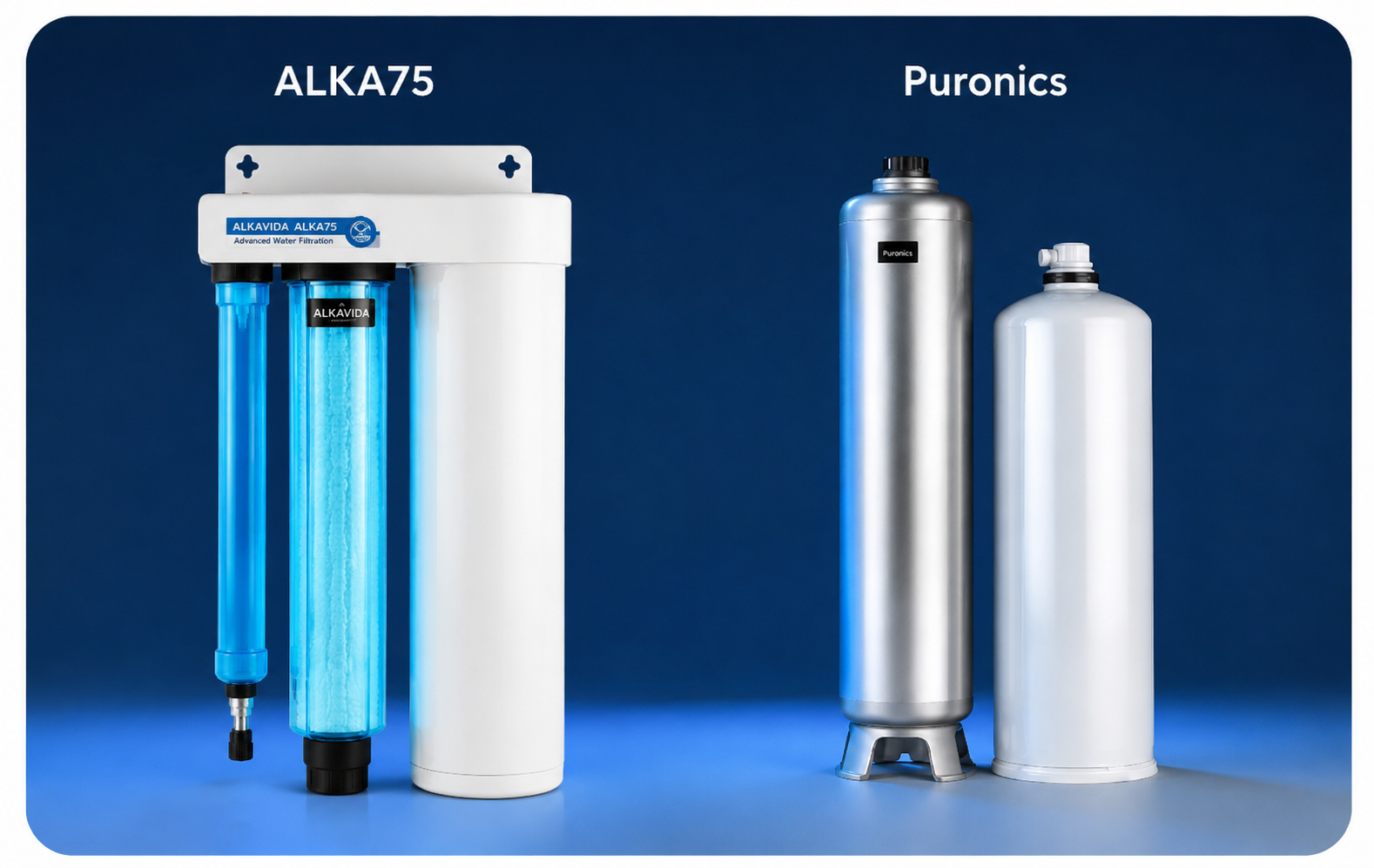
Puronics' whole-house systems focus on softening and bacteriostatic filtration. They do offer RO drinking water systems. Their whole-house units do not remove fluoride.
Puronics does not specifically market fluoride removal as a primary capability, and their focus on silver-based bacterial protection is more relevant for well users than for Central Valley municipal water customers focused on fluoride.
Fluoride removal: Available through add-on RO system. Whole-house fluoride removal: No.
---
Kinetico
Kinetico's K5 Drinking Water Station is one of the most sophisticated residential RO systems available and has specific fluoride-addressed filtration modules. The K5 uses a modular cartridge approach, letting you add a "MACguard" or specific contaminant-targeted cartridges for your particular water challenges.
For Central Valley homeowners concerned about fluoride specifically, Kinetico's K5 with a fluoride-specific module is an excellent (if premium-priced) option. Kinetico also manufactures their membranes to higher quality standards than some lower-cost RO systems, which matters for long-term fluoride rejection rates.
Fluoride removal: Yes, and with a specifically designed module, very effectively. Whole-house fluoride removal: No.
---
EcoWater
EcoWater's ERO 375 and similar RO systems provide standard multi-stage RO that will remove fluoride at the kitchen sink. Their systems are mid-tier in price and quality — competent and appropriate for most Central Valley homeowners.
EcoWater's smart monitoring feature does not extend to water quality testing in real time, so you rely on manufacturer claims and periodic third-party verification rather than ongoing fluoride measurement.
Fluoride removal: Yes, through their RO system. Whole-house fluoride removal: No.
---
Generation H2O
Generation H2O offers RO systems as part of their product line. For fluoride removal specifically, their RO products perform at a similar level to other mid-tier brands. They do not have specialized fluoride-specific media or any differentiated capability compared to other standard RO systems.
Fluoride removal: Yes, through standard RO. Whole-house fluoride removal: No.
---
SpringWell
SpringWell's SWRO RO system is a direct-purchase option priced at approximately $400–$600. It is a competent 5-stage RO system that will remove fluoride effectively. For Central Valley homeowners who are confident installing the system themselves and doing their own filter replacements, SpringWell's RO is among the better value options on the market.
SpringWell does not have a local Central Valley presence. Installation, maintenance, and any troubleshooting are the buyer's responsibility. RO systems require annual filter replacements and periodic membrane changes — if you are not comfortable managing this yourself, online-only brands become more complicated over time.
Fluoride removal: Yes, effectively. Whole-house fluoride removal: No. Local service: None.
---
APEC
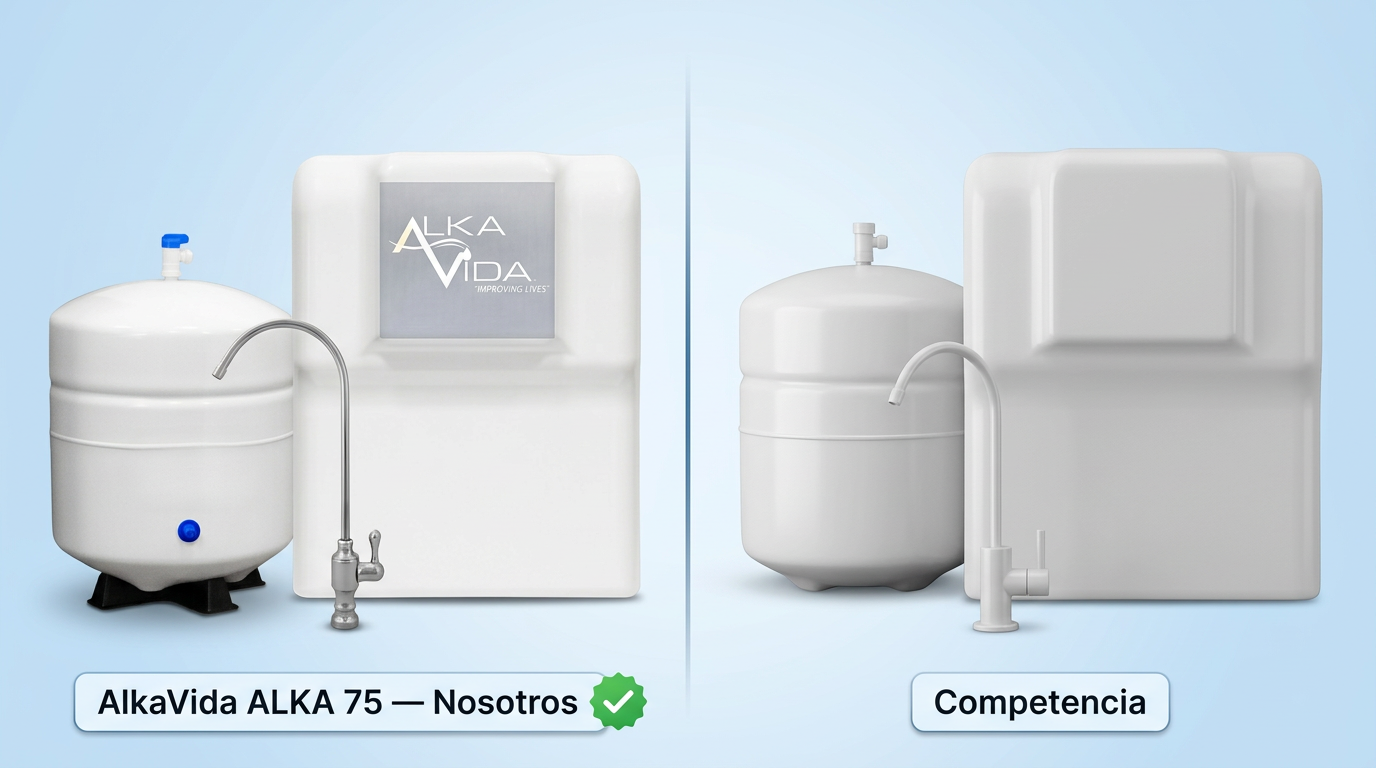
APEC is specifically known for their RO systems and is one of the best values in the market for residential fluoride removal. Their ROES-50 and ROES-75 systems are 5-stage RO units that reliably remove fluoride, nitrates, arsenic, and PFAS.
For Central Valley homeowners on a budget who want to address fluoride first and foremost, an APEC RO system ($200–$400 installed) is an excellent starting point. Filter replacement kits are affordable and available through Amazon, making ongoing maintenance easy.
The limitation is the same as all online-only brands: no local service. And APEC only makes RO systems — they do not make whole-house softeners or whole-house filters. If you also want to address hardness and chloramines, you are pairing an APEC RO with a separate whole-house system from another company.
Fluoride removal: Yes, very effectively at great value. Whole-house fluoride removal: No — RO only. Local service: None.
---
Aquasana
Aquasana's OptimH2O under-sink system is a countertop/under-sink RO that specifically markets fluoride removal alongside nitrate removal — both of which are contaminants that standard carbon systems miss. For Central Valley homeowners specifically concerned about the fluoride + nitrate combination, the Aquasana OptimH2O is worth considering.
Aquasana's whole-house systems use catalytic carbon and KDF media. They are effective for chloramines and some heavy metals but do not remove fluoride at the whole-house level.
Fluoride removal: Yes, through OptimH2O RO system. Whole-house fluoride removal: No. Local service: None (online brand).
---
Pelican
Pelican's salt-free conditioners and whole-house carbon filters do not remove fluoride. Pelican does not make a residential RO system (as of 2026). If you want Pelican's whole-house conditioning combined with fluoride removal, you would need to add a separate third-party RO system.
This is a genuine gap in Pelican's product line for Central Valley customers concerned about fluoride.
Fluoride removal: Not available in their product line without a third-party RO addition. Whole-house fluoride removal: No.
---
LifeSource
LifeSource makes large whole-house activated carbon systems and is strong on chlorine, chloramine, and taste/odor improvement. LifeSource explicitly does not claim to remove fluoride from their whole-house systems. Their technology is not designed for fluoride removal.
For Central Valley homeowners who want LifeSource's whole-house coverage and also want fluoride removal, you would need a separate RO system at the kitchen.
Fluoride removal: Not available in their product line. Whole-house fluoride removal: No.
---
Home Valley Solutions
Home Valley Solutions offers the complete picture for Central Valley homeowners concerned about fluoride:
1. Free water test first. HVS tests your water to confirm whether fluoride is present and at what level, along with all other relevant contaminants for your specific address. Fluoride levels vary across Central Valley communities — some areas are fluoridated at target levels, some are below, some have natural fluoride from well water. Knowing your actual number matters.
2. Reverse osmosis at the kitchen. HVS installs multi-stage RO systems at the kitchen sink that remove fluoride, nitrates, arsenic, PFAS, chloramines, and TDS from your drinking and cooking water. This is the right solution for fluoride removal.
3. Whole-house protection in combination. For customers who also want to address hardness (scale damage to appliances) and chloramines (throughout the whole house), HVS pairs whole-house softening and carbon filtration with the kitchen RO. The whole-house system handles what the RO does not need to (hardness, bulk chloramines), and the RO handles what the softener cannot (fluoride, nitrates, arsenic, PFAS at drinking water points).
4. AlkaVida alkaline option. For customers who want the best possible drinking water experience — fluoride removed, minerals balanced, pH optimized — HVS offers the AlkaVida alkaline system as an upgrade to standard RO. Alkaline water with balanced pH is often preferred by health-conscious families who are already making the investment in filtered water.
5. Bilingual, no-pressure consultation. HVS serves the entire Central Valley in English and Spanish. The consultation is educational — no same-day close pressure, no scripts designed to make you say yes before you are ready.
[Learn about HVS reverse osmosis systems for fluoride removal.](/services/reverse-osmosis?utm_source=blog&utm_medium=seo&utm_campaign=comparison_blogs&utm_content=48-fluoride-removal-central-valley)
---
Why Whole-House Fluoride Removal Is Not Practical (And What to Do Instead)
You may be wondering: can I remove fluoride from ALL the water in my home, including showers and baths?
The short answer: technically possible, but not practical for most homeowners.
Removing fluoride from a whole house would require either:
- A very large activated alumina or bone char filter at the point of entry, which would need enormous media volume for a family home's daily water use and would require frequent regeneration and media replacement, or
- A whole-house RO system, which wastes significant water (typical RO units reject 2-4 gallons for every gallon filtered), requires a large holding tank, and costs $5,000–$15,000+ for a properly sized residential system.
The practical and cost-effective approach is: whole-house softener + catalytic carbon for hardness/chloramines throughout the home, plus a reverse osmosis system under the kitchen sink for fluoride, nitrates, arsenic, and PFAS at drinking and cooking points.
Your primary fluoride exposure is from drinking and cooking water. You do not drink water in the shower. While some research explores dermal absorption of fluoride, the consensus is that oral ingestion (drinking and cooking) is the primary exposure pathway. Protecting your kitchen tap with RO is the effective, proportionate response.
[Learn about whole-house filtration options for Central Valley homes.](/services/water-filtration?utm_source=blog&utm_medium=seo&utm_campaign=comparison_blogs&utm_content=48-fluoride-removal-central-valley)
---
The Science on Fluoride: What We Know in 2026
This guide takes no position on whether public water fluoridation is a net public health benefit or harm. That debate involves complex tradeoffs between population-level cavity reduction (especially in lower-income communities without regular dental care) and potential neurological effects at higher doses.
What we can say clearly:
- The EPA has maintained a maximum contaminant level (MCL) of 4 mg/L for fluoride in drinking water, with a secondary standard of 2 mg/L to prevent dental fluorosis.
- The current fluoridation target is 0.7 mg/L, reduced from the previous range of 0.7–1.2 mg/L.
- A 2024 NTP systematic review found moderate confidence that fluoride is associated with lower IQ scores in children based on a meta-analysis of epidemiological studies, primarily from areas with higher fluoride levels (above 1.5 mg/L).
- Some Central Valley communities have naturally occurring fluoride in groundwater at or above the current MCL.
- The precautionary principle — reducing exposure to a potentially harmful substance even before definitive proof of harm — leads many health-conscious families to seek fluoride removal regardless of the regulatory debates.
For Central Valley families on private wells, natural fluoride testing is important. Some San Joaquin Valley groundwater has naturally occurring fluoride above the optimal range — which means you might have a fluoride issue even without municipal fluoridation.
---
What to Look for in an RO System for Fluoride Removal
Not all RO systems are equally effective at removing fluoride. Here is what to look for:
1. NSF/ANSI Standard 58 certification. This is the key certification for RO systems. NSF 58 certifies that a system performs as claimed, including for contaminant reduction. Look for NSF 58 certification and specifically for fluoride reduction listed in the certified contaminant reduction claims.
2. Membrane type and quality. Thin-film composite (TFC) membranes are standard and effective. Higher-end membranes maintain higher rejection rates over longer periods. Cheap membranes degrade faster, and fluoride rejection drops over time.
3. Number of stages. A 4-5 stage system (sediment filter, carbon pre-filter, RO membrane, carbon post-filter, plus optional remineralization) is appropriate. More stages do not always mean better — what matters is that each stage does what it is rated for.
4. Flow rate and tank size. For a family kitchen using the RO system for cooking and drinking, a 50 GPD (gallons per day) system with an adequate storage tank is typically sufficient. Higher-flow systems are available.
5. TDS meter or monitoring. Some premium RO systems include a built-in TDS monitor that tracks when the membrane needs replacement. Since you cannot taste or see when fluoride rejection declines, a TDS meter is a useful proxy for system performance.
[Learn about HVS alkaline water systems — RO-based with pH balancing for drinking water quality.](/services/alkaline-water?utm_source=blog&utm_medium=seo&utm_campaign=comparison_blogs&utm_content=48-fluoride-removal-central-valley)
---
Central Valley Communities and Fluoride: A Quick Reference
Fresno: City of Fresno fluoridates its water supply. Fluoride levels typically at or near 0.7 mg/L target.
Clovis: Served by Fresno's water system in most areas. Fluoridated.
Bakersfield: Fluoridated.
Visalia: Fluoridated by the City of Visalia water system.
Tulare: Fluoridated.
Hanford: Fluoridated.
Madera: Fluoridated by the Madera Irrigation District/City of Madera system.
Porterville: Check your specific service area — has had historical natural fluoride variation in groundwater sources.
Private wells: No fluoridation, but may have naturally occurring fluoride depending on geology. Testing required.
Note: Always verify current fluoride levels in your specific service area via your most recent Annual Water Quality Report (Consumer Confidence Report), which your water provider is required to publish annually.
---
The Complete Central Valley Fluoride Removal Setup
For most Central Valley homeowners who want to address fluoride along with the full range of local water issues:
Tier 1 (Fluoride removal only, minimum cost):
- Under-sink RO system ($200–$600 purchased online)
- Addresses: fluoride, nitrates, arsenic, PFAS, TDS, chloramines at kitchen point
- Does NOT address: hardness, whole-house chloramines, scale in appliances
Tier 2 (Fluoride + taste/odor throughout the home):
- Whole-house catalytic carbon filter + under-sink RO
- Addresses: chloramines throughout the house, fluoride at kitchen
- Does NOT address: hardness, scale
Tier 3 (Comprehensive — recommended for Central Valley):
- Whole-house water softener + whole-house catalytic carbon filter + under-sink RO
- Addresses: hardness, chloramines throughout house, fluoride, nitrates, arsenic, PFAS at kitchen
- This is the right solution for most Central Valley families
Tier 4 (Premium — with alkaline drinking water):
- All of Tier 3 + HVS AlkaVida alkaline system at kitchen
- Addresses everything above, plus pH-optimized alkaline drinking water
- Ideal for health-conscious families who want the best possible water
---
Our Recommendation for Central Valley Homeowners Concerned About Fluoride
The bottom line for 2026: reverse osmosis is the proven, accessible, and cost-effective way to remove fluoride from your drinking and cooking water. Every reputable brand on this list — Culligan, RainSoft, Kinetico, EcoWater, APEC, Aquasana, and Home Valley Solutions — offers an RO system capable of this.
What differentiates the options:
- APEC and SpringWell are best if you want low cost and are confident in DIY installation with no local service backup.
- Kinetico is best if you want a premium system with modular fluoride-specific filtration.
- Culligan and EcoWater are reasonable mid-tier options with local dealer networks.
- Home Valley Solutions is the right choice if you want local Central Valley expertise, free water testing, bilingual service, a system designed around your actual water test results, and no sales pressure.
For the full picture — test first, then decide — call (559) 507-6838 or [schedule your free water consultation online.](/appointment?utm_source=blog&utm_medium=seo&utm_campaign=comparison_blogs&utm_content=48-fluoride-removal-central-valley)
---
Home Valley Solutions serves Fresno, Clovis, Visalia, Tulare, Hanford, Madera, Porterville, and all Central Valley communities. Free water testing available. Bilingual service in English and Spanish.
¿Listo para mejorar la calidad de su agua?
Obtenga una prueba de agua gratuita y descubra cómo podemos ayudarle.