
If you live in Hollister and you have not treated your water, hard water is costing you money right now. Not eventually. Right now. Every shower, every dishwasher cycle, every load of laundry, and every gallon your water heater processes is leaving mineral deposits that accumulate silently inside your pipes, appliances, and fixtures — shortening their lives, reducing their efficiency, and adding up to thousands of dollars in premature replacement costs.
Hollister, the San Benito County seat, is a growing community that sits in a basin with some of the hardest water in Central California. Fed largely by groundwater and served by the City of Hollister's municipal water system, local water regularly tests in the range of 20–35 grains per gallon (GPG) — that is the hard water category, well above the 10.5 GPG threshold that the Water Quality Association uses to define "very hard" water. For context, water above 14 GPG is considered extremely hard by most classification systems, and Hollister's water often exceeds that.
This guide explains exactly what hard water is doing to your Hollister home, compares every major water softener brand available in 2026 (Culligan, RainSoft, Puronics, Kinetico, EcoWater, Generation H2O, SpringWell, Pelican, LifeSource, and Home Valley Solutions), and tells you how to choose the right solution without overpaying or undersizing.
What Hard Water Actually Does to a Home in Hollister
Let us start with the physical reality. Hard water contains dissolved calcium and magnesium ions. These are not immediately harmful to drink (though very high mineral content affects taste). The problem is what happens when hard water is heated, evaporated, or simply sits in contact with surfaces over time.
When calcium and magnesium ions leave the water — through heating, evaporation, or reaction with soap — they form calcium carbonate (limescale) deposits. In Hollister's extremely hard water range, this process happens faster and more aggressively than in most California communities.
Water Heater Damage
Your water heater is the single biggest victim of hard water in Hollister. Here is why:
Inside a tank water heater, water is heated to 120°F or higher. At elevated temperatures, calcium carbonate precipitates out of solution and settles on the bottom of the tank and on the heating element (in electric models) or the burner area (in gas models).
A study conducted by the Water Quality Research Foundation found:
- A water heater operating on Hollister-level hard water (20–30 GPG) accumulated significant scale within the first 2–3 years of operation
- Scale acting as an insulator on heating elements forces the heater to work harder and longer to reach target temperature
- A water heater with 1/2 inch of scale requires approximately 70% more energy to heat water to the same temperature as a scale-free heater
- Hard water reduced water heater efficiency dramatically and shortened expected lifespan from 12–15 years to as few as 6–8 years
In Hollister, where water is at the extreme end of hard, this damage timeline is compressed. A water heater installed without upstream softening in Hollister may require full replacement in under 10 years, compared to 12–15 years in soft water conditions.
Cost impact: A replacement 50-gallon gas water heater runs $900–$1,500 installed. If hard water costs you 5 years of lifespan, you are replacing a water heater once every 8 years instead of once every 13 — a significant difference in a 30-year homeownership horizon.
Dishwasher and Washing Machine Damage
Both of these appliances run hot water through internal components repeatedly, day after day. In Hollister's hard water, scale accumulates on:
- Dishwasher spray arm nozzles (clogging them, reducing cleaning effectiveness)
- Dishwasher heating element (same efficiency losses as the water heater)
- Washing machine drum seals and internal tubing
- Washing machine heating element (in hot water cycles)
Scale in dishwashers causes cloudy spots on glasses and dishes — a very visible symptom that Hollister homeowners know well. It also clogs spray arms, reducing cleaning performance and requiring cleaning cycle additives (rinse aid, dishwasher cleaner tabs) that would not be necessary with soft water.
Washing machine lifespans in very hard water areas are typically 30–40% shorter than in soft water areas. With front-load washing machines costing $700–$1,200 and top-load machines $500–$900, this is real money.
Shower Fixtures, Faucets, and Valves
Hollister homeowners in hard water areas spend more time cleaning and sooner replacing:
- Showerheads (nozzles clog with scale, reducing flow and pressure)
- Faucet aerators (scale clogs the fine mesh, reducing flow)
- Shower valves and cartridges (internal scale causes valves to stick, drip, or fail)
- Toilet fill valves (scale on the valve seat causes running toilets and higher water bills)
In Hollister, showerhead replacement is often needed every 2–3 years without treatment, versus 7–10+ years in soft water homes. Shower valve cartridge replacement, which typically requires a plumber, costs $150–$300 per occurrence. In a home with multiple bathrooms, these costs add up fast.
Pipe and Plumbing Scale
In severe hard water conditions, scale can accumulate inside copper and galvanized steel pipes, progressively narrowing the effective pipe diameter and reducing flow. While Hollister's PVC and copper plumbing in newer homes is more resistant to this than older galvanized steel, any home with galvanized pipes (generally pre-1980 construction) is at elevated risk of significant scale accumulation.
Skin, Hair, and Laundry
The practical daily effects of Hollister's hard water extend beyond appliances:
- Dry skin: Hard water interferes with soap lathering and leaves a mineral film on skin after rinsing. This mineral residue strips natural oils and causes dryness, particularly in children with sensitive skin. Eczema and similar conditions are frequently aggravated by hard water.
- Brittle hair: The same mineral film on hair shafts makes hair feel rough, look dull, and tangle more easily. Salon-quality shampoos and conditioners partially compensate, but soft water makes a dramatic, noticeable difference.
- Gray laundry: Hard water causes whites to gray and colors to fade faster. The mineral interaction with detergent produces a dingy film on fabrics over time.
- Higher soap and detergent use: Hard water requires significantly more soap, shampoo, dish soap, and laundry detergent to achieve the same cleaning results as soft water. For a family of four, this can add $300–$500/year in product costs.
[Get a free water test to confirm your Hollister home's exact hardness level.](/free-water-test?utm_source=blog&utm_medium=seo&utm_campaign=comparison_blogs&utm_content=50-hard-water-damage-hollister)
---
Hard Water vs. Salt-Free: What Hollister Actually Needs
Before comparing brands, you need to understand the fundamental divide in water "softening" products: traditional salt-based ion exchange softeners versus salt-free water conditioners.
Salt-Based Ion Exchange Softeners
Traditional water softeners work by passing hard water through a tank of resin beads charged with sodium ions. As the hard water flows through, calcium and magnesium ions exchange places with sodium ions on the resin — the calcium and magnesium stick to the resin, sodium goes into the water. The result is "soft" water: calcium and magnesium have been removed, replaced by a small amount of sodium.
Salt-based softeners:
- Produce genuinely soft water — calcium and magnesium removed from the water
- Produce the characteristic "slippery" feel of soft water in the shower
- Eliminate scale formation in pipes, appliances, and fixtures
- Require periodic regeneration (flushing the resin with brine solution to remove accumulated calcium/magnesium and recharge the resin with sodium)
- Require regular salt (sodium chloride or potassium chloride) addition to the brine tank
For Hollister's extreme hardness (20–35 GPG), salt-based softeners are the most reliable solution. The hardness level is high enough that salt-free alternatives may not perform adequately.
Salt-Free Water Conditioners (Template Assisted Crystallization / TAC)
Salt-free conditioners (sold by brands like Pelican and LifeSource) use a different mechanism. They do not remove calcium and magnesium from the water. Instead, they change the physical structure of the calcium carbonate molecules so they stay suspended in the water rather than sticking to surfaces.
Salt-free conditioners:
- Do not produce "soft" water — minerals remain in the water
- Do not produce the slippery feel of soft water
- Claim to prevent scale formation (to varying degrees)
- Do not require salt
- Do not require electricity
- Do not produce a brine waste stream
The critical question for Hollister: Do salt-free conditioners work at 20–35 GPG hardness?
The honest answer is: results are mixed at extreme hardness levels. Salt-free conditioners are generally more effective at moderate hardness levels (5–15 GPG) than at the extreme hardness levels common in Hollister. Independent testing has shown variable scale prevention performance at high hardness levels.
For Hollister homeowners, if scale prevention is the primary goal and you want the most reliable protection for your appliances, a traditional salt-based softener is the more dependable choice. Salt-free conditioners may be appropriate if you are on a sodium-restricted diet, have environmental concerns about salt discharge, or want a low-maintenance option for moderate additional protection.
---
Brand-by-Brand Water Softener Comparison for Hollister
Culligan
Culligan is the brand most Hollister homeowners already know. Their HE (High Efficiency) softener line is legitimately well-regarded, using a demand-initiated regeneration controller that only regenerates when needed based on actual water usage — a more efficient approach than older timer-based systems.
For Hollister's high hardness level, Culligan's systems can be configured with appropriate grain capacity (48,000–80,000+ grain) to handle the heavy mineral load without constant regeneration.
The Culligan experience in Hollister involves a local dealer (the San Benito/Monterey County Culligan franchise). Quality of service depends on the local operation. Monthly rental pricing runs $40–$80/month for a standard softener, or purchase pricing (rarely listed publicly) is typically $1,500–$3,000+ installed.
Rental is convenient — Culligan handles salt delivery and service — but over 10 years, rental almost always costs more than purchasing a comparable system.
Hard water rating: Excellent — systems specifically sized for high hardness. Local service: Yes. Price transparency: Low. Estimated cost: $1,500–$3,000 purchased or $40–$80/month rental.
---
RainSoft
RainSoft's EC4 whole-house system includes softening as the primary component, sized for high hardness applications. For Hollister's 20–35 GPG water, RainSoft's system is technically capable.
The concern, as always with RainSoft, is pricing and sales tactics. Their in-home demonstrations use a water testing display (including TDS comparison and soap lathering demonstration) that is designed for dramatic effect rather than technical precision. The full EC4 package for a home with Hollister-level water typically runs $4,000–$10,000+ installed, depending on the additional components bundled in.
Get competitive quotes before committing to RainSoft. The technology is not worth the price premium over equivalent-performing systems from other brands.
Hard water rating: Excellent — systems designed for high hardness. Local service: Through local dealer. Price transparency: Very low. Estimated cost: $4,000–$10,000+ for full package.
---
Puronics
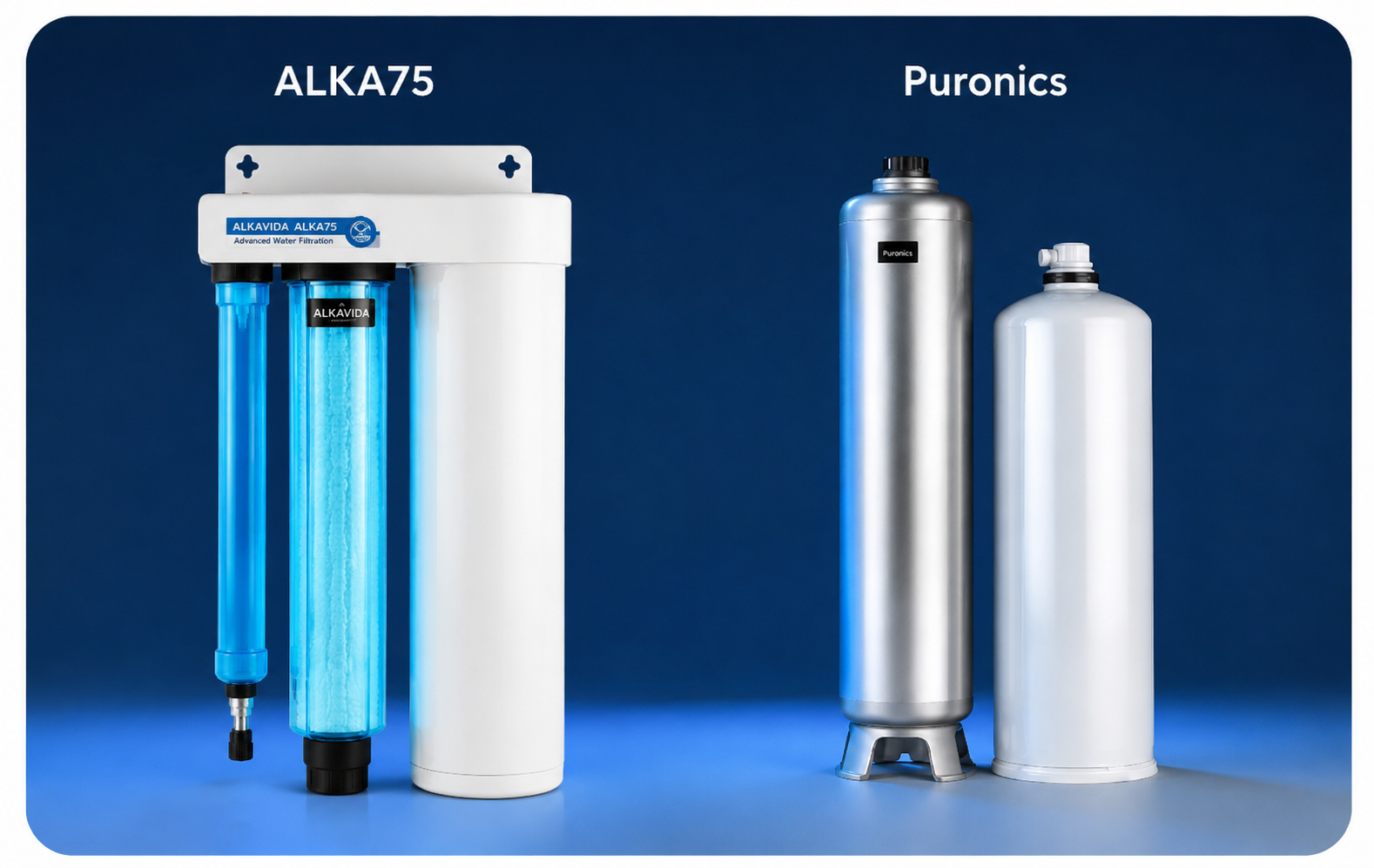
Puronics' bacteriostatic resin technology is an interesting differentiator for Hollister homeowners. At high hardness levels, softener resin regenerates frequently, and in warm climates like San Benito County's summers, bacteria can colonize the resin bed during periods between regeneration cycles. Puronics' silver-ion treated resin inhibits this bacterial growth.
For families concerned about water quality in the softener itself — not just what comes out of the tap — Puronics' iGen technology is a genuine benefit.
Puronics systems are mid-to-high tier in pricing. Dealer availability in the Hollister/San Benito County area should be confirmed before planning on their systems.
Hard water rating: Good to excellent. Local service: Limited — confirm dealer availability. Estimated cost: Mid-to-high tier, requires quote.
---
Kinetico
Kinetico's non-electric, twin-tank, demand-regeneration softeners are particularly well-suited for Hollister's extreme hardness for two reasons:
1. Twin-tank continuous service: While one tank is in service, the other regenerates. You never run out of soft water, even during peak usage periods. For Hollister homeowners with high hardness, this means regeneration can happen more frequently (as needed by demand) without ever experiencing a period of hard water breakthrough.
2. Demand-based regeneration: Kinetico softeners regenerate based on water volume used, not on a timer. At Hollister's extreme hardness levels, a system may need to regenerate more frequently than average. A timer-based system set for an average household may be exhausted before the next scheduled regeneration; Kinetico's demand system regenerates as needed.
Kinetico Premier Series and Mach Series can both be configured for high-hardness water. They are not the cheapest option (systems typically run $2,500–$5,000 installed), but they are among the most technically appropriate for Hollister's specific conditions.
Hard water rating: Excellent — design is specifically well-suited for high hardness. Local service: Through dealer — confirm Hollister/San Benito County coverage. Estimated cost: $2,500–$5,000 installed.
---
EcoWater
EcoWater's ERR series softeners are solid performers with smart monitoring capability. For Hollister homeowners, the smart monitoring is worth noting: you can track daily water usage, monitor salt levels remotely, and receive alerts when the system needs attention.
At Hollister's high hardness levels, the smart monitoring becomes more valuable because the system will work harder and regenerate more often — knowing when salt is running low before you run out (and hard water starts flowing again) is a practical benefit.
EcoWater systems are mid-tier in price and performance — appropriate for Hollister's hardness if properly sized.
Hard water rating: Good — mid-tier systems work for Hollister if properly sized. Local service: Through dealer — EcoWater dealer network in the Central Coast/South Bay area. Estimated cost: $1,500–$2,500 installed.
---
Generation H2O
Generation H2O is a regional brand without significant differentiation in their softener technology. For Hollister homeowners, they are worth including in a quote comparison but do not offer a compelling reason to choose them over Kinetico, EcoWater, or HVS.
Hard water rating: Standard softener technology, appropriate if properly sized. Local service: Regional dealer.
---
SpringWell
SpringWell's Salt-Based Water Softener (available in 32,000 and 48,000 grain models) is a direct-purchase option. For Hollister's extreme hardness (20–35 GPG), the 48,000-grain model is the minimum, and even that may need to be evaluated against your actual daily water usage and hardness to ensure it does not exhaust before scheduled regeneration.
SpringWell uses a demand-based Clack valve controller, which is a reputable control valve in the industry. The system quality is appropriate for the price ($700–$900 for the system itself).
The challenge: with no local Hollister or San Benito County dealer, installation, commissioning (programming the control valve correctly for your water hardness and household size), and any service issues are the buyer's responsibility. Incorrectly programmed softeners either waste salt (over-regenerating) or fail to adequately soften (under-regenerating). For Hollister's extreme hardness, correct programming is essential.
Hard water rating: Adequate if properly sized and programmed. Local service: None. Price transparency: High — listed on website. Estimated cost: $700–$900 purchased, installation/programming additional.
---
Pelican
Pelican's NaturSoft salt-free conditioner is their primary residential product. As discussed above, salt-free conditioners do not remove calcium and magnesium — they change the structure of mineral deposits to reduce scale adhesion.
For Hollister's extreme hardness (20–35 GPG), a salt-free conditioner is likely to be insufficient to prevent meaningful scale accumulation. Independent testing of salt-free systems at high hardness levels consistently shows more scale formation than equivalent traditional softeners.
If you have specific reasons to avoid salt (medical, environmental, or preference), a Pelican system may reduce scale somewhat. But it will not deliver the full benefits of soft water — including the protection for your water heater, dishwasher, and washing machine — that Hollister's hard water makes critical.
Hard water rating: Likely insufficient for 20–35 GPG hardness in Hollister. Recommendation: Traditional salt-based softener more appropriate for Hollister's conditions.
---
LifeSource
LifeSource makes large whole-house carbon systems with a conditioning component. Similar to Pelican, LifeSource systems do not use salt and do not remove calcium and magnesium through ion exchange. Their scale reduction claims depend on their specific conditioning media.
For Hollister's extreme hardness, the same concern applies as with Pelican: a salt-free conditioner of any type is unlikely to fully protect appliances and plumbing at the mineral load present in San Benito County water.
Hard water rating: Not recommended as primary hardness solution for Hollister's conditions.
---
Home Valley Solutions
Home Valley Solutions is the local, Central Valley-focused company that specifically understands the hardness challenges of San Benito County and surrounding areas. HVS is not a national franchise — they are a family-owned business that has built systems for communities throughout the Central Valley and Central Coast, including communities with water profiles similar to Hollister's extreme hardness.
For Hollister homeowners, HVS's process:
1. Free water test. HVS tests your water to confirm hardness level, TDS, chloramine content, and any other relevant parameters. For Hollister, where hardness can vary by neighborhood and well-dependency, knowing the exact number in GPG matters for correct system sizing.
2. Sizing for your actual hardness. A softener sized for a 10 GPG home will exhaust much faster in a 25 GPG home. HVS calculates the correct grain capacity based on your measured hardness and your household's daily water usage — not a generic formula.
3. Appropriate technology recommendation. HVS recommends traditional salt-based softening for Hollister's high-hardness conditions, not salt-free conditioning that may underperform. If you have specific reasons to prefer salt-free, HVS will explain the tradeoffs honestly.
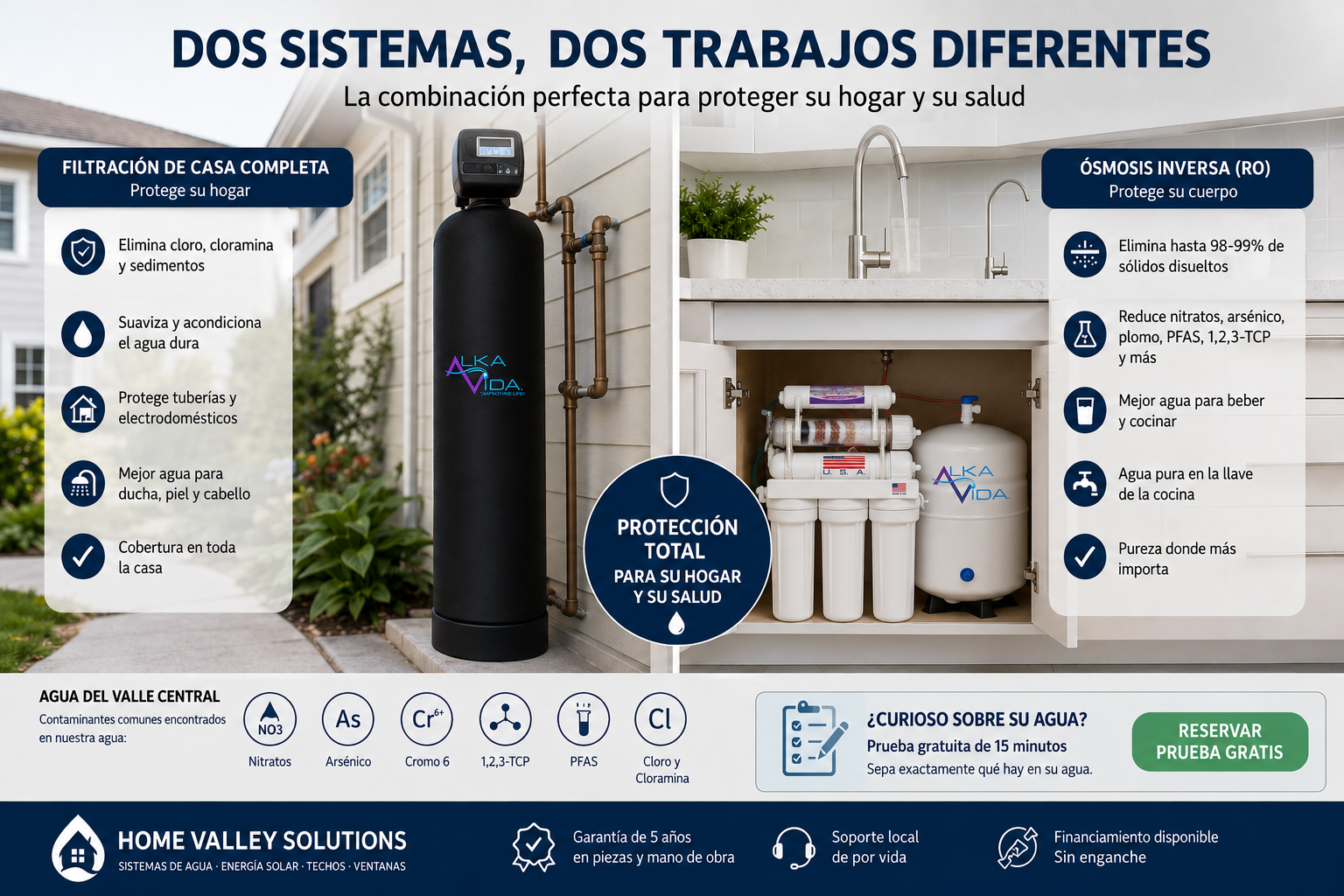
4. Pairing with carbon filtration. Hollister's municipal water uses chloramine disinfection, which standard softeners do not remove. HVS typically pairs a softener with a whole-house catalytic carbon filter so that softened water is also free of the chloramine taste and odor that affects every tap in the home.
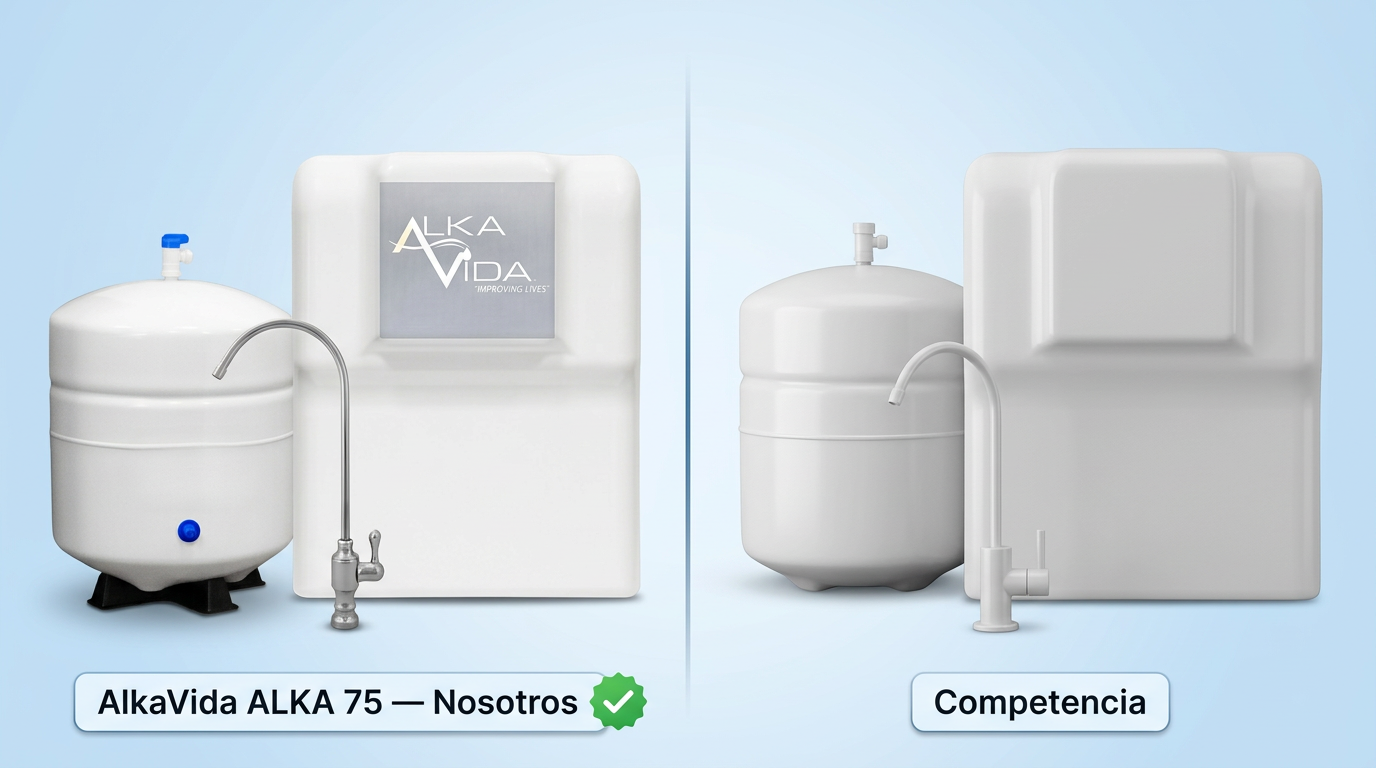
5. AlkaVida alkaline option. For homeowners who want premium drinking water at the kitchen — fluoride removed, minerals balanced, pH optimized — HVS offers the AlkaVida system as a complete package addition.
6. Bilingual service. Hollister has a significant Spanish-speaking population. HVS conducts all consultations and ongoing service in both English and Spanish.
7. No pressure. No same-day close requirement. No long-contract lease pressure. Just an honest assessment, a system recommendation based on real test data, and professional installation.
[Schedule your free water test and consultation for your Hollister home.](/free-water-test?utm_source=blog&utm_medium=seo&utm_campaign=comparison_blogs&utm_content=50-hard-water-damage-hollister)
---
Calculating the True Cost of Hard Water in Hollister
Let us put real numbers to what Hollister's hard water costs a homeowner over 10 years, compared to the cost of treating it:
Without a Water Softener (10-Year Hard Water Costs in Hollister):
| Cost Category | Estimate |
|---|---|
| Premature water heater replacement (1 extra replacement) | $1,200 |
| Premature washing machine replacement (1 extra) | $800 |
| Premature dishwasher replacement (1 extra) | $700 |
| Extra soap/detergent/cleaning products (10 years) | $3,000–$5,000 |
| Showerhead/faucet/valve replacements and plumber calls | $1,500–$2,500 |
| Higher water heating energy costs (scale efficiency loss) | $1,000–$2,000 |
| Total estimated hard water cost (10 years) | $8,200–$13,200 |
These numbers are conservative estimates based on published appliance lifespan studies and average product/energy costs in California. Your actual costs depend on home size, number of bathrooms, appliance age, and water usage patterns.
With a Quality Water Softener (10-Year Costs):
| Cost Category | Estimate |
|---|---|
| System purchase and installation | $1,800–$3,000 |
| Salt (10 years, average $10–$15/bag, ~1 bag/month) | $1,200–$1,800 |
| Annual service/filter changes | $500–$800 |
| Total estimated softener cost (10 years) | $3,500–$5,600 |
10-year savings: $4,700–$7,600 or more, before accounting for quality-of-life improvements in skin, hair, and laundry.
A properly sized water softener in Hollister does not just improve your water — it pays for itself. In most cases, the payback period is 3–5 years, after which the system is saving you money every month it runs.
---
Sizing a Water Softener for Hollister's Hard Water
Proper sizing is critical in Hollister because the hardness level is so high. An undersized system will exhaust before scheduled regeneration, allowing hard water to flow through untreated (called "hardness breakthrough"). Here is how to think about sizing:
The formula: Daily softening requirement = (People in household × 75 gallons/day) × GPG hardness
For a family of 4 at 25 GPG (typical Hollister range): 4 × 75 × 25 = 7,500 grains per day
For a 48,000-grain softener: 48,000 ÷ 7,500 = 6.4 days between regeneration — acceptable. For a 32,000-grain softener: 32,000 ÷ 7,500 = 4.3 days — may be acceptable but is thin. For a family of 5 at 30 GPG: 5 × 75 × 30 = 11,250 grains/day — a 48,000-grain softener regenerates every 4.3 days; a 64,000-grain softener gives 5.7 days.
At Hollister's upper hardness range (30–35 GPG), families should typically be looking at 64,000–80,000 grain capacity systems. National chains sometimes try to sell smaller, less expensive systems — be cautious.
[Learn about whole-house water filtration and softening options for Hollister.](/services/water-filtration?utm_source=blog&utm_medium=seo&utm_campaign=comparison_blogs&utm_content=50-hard-water-damage-hollister)
---
What Soft Water Feels Like: Setting Expectations
If you have never had a water softener and you install one in your Hollister home, here is what to expect:
In the first week:
- Your shower will feel different — "slippery" or "silky" is the common description. This is normal. It is not residue or soap — it is the absence of mineral residue that you were previously rinsing off (and mistakenly thinking was "clean").
- Existing scale deposits will not disappear overnight. They will gradually dissolve over several weeks as soft water runs over them.
- You will use noticeably less shampoo, soap, and dish soap to get the same lather.
In the first month:
- Scale deposits in showerheads and faucets will visibly reduce.
- Glasses and dishes from the dishwasher will come out clearer.
- Skin and hair will feel noticeably smoother, particularly in children.
Over 6–12 months:
- Your water heater, dishwasher, and washing machine will run more efficiently as existing scale deposits dissolve.
- Plumbing fixtures will require less frequent cleaning.
- Your water heater's efficiency will improve measurably (verifiable on your gas or electricity bill).
---
Questions to Ask Any Water Softener Company in Hollister
What is the grain capacity of this system, and how did you calculate it for my household? If they cannot show you the calculation based on your measured hardness and daily water usage, they are guessing.
What is the control valve, and is it demand-based or timer-based? Demand-based is better for Hollister's high hardness and variable daily water use.
What is the warranty on the resin tank, the control valve, and the labor? Resin tanks typically carry 10-year warranties. Control valves vary. Get specifics.
What salt does this system use, and how much will I use per month? At Hollister's hardness level, expect higher salt consumption than average. Know what you are signing up for.
Does this system include any carbon filtration for chloramine removal? If not, your softened water will still have chloramine taste and odor.
Can I get a quote for both purchase and rental, with a total cost-of-ownership comparison for 10 years?
Do you have bilingual staff who can assist in Spanish?
---
Our Recommendation for Hollister Homeowners
Hard water at 20–35 GPG is not a cosmetic problem. It is an appliance-destroying, energy-wasting, skin-drying problem with measurable economic consequences over the lifetime of your home. Hollister homeowners who do not treat their water are quietly paying thousands of extra dollars in replacement costs and energy bills that a properly sized water softener would prevent.
The right system for Hollister is:
- A traditional salt-based ion exchange softener (not salt-free — the hardness level is too high)
- Properly sized for your household and your actual measured hardness (not a generic estimate)
- Paired with catalytic carbon filtration for chloramine removal
- Installed by a local professional who can commission the control valve correctly
The right company is one that tests your water before recommending anything, sizes the system honestly for your actual needs, provides local installation and service, and does not pressure you into signing on the spot.
For Hollister and the surrounding San Benito County area, Home Valley Solutions is the local, family-owned option that checks every one of those boxes. Call (559) 507-6838 or [schedule your free water consultation online.](/appointment?utm_source=blog&utm_medium=seo&utm_campaign=comparison_blogs&utm_content=50-hard-water-damage-hollister)
Your appliances will thank you. Your skin will thank you. Your energy bill will thank you.
[Learn about HVS alkaline water systems — the premium addition for Hollister families who want the best possible drinking water.](/services/alkaline-water?utm_source=blog&utm_medium=seo&utm_campaign=comparison_blogs&utm_content=50-hard-water-damage-hollister)
---
Home Valley Solutions serves Hollister, Gilroy, Morgan Hill, Salinas, Fresno, Visalia, and surrounding Central Valley and Central Coast communities. Free water testing available for all residential customers. Bilingual service in English and Spanish. Call (559) 507-6838 to schedule.
¿Listo para mejorar la calidad de su agua?
Obtenga una prueba de agua gratuita y descubra cómo podemos ayudarle.